What is a kWh (kilowatt-hour)?
Updated on 4 min read
1 kilowatt is 1,000 watts. A kilowatt-hour (kWh) is that 1,000 watts for one hour. How to tell kW and kWh apart.
All articles
A kilowatt-hour (kWh) is the energy a 1,000-watt appliance uses in one hour. 1 kilowatt is 1,000 watts; 1 kWh is that draw over one hour. You settle your electricity and your panels' output in kWh.
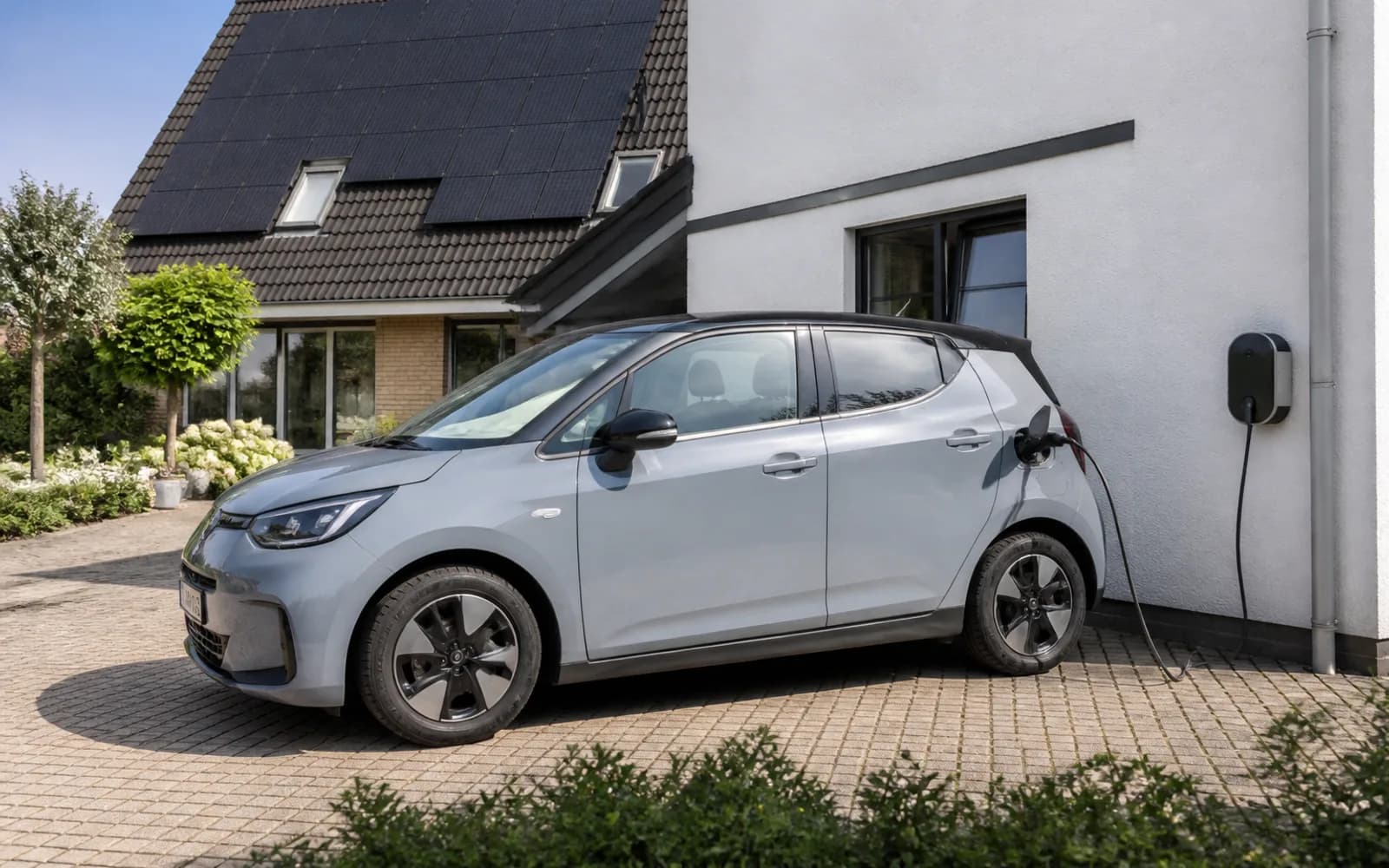
What is a kilowatt-hour?
 Solar panels
A kilowatt (kW) is how hard something draws electricity at a given moment. A kilowatt-hour (kWh) is energy: that draw times time. A 2 kW kettle running for half an hour uses 1 kWh. Your annual statement shows your total use in kWh.
The formula is simple: kWh = (watts × hours) / 1,000. A 500-watt appliance running for four hours uses 2 kWh. That lets you estimate what a device costs per year, as long as you know how long it typically runs.
How many watts is 1 kilowatt?
1 kilowatt is 1,000 watts. That is how hard something draws at a moment. A 2 kW kettle is twice that 1,000 W. 1 kW is not 1,000 kWh. kWh counts energy over time, so draw times hours.
Kilo means a thousand. 1 kW is therefore 1,000 W, just as 1 kilogram is 1,000 grams. A 7 kW charger draws 7,000 W while it charges. How much energy that session uses depends on how long it runs, and you count that in kWh. Panel output is listed in watt-peak.
kW, kWh and kWp apart
Watt, kW and kWh measure different things. W and kW are how hard something draws at a moment. kWh is energy over time. kWp is the peak output of your solar panels together. The figure per panel is listed in watt-peak (Wp).
| Unit | What it measures | Example |
|---|---|---|
| W | Draw at a moment | 1,000 W is 1 kW |
| kW | Same, in thousands | A charger draws 7 kW while charging |
| kWh | Energy (draw × time) | That charge session uses 15 kWh |
| kWp | Peak output of panels | Ten 400 Wp panels = 4 kWp |
4 kWp produces roughly 3,400 to 3,600 kWh per year in the Netherlands (rule of thumb 0.85 to 0.9 kWh per Wp).
How much kWh does a household use?
Use varies a lot per household. Family size, appliances, a heat pump or an electric car determine how many kWh you need per year. Two homes next to each other can easily differ by a factor of two.
The best starting point is your own annual statement or smart meter. There you see how many kWh you actually use. We use that figure to size your solar panels. A heat pump or charger pushes use up significantly; factor that in if you are planning ahead.
kWh and solar panels
Your panels' output is also counted in kWh. To go from the wattage on your roof to kWh per year, multiply total watt-peak by roughly 0.85 to 0.9. That is a rule of thumb for the Netherlands; your actual yield depends on orientation and shade.
Concrete calculation examples, a monthly split and what it saves on your energy bill are on our page about solar panel yield and return. Want to know how many kWh you need? Start with your annual statement and request a quote via solar panels.
Solar panels are still a smart investment in 2026. A few things matter if you want the most from your own power.
Your energy use
Planning to drive, cook or heat electrically? Factor that into how many panels you install now.
Spread the yield
Spread panels across roof faces so you generate through the day and use more of your own energy.
Your data
Choose a system with its own 4G connection and data storage in Europe so your information stays secure.
Boost your energy
A smart home battery stores today's power for later, so you use more of your own electricity after sunset.

We install your solar panels in a day
We can often start within three weeks. A day later your panels are on the roof and everything is connected. We leave your home clean and make sure you know exactly how it all works.
- Use more of your own power during the day
- 0% VAT makes the investment even more attractive
Frequently asked questions
1 kilowatt is 1,000 watts. That is how hard something draws at a moment, not energy. So 1 kW is not 1,000 kWh.
kW is how hard something draws at a moment, kWh is energy over time. A 1 kW appliance running for an hour uses 1 kWh.
1 kWh is 1,000 watts for one hour. A 2,000-watt appliance running for half an hour also uses 1 kWh.
Multiply watts by the number of hours and divide by 1,000. A 500-watt appliance running for four hours: (500 × 4) / 1,000 = 2 kWh.
Kilowatt-peak is the peak output of your panels together. Ten 400 Wp panels are 4 kWp. The rule of thumb of 0.85 to 0.9 kWh per Wp converts that into kWh per year.
On your supplier's annual statement and on your smart meter. We use that consumption to size your system.

Discover what smart energy can do for you
In about an hour you get insight into your savings, the options for your home and when the investment pays back. Straightforward, honest advice so you know exactly where you stand.
Smart energy at home
- Upgrade your home with our smart battery
- Our solar panels deliver up to 25% more energy
- A heat pump to minimise your energy use
- Charge your electric car easily at home with an EV charger
Booking an advice call is easy
Fill in your details below. Within a day we will contact you to schedule a no-obligation advice call together.
Related articles