What does a home battery cost? From €5,445
Updated on 7 min read
A home battery from SolarFast starts at €5,445 including VAT and installation. Prices per capacity (around 5 to 25 kWh), price level September 2026.
All articles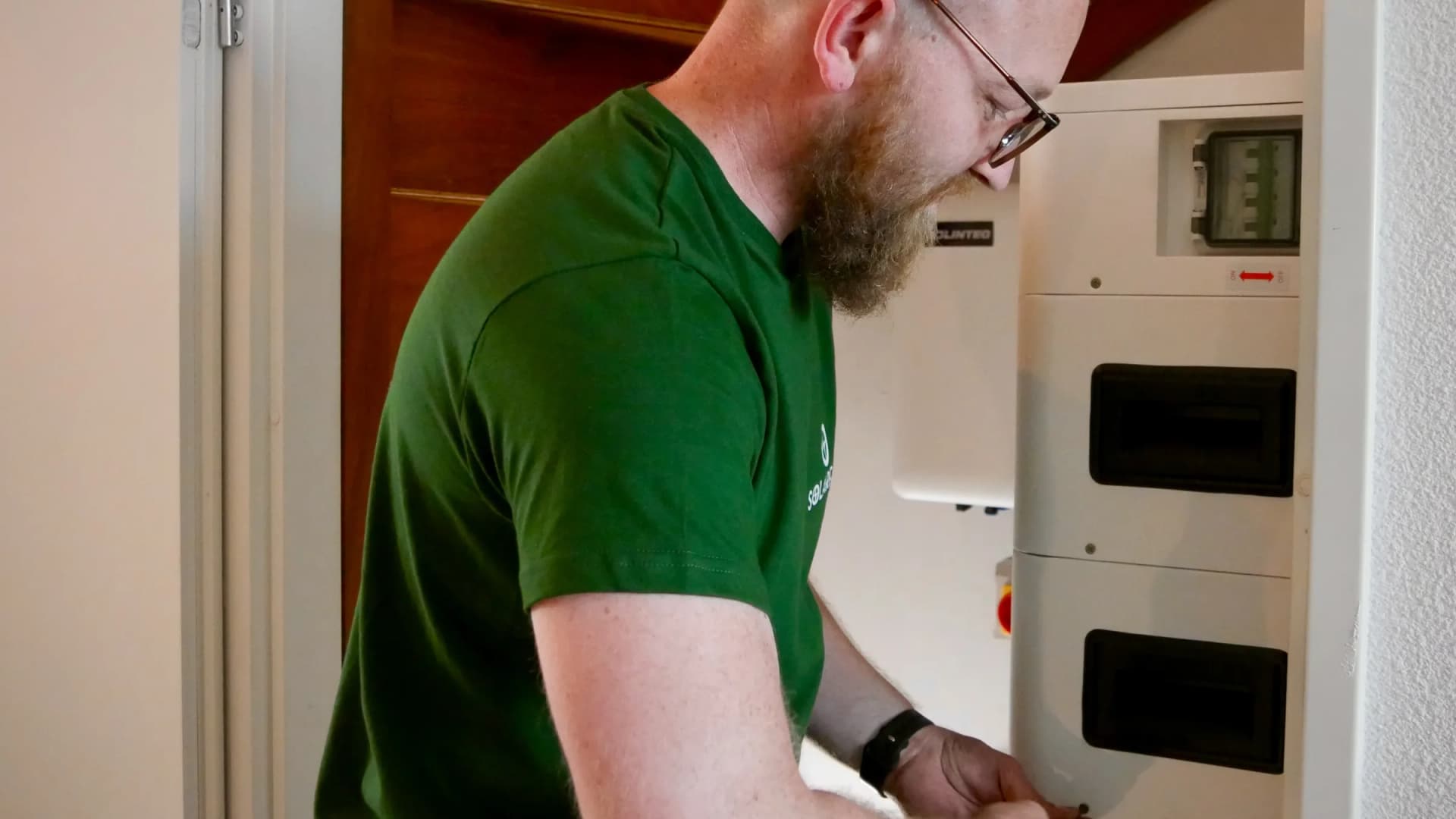
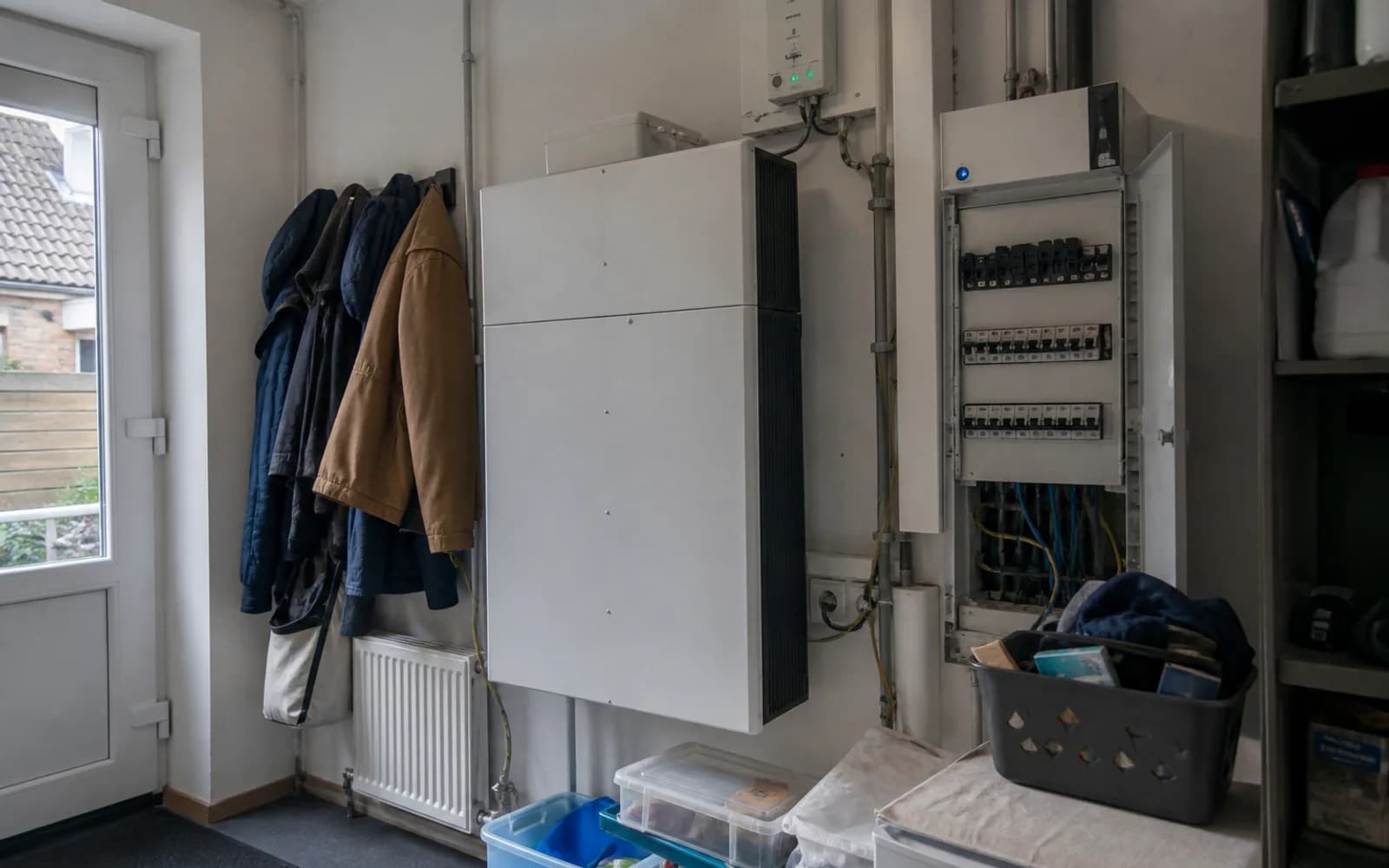
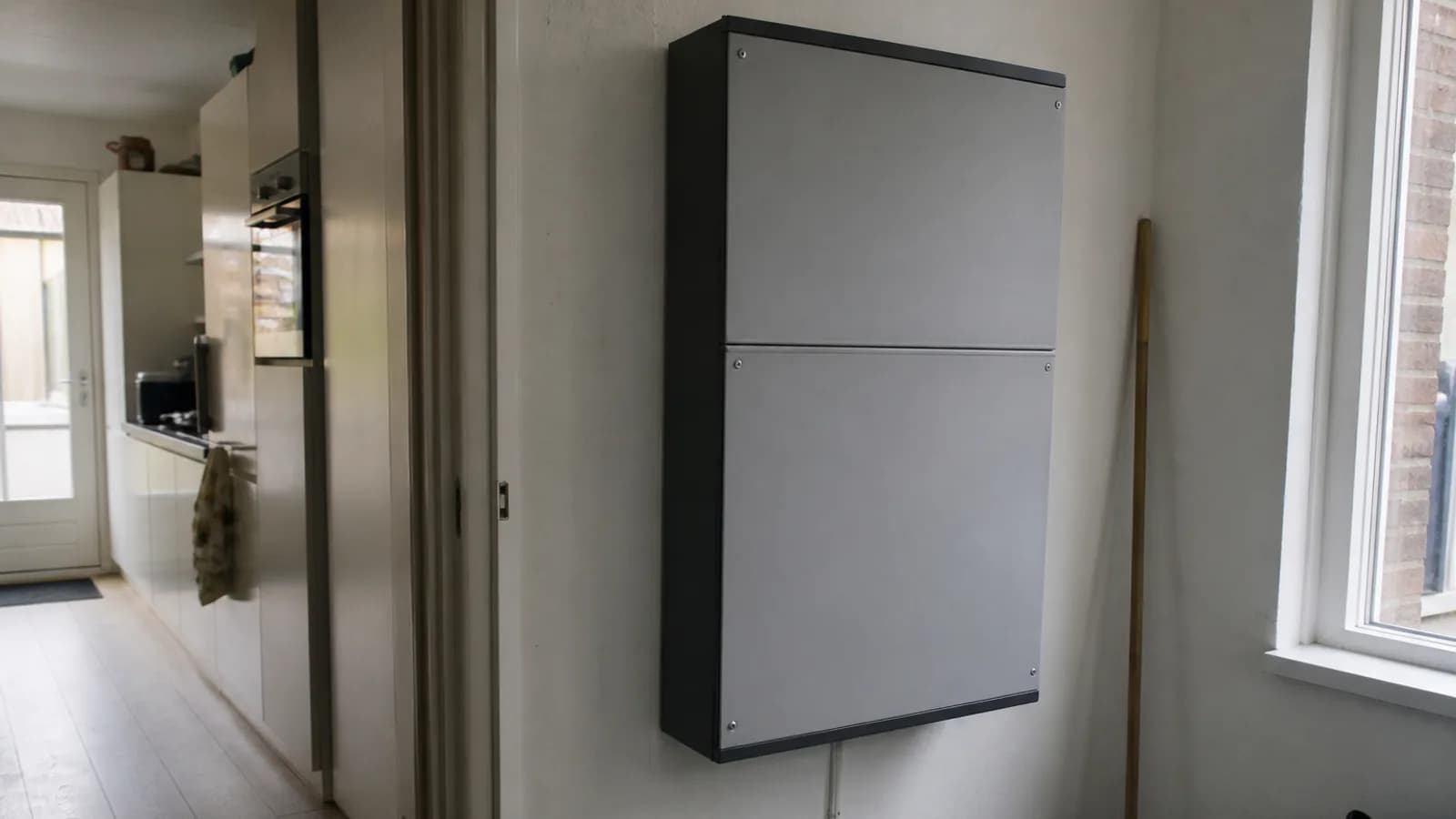
A permanently installed home battery (often called a thuisaccu in Dutch) from SolarFast starts at €5,445, including 21% VAT and standard installation, price level September 2026. The price rises mainly with capacity. Whether it pays off is about how much of your own power it lets you save, not price alone.
What does a home battery cost at SolarFast?
 Home battery
Our starting prices per capacity, including 21% VAT and standard installation, price level September 2026. Within the same capacity, the brand, single- or three-phase and whether you get full backup make the difference.
- Around 5 kWh (5.1 to 7.1 kWh): starting prices €5,445 to €6,655
- Around 10 kWh (10.2 to 10.7 kWh): starting prices €6,353 to €8,773
- Around 15 kWh (14.2 to 15.9 kWh): starting prices €8,410 to €10,285
- Around 20 kWh (17.8 to 21.3 kWh): starting prices €9,378 to €11,858
- Around 25 kWh (25.5 to 26.5 kWh): starting prices €11,435 to €13,298
If your fuse box needs changing first, that is a separate line in your quote. Your quote always leads: it states the amount for your home and setup.
If you trade power with your battery, you can reclaim the VAT under conditions. Whether that works for you, you can see with the VAT refund check.
What sets the price?
The biggest factor is capacity: how many kilowatt-hours the battery holds. On top of that come power, brand, the inverter and the installation itself. A bigger battery costs more, but only earns more if you actually use that room.
| Cost item | What it moves | When it counts |
|---|---|---|
| Capacity | How many kilowatt-hours the battery holds. That is the biggest item. | Always. More kWh costs more, but only if you actually use that room. |
| Power | How fast the system charges and discharges. | Alongside capacity, in the same calculation. |
| Brand | Build, warranty and how the system is steered. | When you compare systems side by side. |
| Inverter | Which inverter goes with the battery and how it works with your current setup. | Varies by setup; your quote shows what is included. |
| Installation | Fitting and connection, not only the battery in the box. | Always for a fixed install. |
| Fuse box | An upgrade of the consumer unit. | Only if the box needs changing first, as a separate line. |
At SolarFast you see systems from roughly 5 to 26.5 kWh; the starting prices per capacity are at the top of this page.
If you search for thuisaccu costs, thuisaccu price or the price of a battery for your solar panels: that is the same question as for a home battery. The words swap in search; the maths stays capacity, installation and what you save.
Payback and return
Home-battery return is not a fixed folder percentage. It is the gap between power you would otherwise buy at a high rate and power you use from storage, minus charge and discharge losses. The more of your evening and night use comes from the battery, the stronger that saving.
That is why there is no national payback period that fits everyone. Purchase cost, capacity, your tariff, feed-in payment, how much you use in the evening, and whether you can still use net metering all matter. We calculate it on your usage instead of promising one figure.
A home battery is what makes evening use of your own solar power possible: charge by day, discharge later. Panels alone mainly generate during daylight; without storage, evening power still mostly comes from the grid.
Allow for charge and discharge losses: not every kilowatt-hour you store comes back one-for-one. Your quote shows what that means for your capacity, so payback does not look prettier than practice.
When does a home battery pay off?
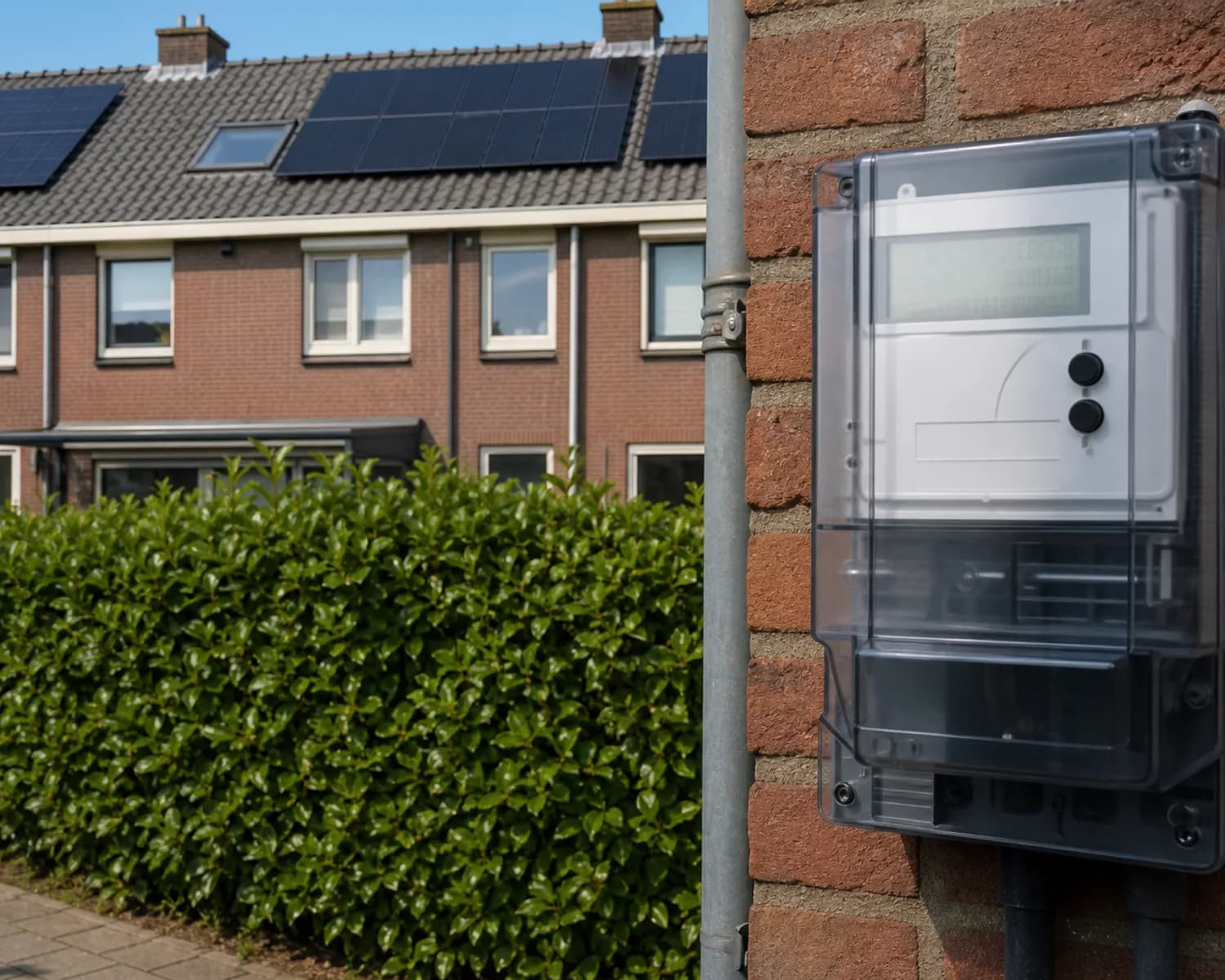
A battery pays back by letting you use power yourself that you would otherwise buy at a high rate. That works best if you use a lot in the evening, if the feed-in payment is low, or if you have a heat pump or EV charger. Net metering ends on 1 January 2027; storing your own power then matters more. Read more on our net metering page.
On our with versus without home battery comparison page we put the trade-offs side by side, so you can see when storage makes sense for your situation.
There is a side benefit too: a permanently installed system of at least 5 kWh, combined with solar panels, counts toward your home's energy label. Plug-in batteries do not. The effect on your label is small, but a better label can earn you a discount on your mortgage rate. The conditions and figures are in our article on home batteries and the energy label.
Net metering and dynamic rates
Until 31 December 2026 full net metering applies: feed-in is settled on your annual statement. That often makes storage less urgent today than after 2027, when you receive a payment for feed-in instead of offsetting. With a dynamic energy contract through our partner Frank Energie you can also charge when power is cheap.
Financing via the Warmtefonds
You do not always have to pay in one go. Through the national Warmtefonds you can finance a home battery under conditions: among others solar panels (or install them at the same time), a fixed install by an installer (not a plug-in battery), and a maximum loan amount for the battery line. Current conditions are on that page.
Separate from loans: also see our pages on subsidy and VAT reclaim. What applies to you, we state clearly in your quote.
How SolarFast does the maths
We look at your yearly use, how much of it falls in the evening, your feed-in payment and your tariff. From that follows how much a battery saves you per year and within what period it pays back.
You get a no-obligation quote within 24 hours (SolarFast service) with the amount for your fuse box, setup and consumption. The starting prices above are the baseline; your quote leads.
Solar panels are still a smart investment in 2026. A few things matter if you want the most from your own power.
Your energy use
Planning to drive, cook or heat electrically? Factor that into how many panels you install now.
Spread the yield
Spread panels across roof faces so you generate through the day and use more of your own energy.
Your data
Choose a system with its own 4G connection and data storage in Europe so your information stays secure.
Boost your energy
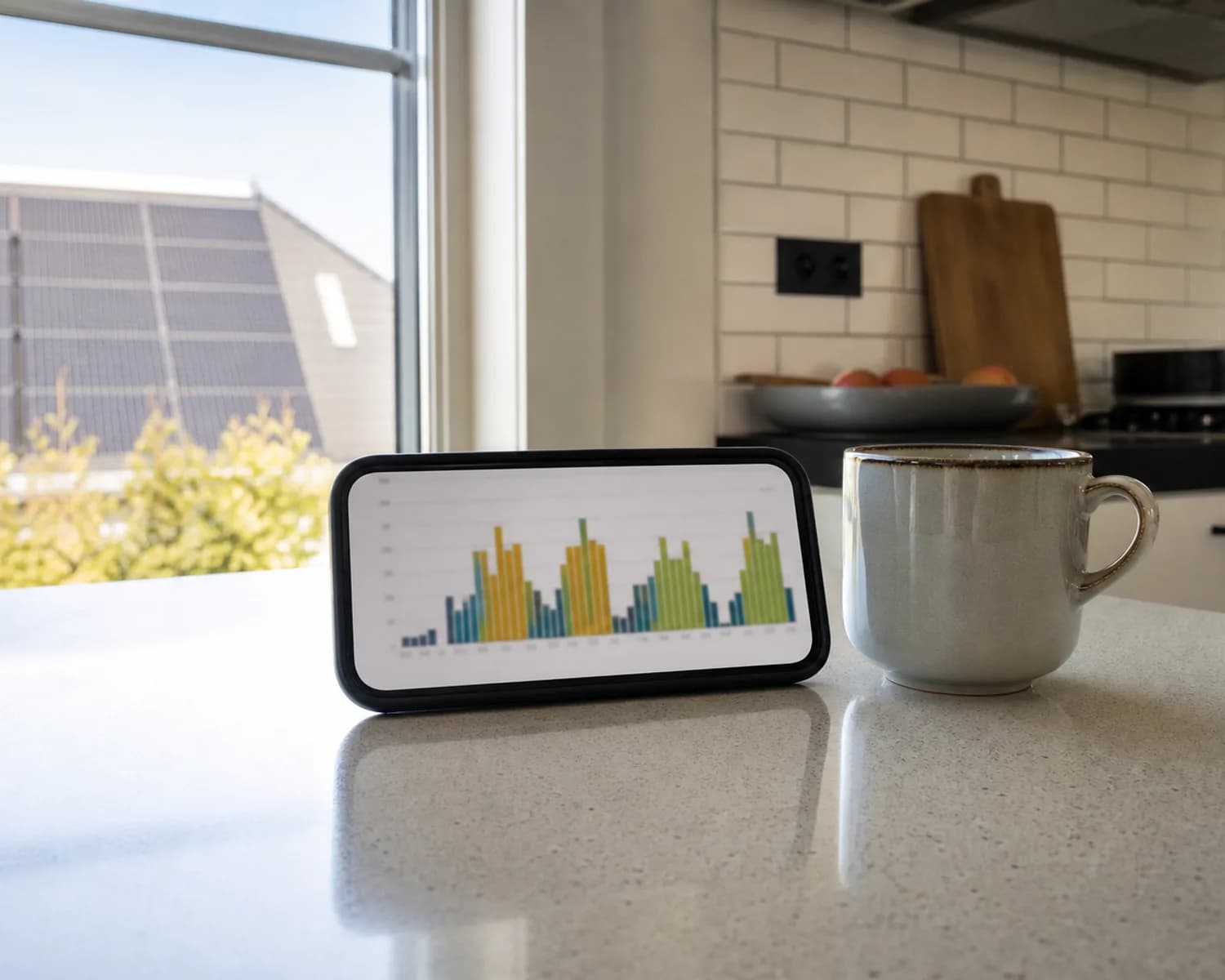
A smart home battery stores today's power for later, so you use more of your own electricity after sunset.
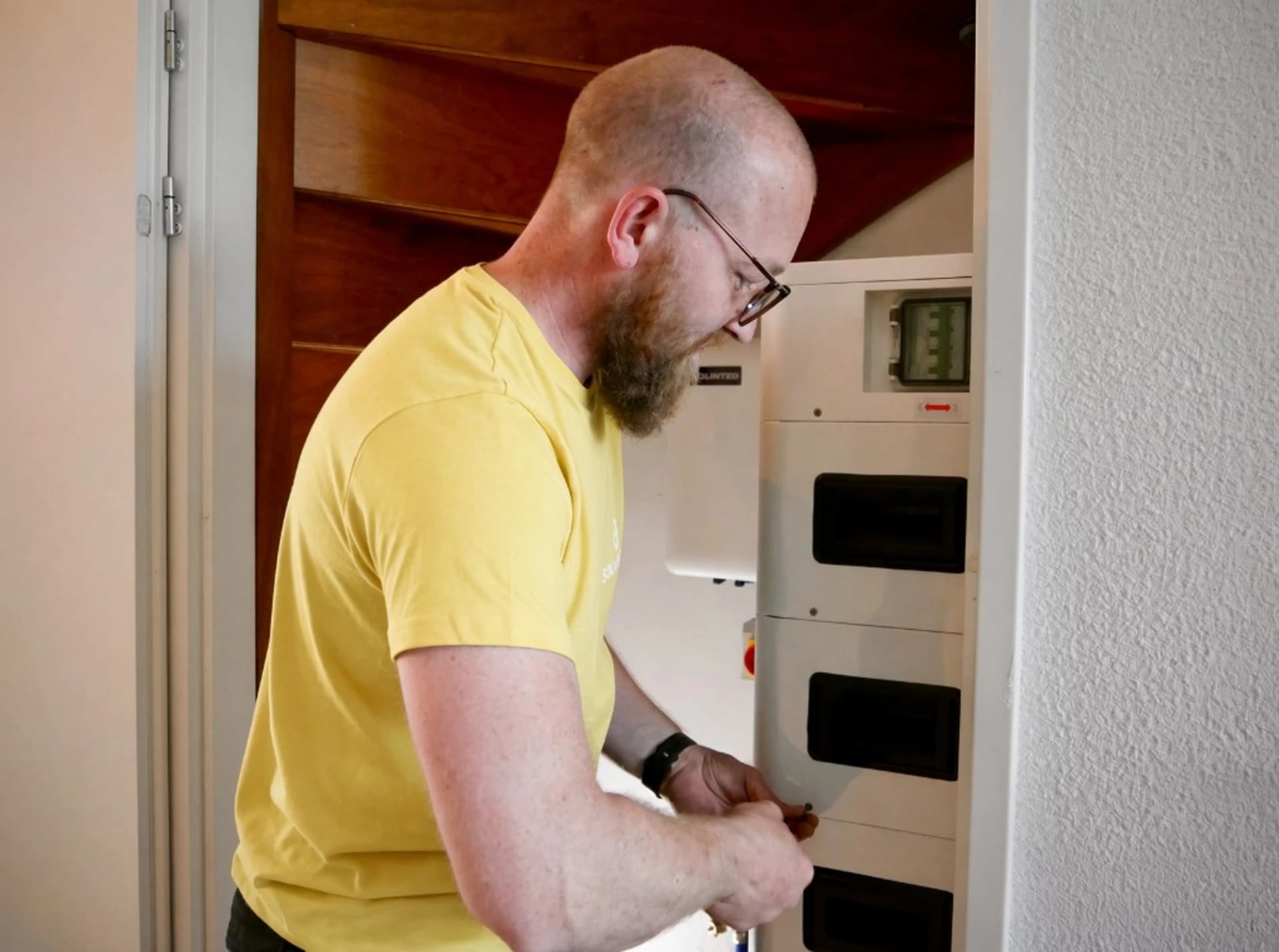
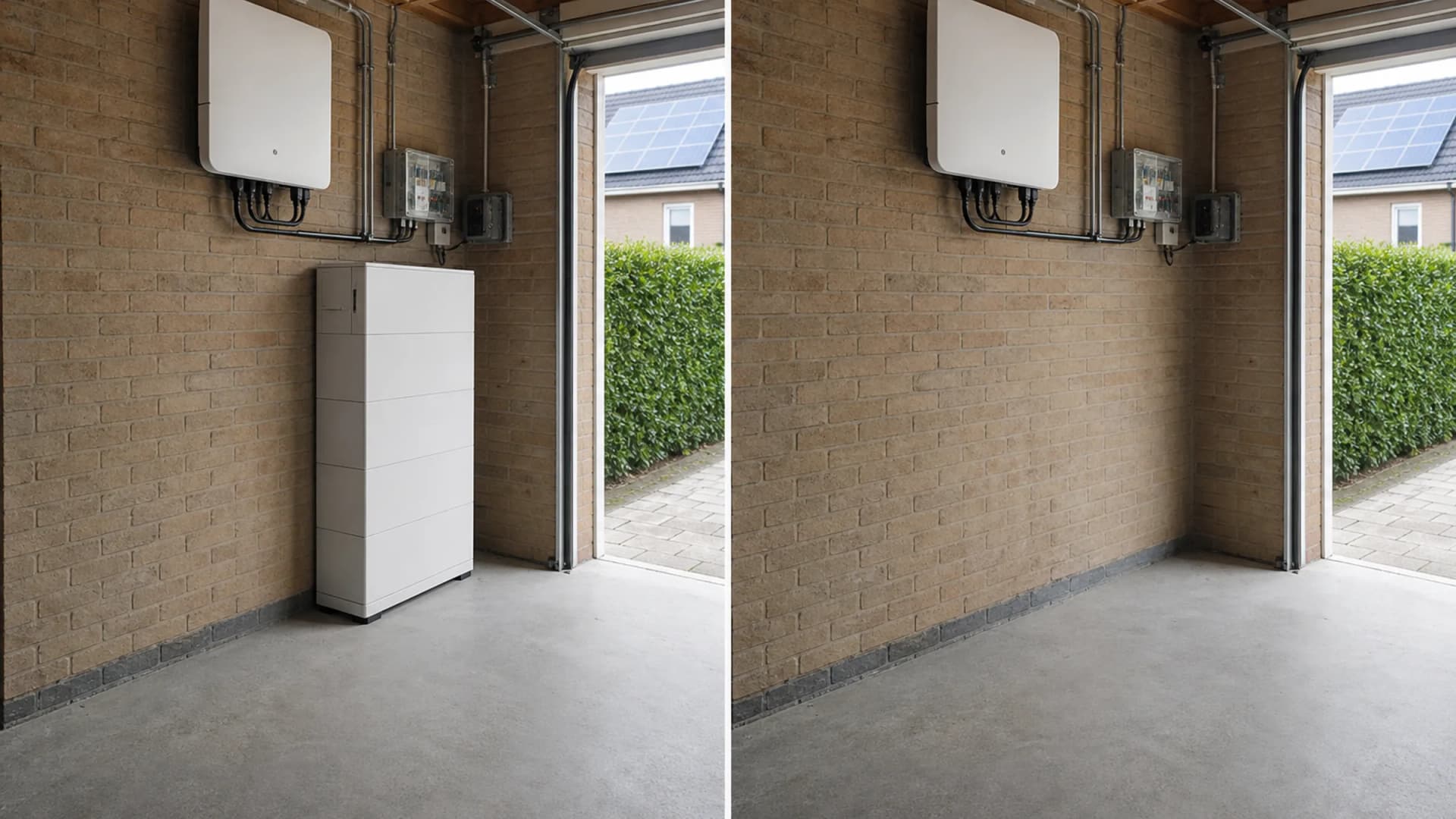
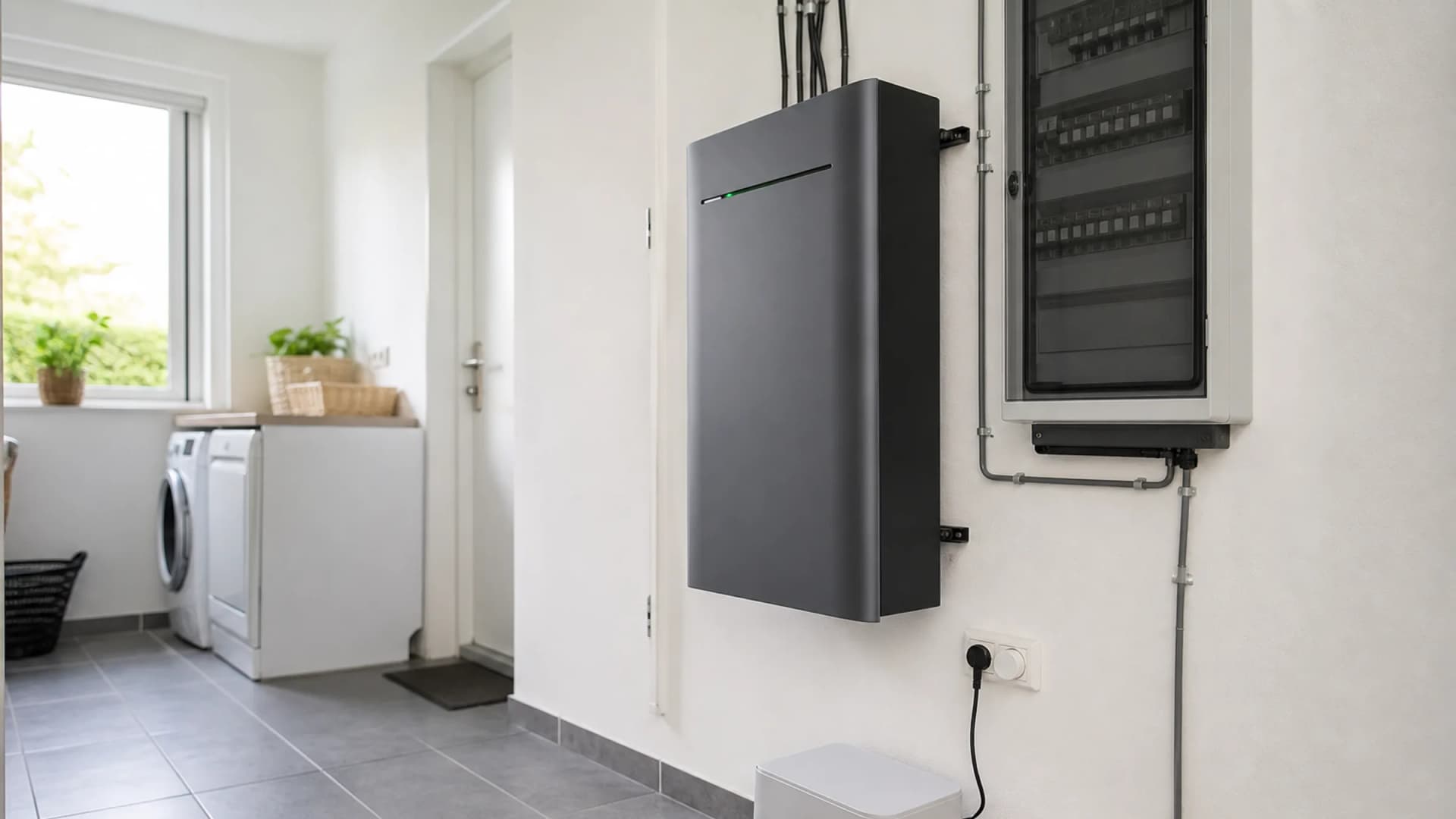
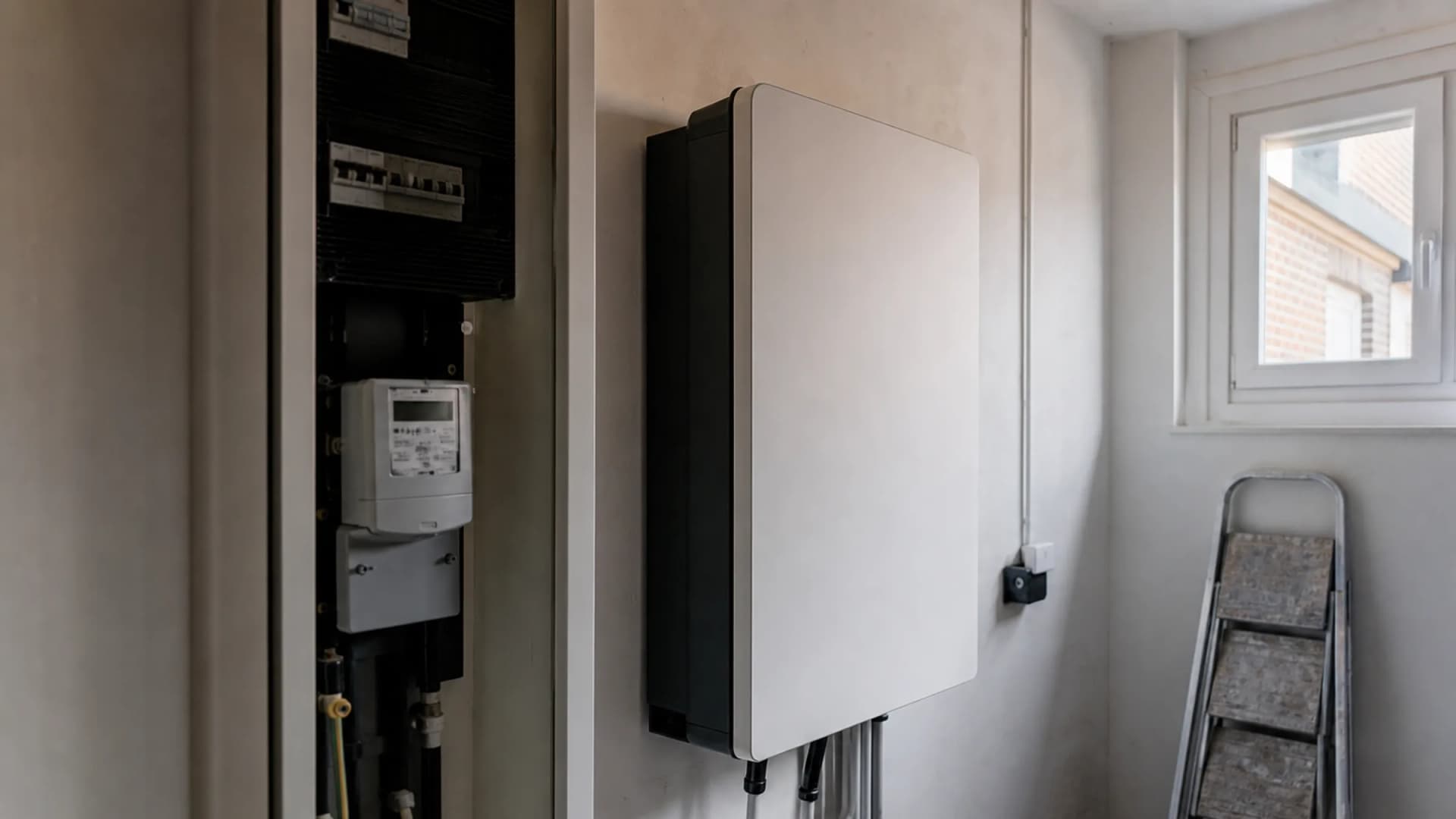
We install your home battery
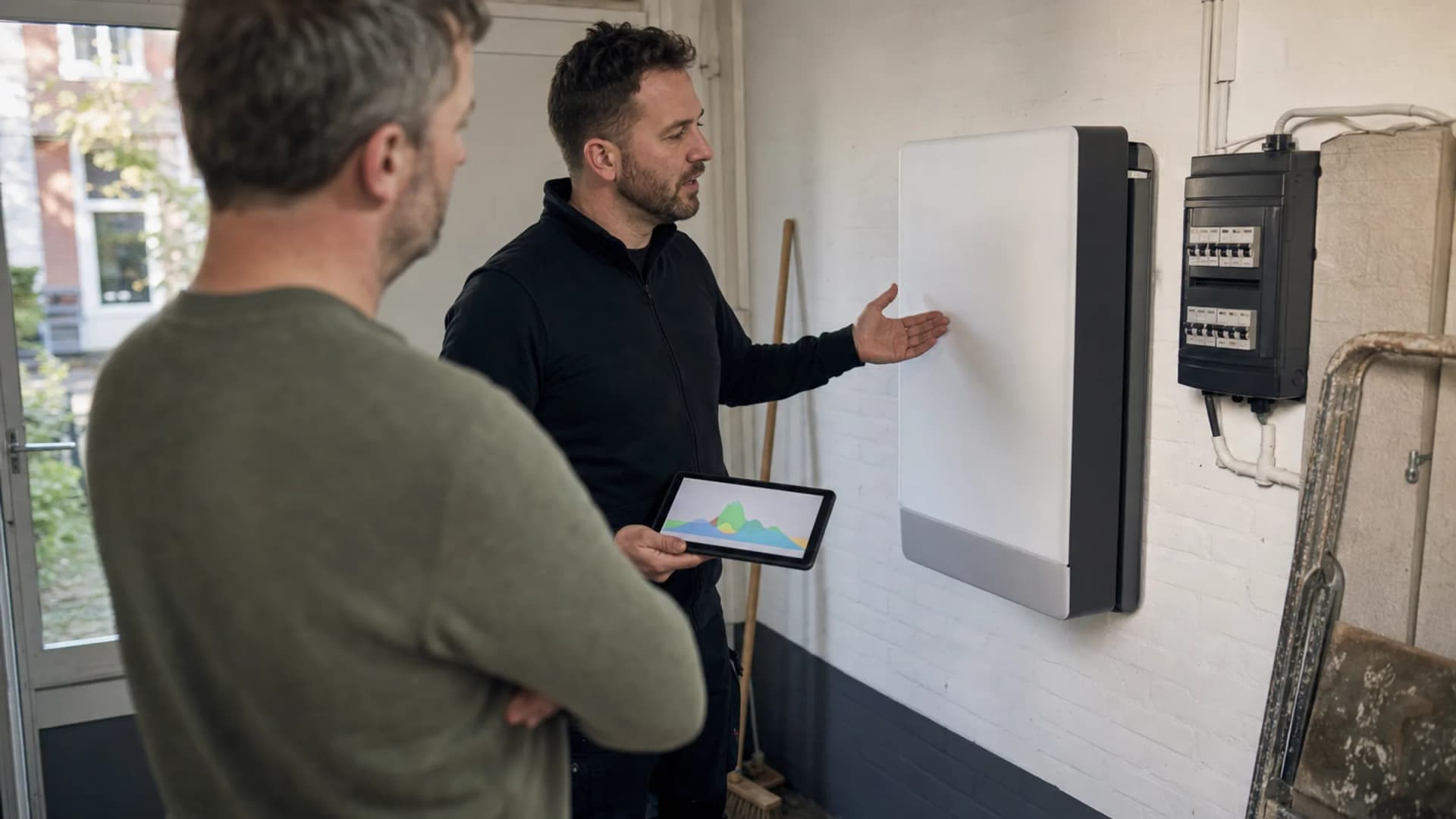
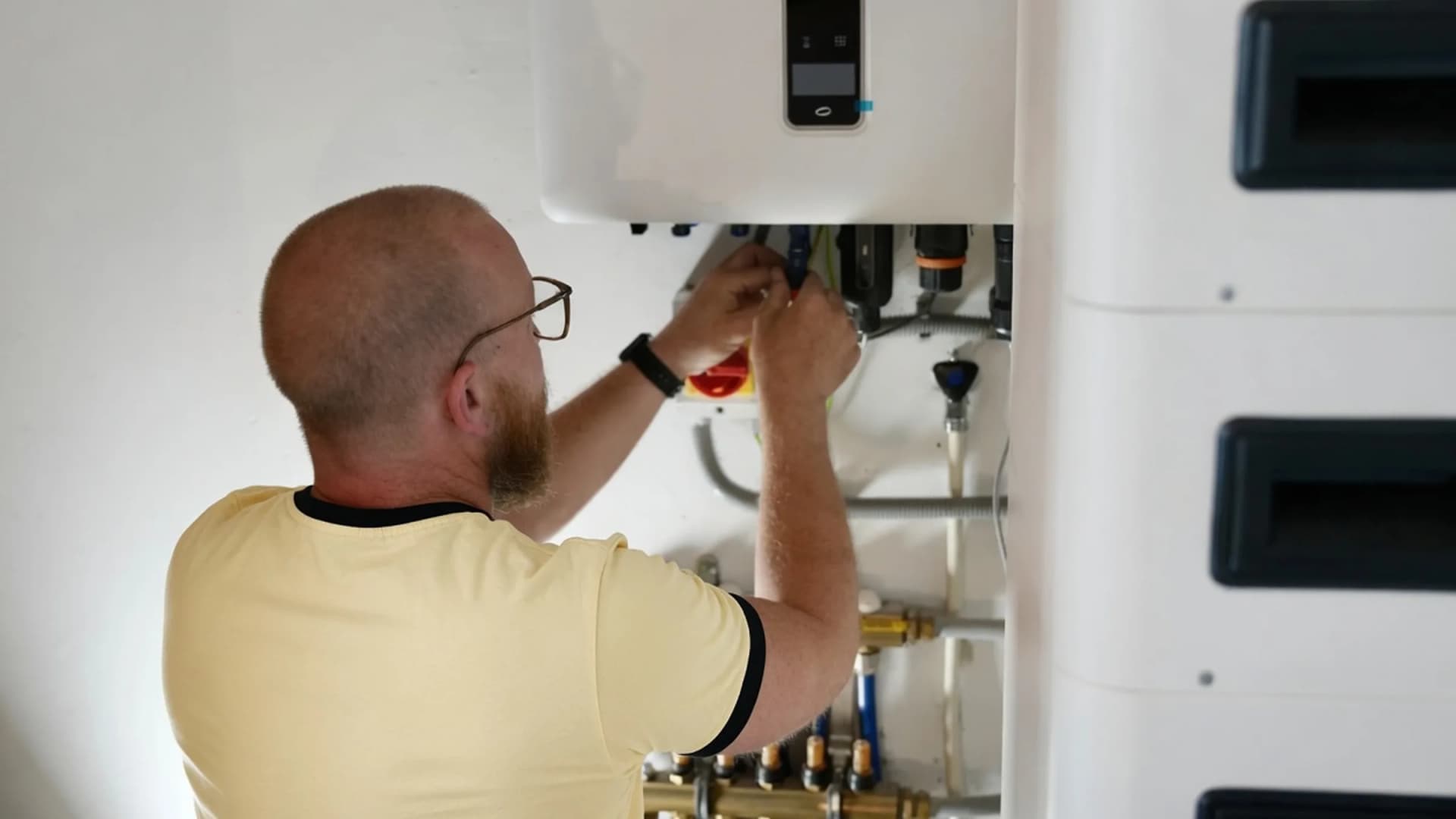
Usually within three weeks. Our installers fit the battery neatly and safely by your fuse box. We leave your home clean and make sure you know exactly how it all works.
- Charge smart when power is cheap
- Keep power until you need it
Frequently asked questions
Same product, two labels. At SolarFast from €5,445 including 21% VAT and standard installation; the prices per capacity are above. A fuse box change is a separate line in your quote.
Around 20 kWh (17.8 to 21.3 kWh) our starting prices run from €9,378 to €11,858, including 21% VAT and standard installation (price level September 2026). The exact capacity, brand and backup decide where you land in that band.
Not one national percentage. Return depends on how much expensive grid power you replace with stored own power, plus your tariff and feed-in payment. We calculate that for your usage.
It depends on your use, your tariff and the feed-in payment. The more of your own power you use later in the day, the faster. There is no fixed term that fits everyone; we calculate it for you.
It depends on your evening use, tariff and feed-in payment. Until end 2026 you still benefit from full net metering, so storage is less urgent for some households. After 1 January 2027 that shifts. We calculate it for your situation.
Often yes, including via the national Warmtefonds if you meet their conditions. In your quote we list the options that fit your situation. Current Warmtefonds conditions are in the financing section above.
Enough to cover your evening use, not so much that the battery never fills. We size it to your real consumption.
Yes, if it stores at least 5 kWh, is permanently connected and you have solar panels. Plug-in batteries do not count. It only counts once you have a new label drawn up.

Discover what smart energy can do for you
In about an hour you get insight into your savings, the options for your home and when the investment pays back. Straightforward, honest advice so you know exactly where you stand.
Smart energy at home
- Upgrade your home with our smart battery
- Our solar panels deliver up to 25% more energy
- A heat pump to minimise your energy use
- Charge your electric car easily at home with an EV charger
Booking an advice call is easy
Fill in your details below. Within a day we will contact you to schedule a no-obligation advice call together.
Related articles