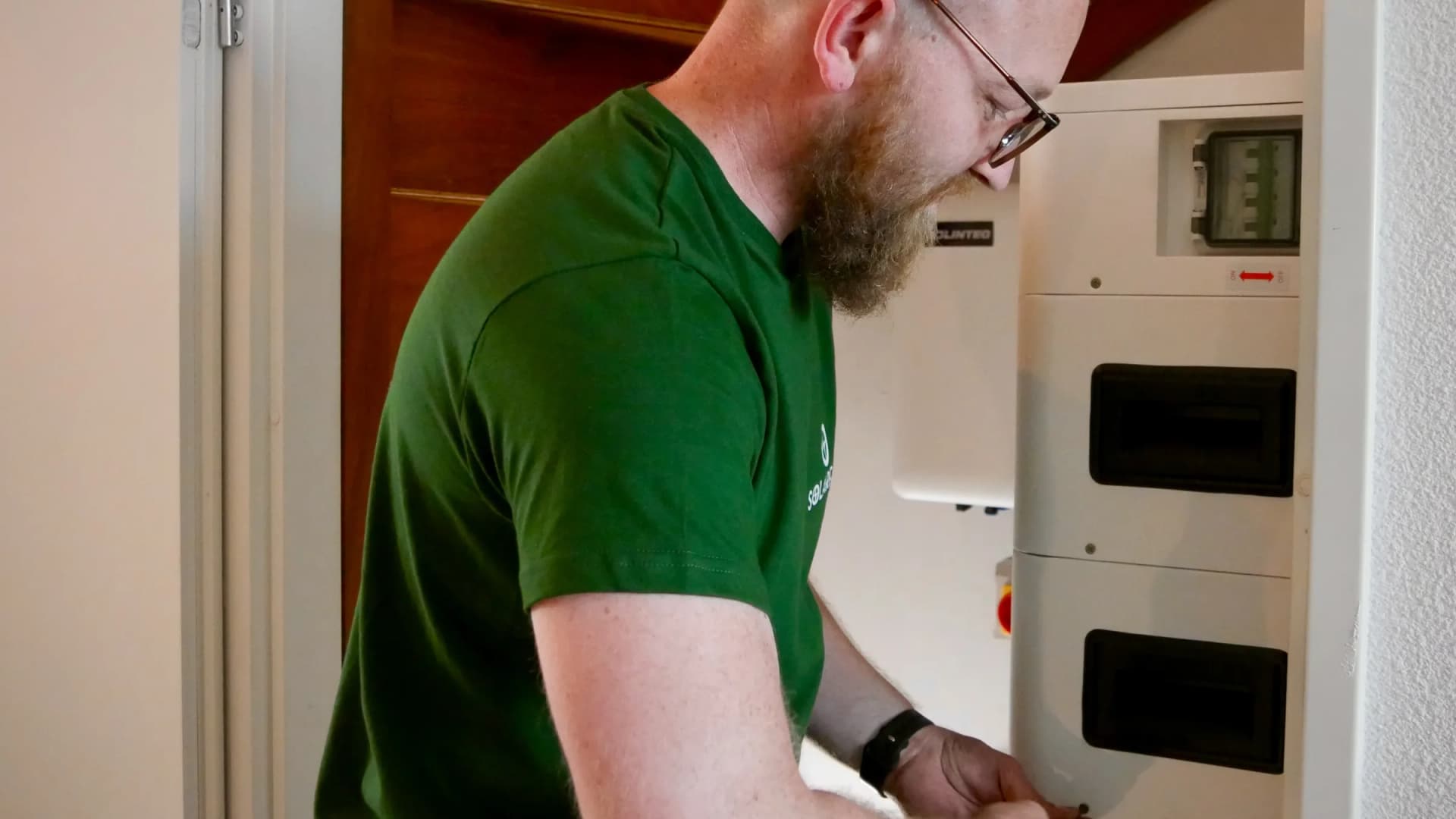
Home batteries now count toward your energy label
Posted on 6 min read
Since 29 May 2026 a fixed home battery from 5 kWh counts toward the Dutch energy label. The conditions and what a better label means for mortgage and sale.
All articles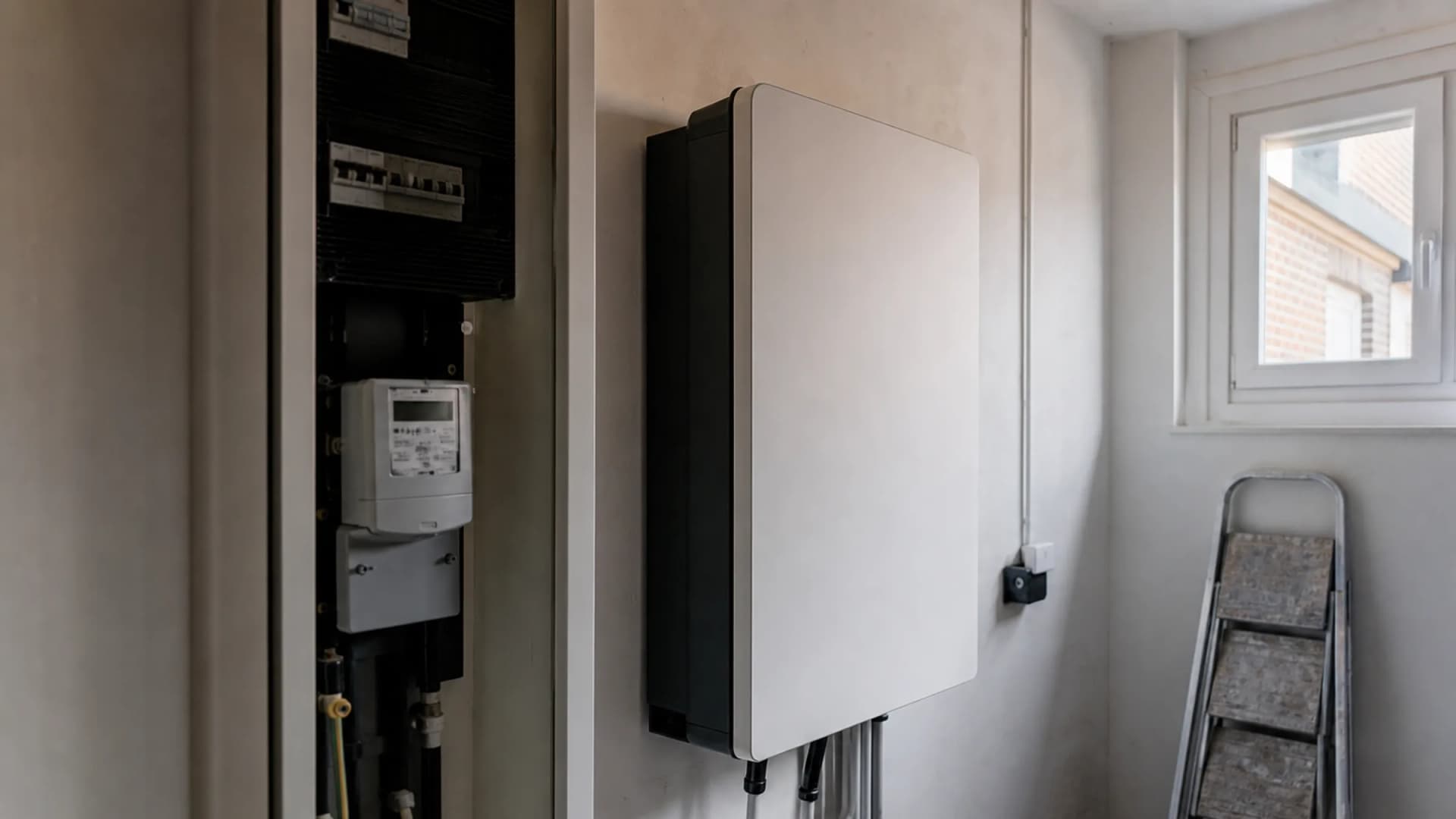
The question keeps popping up, from birthday parties to Instagram: does a home battery really count toward your energy label now? The short answer: yes. Since 29 May 2026 the official method behind the Dutch energy label includes battery storage for the first time. But there are conditions, and the effect is smaller than some videos suggest. This article covers what exactly changed, which requirements your battery must meet and what a better label concretely gets you at the bank and at sale. Considering a home battery? Then you will also read what we watch for during installation.

What changed on 29 May 2026?
 Smart home battery
The energy label is calculated with a legally prescribed method, the NTA 8800. That method was renewed per 29 May 2026 following the European directive on the energy performance of buildings (EPBD IV). New in it: electricity storage now counts positively. Until that date a battery did nothing for your label, however big it was.
The label itself got a new design too. On labels registered since 29 May 2026, battery storage is listed as a separate item, next to your solar panels and insulation. Buyers and tenants see at a glance that a home can store power. The full explanation of the renewed label is on the RVO website (Dutch).
The conditions: when does your battery count?
Not every battery counts. Worth knowing: these requirements are not listed on a single government overview page, but follow from the NTA 8800 calculation method and the assessment protocol energy advisers work with. Three things are decisive:
| Condition | What is required | What does not count |
|---|---|---|
| Capacity | At least 5 kWh | Smaller systems |
| Connection | Fixed to the installation, to NEN 1010 | Plug-in battery in a wall socket |
| Generation | Solar panels on the roof | Battery without your own generation |
These requirements follow from NTA 8800 and the assessment protocol, not from a single government overview page.
1. At least 5 kWh of storage capacity. Smaller systems fall outside the calculation. This threshold is printed on the renewed label itself: only batteries of 5 kWh or larger count toward the energy label, as shown in the RVO example label (PDF, Dutch). 2. A fixed connection. The battery must be permanently connected to the electrical installation, installed to the NEN 1010 safety standard. Plug-in batteries that go into a wall socket do not count, even if they are big enough: they qualify as a loose appliance, not as part of the home. 3. Solar panels on the roof. The valuation is about storing power you generate yourself. A battery without your own generation does nothing for your label.
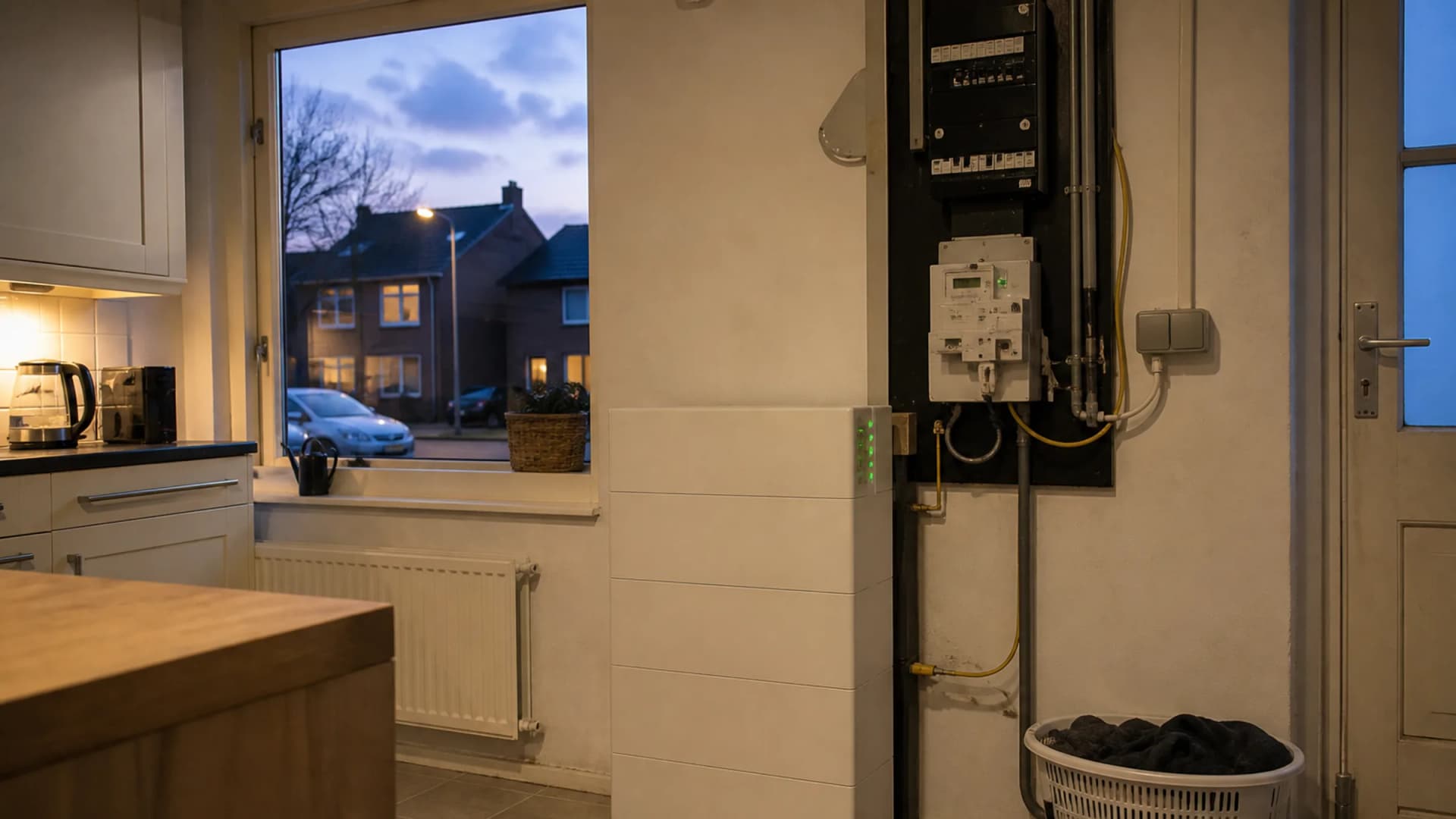
All home batteries we install, such as HyxiPower, KStar, Sungrow and Dyness, are permanently connected in or near the meter cupboard. When sizing we look at your consumption, and in practice most setups end up at or above that 5 kWh threshold.
What does it do to your label?
If you meet the conditions, your home receives a correction of up to roughly 2 percent on the energy performance score. That figure comes from the explanatory notes to the updated calculation rules: until 2030 storage is valued pragmatically at up to about 2 percent better energy performance, because your own generation already weighs in heavily. The technical explanation is on Gebouwenergieprestatie.nl (Dutch), the knowledge platform behind the energy label framework. So do not count yourself rich: two percent is rarely enough for a label jump, unless your score already sits against a class boundary. Then the battery can be just the push from B to A.
Important: your existing energy label does not change by itself. Labels issued before 29 May 2026 remain valid, up to ten years after the assessment, and are not adjusted. If you want your battery to count, you have a new label drawn up by a certified energy adviser. That usually costs a few hundred euros, so pick a sensible moment: at sale, new rental or when refinancing your mortgage.
Better label, lower mortgage rate
Banks increasingly tie mortgage rates to the energy label. ING has worked with a rate per label since April 2025, from G through A++++. As of mid 2026, label A or higher earns a 0.20 percentage point discount there compared with label E or lower; label B gets 0.12 and label C 0.06 percentage points. If your registered label improves, ING adjusts the rate automatically during your fixed-rate period. Rabobank gives a sustainability discount of 0.15 percentage points for a final registered label A or higher.
What does that mean in euros? On a 500,000 euro mortgage, a 0.14 percentage point difference (the step from label C to A at ING) is about 700 euros of gross interest per year, almost 60 euros per month. The full 0.20 percentage point difference runs up to 1,000 euros per year, over 80 euros per month. How much of that lands in your monthly payment depends on your mortgage type and your bank, and the discount applies with a new mortgage or a new fixed-rate period. Worth recalculating, especially if you are refinancing anyway.
And your home value?
The label also matters at sale. Research by brainbay (Dutch), the data lab of the Dutch realtors association NVM, shows that the step from label C to A makes a home about 4.7 percent more valuable on average. Jumps from a red or yellow label (D through G) to a green label yield more in percentage terms. On an average Dutch home that quickly adds up to tens of thousands of euros.
Be honest in your expectations though: those value jumps come from the full package, so insulation, solar panels and for example a heat pump. The battery is the push, not the engine. But it now shows on your label, and that makes your home more attractive to buyers who want to keep the energy bill low.
A smart moment to run the numbers
The label bonus comes on top of the reasons a home battery is becoming more interesting anyway. On 1 January 2027 the Dutch net metering scheme ends; storing power and using it later becomes structurally more valuable. What exactly changes is covered in our article on the end of net metering.
If you are considering a battery, look beyond the label bonus. Your usage profile, your connection and the steerability of the system determine the return. During the survey we take all of that into account, including the fixed connection and the capacity needed to count toward the energy label.
Conclusion
In short: since 29 May 2026 a permanently installed home battery of at least 5 kWh, combined with solar panels, counts toward the energy label. The effect is a modest correction of up to roughly 2 percent, which mainly matters if you sit against a label boundary. The real gain of a better label is at the bank and at sale, and you capture that with the full package of home improvements.
Want to know whether a home battery works in your situation, and whether a label step is within reach? Put your situation to us and we will run the numbers with you and watch the energy label requirements during installation.
Read more
- RVO: the renewed energy label explained (new design per 29 May 2026, Dutch)
- RVO: example of the new energy label, listing battery storage from 5 kWh (PDF, Dutch)
- Gebouwenergieprestatie.nl: NTA 8800:2026 changes, storage valued at up to about 2 percent (Dutch)
- ING: mortgage rate per energy label (Dutch)
- Rabobank: sustainability discount on your mortgage rate (Dutch)
Solar panels are still a smart investment in 2026. A few things matter if you want the most from your own power.
Your energy use
Planning to drive, cook or heat electrically? Factor that into how many panels you install now.
Spread the yield
Spread panels across roof faces so you generate through the day and use more of your own energy.
Your data
Choose a system with its own 4G connection and data storage in Europe so your information stays secure.
Boost your energy
A smart home battery stores today's power for later, so you use more of your own electricity after sunset.
We install your home battery
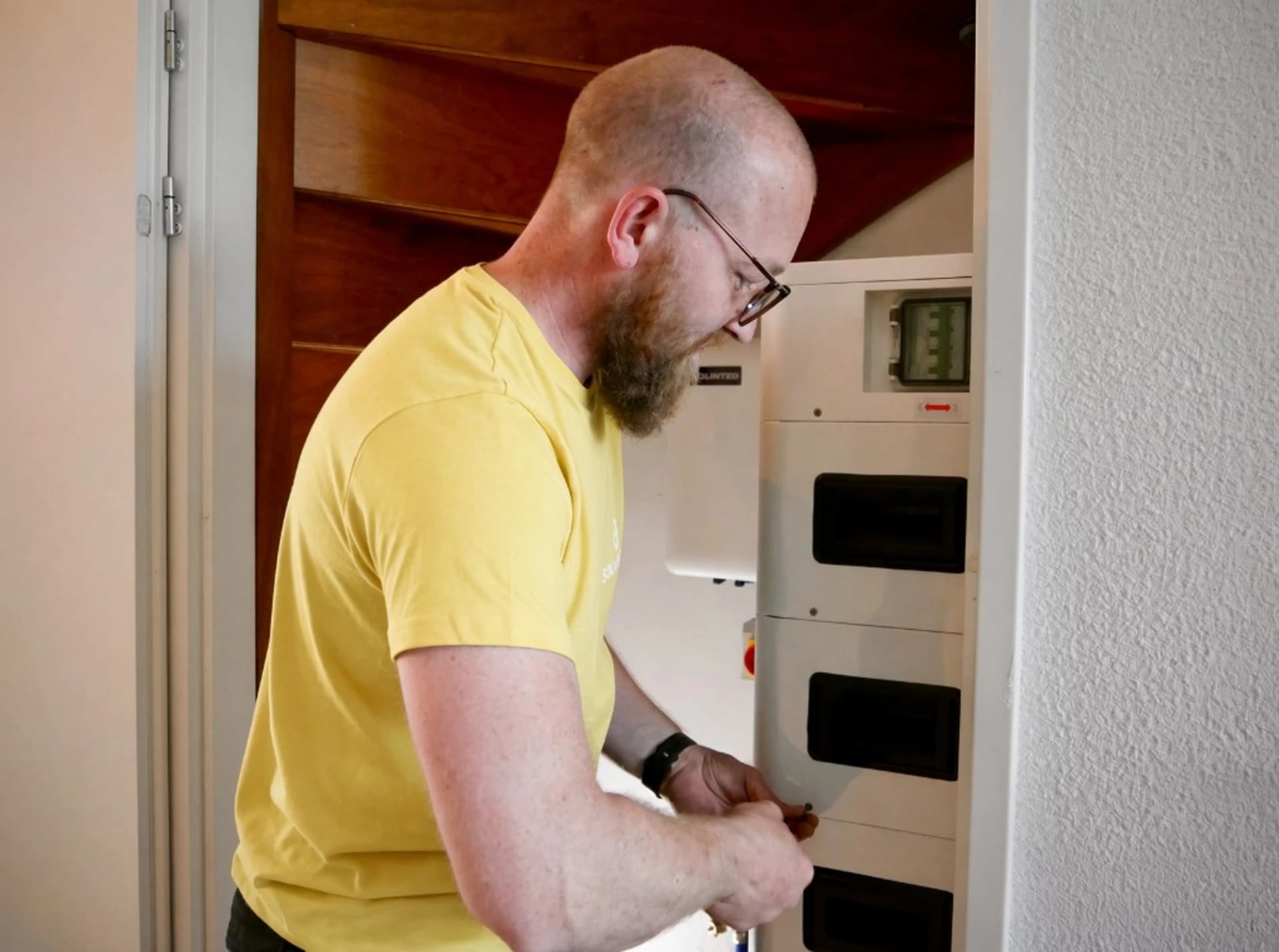
Usually within three weeks. Our installers fit the battery neatly and safely by your fuse box. We leave your home clean and make sure you know exactly how it all works.
- Charge smart when power is cheap
- Keep power until you need it

Discover what smart energy can do for you
In about an hour you get insight into your savings, the options for your home and when the investment pays back. Straightforward, honest advice so you know exactly where you stand.
Smart energy at home
- Upgrade your home with our smart battery
- Our solar panels deliver up to 25% more energy
- A heat pump to minimise your energy use
- Charge your electric car easily at home with an EV charger
Booking an advice call is easy
Fill in your details below. Within a day we will contact you to schedule a no-obligation advice call together.
Related articles