How home battery VAT refund works
Updated on 9 min read
Home battery VAT refund: if your battery trades in power, you can reclaim the VAT on purchase and installation. Conditions, steps and KOR timing.
All articles
If you trade power with your home battery, you can reclaim the VAT on purchase and installation. On €12,100 including VAT that is €2,100. You usually need an EMS, a dynamic contract and everything in the same name, and you must not be in the KOR at purchase. After that you pay VAT on the power you sell, and there may be a correction for private use.

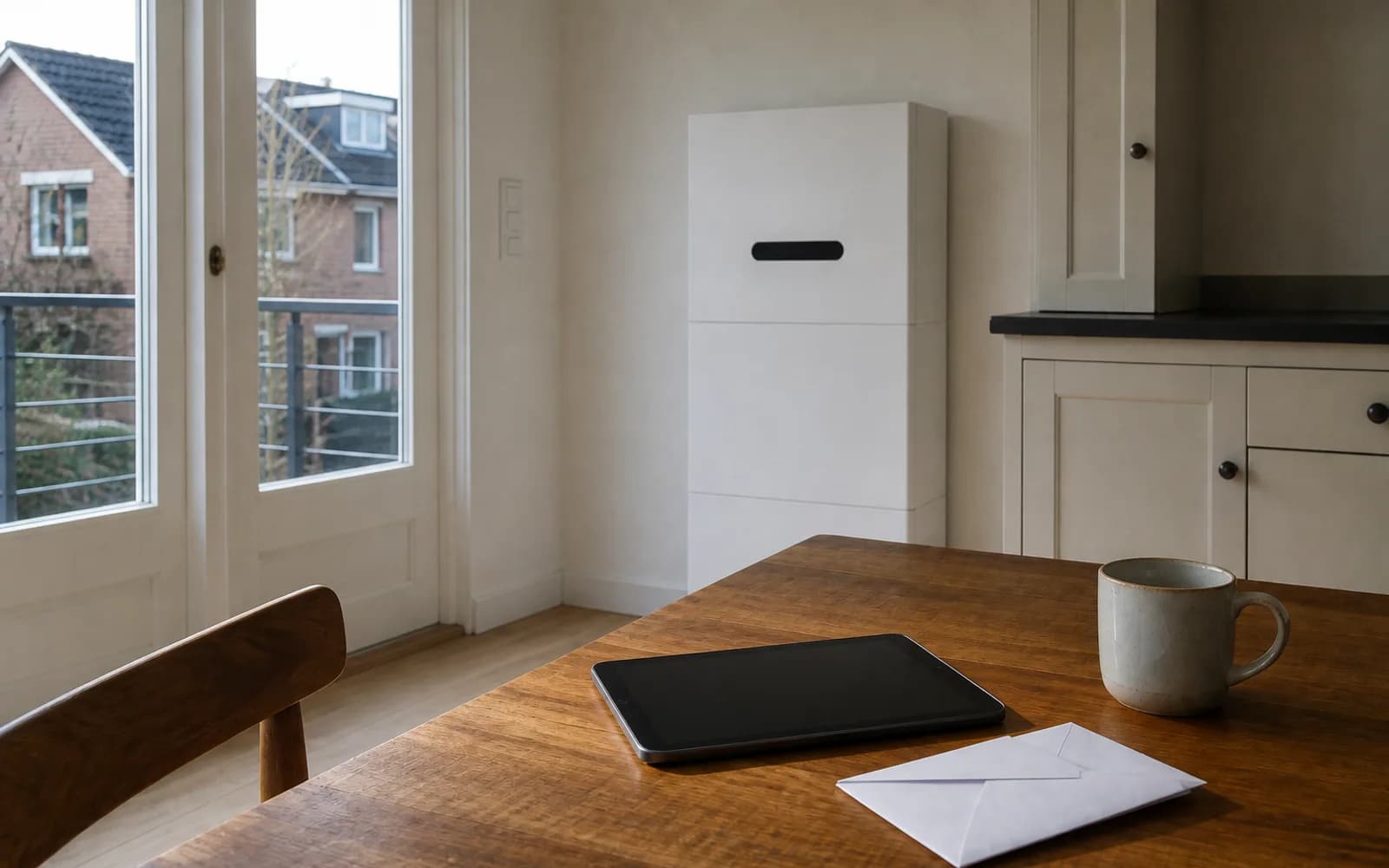
Why the VAT can be reclaimed
 Home battery
A home battery carries the standard 21 percent VAT; the zero rate for solar panels does not apply here. Since 2024 you can nevertheless get that VAT back under conditions. The reasoning: if your battery buys power when it is cheap and feeds back for a payment, you are trading in power. That makes you an entrepreneur for VAT purposes, and entrepreneurs may deduct the VAT on their investment.
A sample in euros
21 percent VAT on purchase
sample including VAT
€12,100VAT
€2,100excl.
€10,000incl.
€12,100
Trading in power
no trading
€0with trading
€2,100
Deduct the VAT on the investment
VAT you reclaim
€2,100
On a purchase of €12,100 including VAT the VAT is €2,100. So this is not a subsidy but a tax route, with real obligations attached. The other arrangements around home batteries are covered in our overview of home battery subsidies. This page covers the one route that yields the largest amount for most private owners: the VAT refund itself.
The conditions in brief
The Dutch Tax Administration checks whether you genuinely trade: the battery has an energy management system (EMS) that steers on the power price, you have a dynamic energy contract and your energy supplier pays you for what you feed back. The purchase invoice and the energy contract must be in your name, and at the time of purchase and installation you must not be in the small business scheme (KOR). If you only use the battery privately, there is no refund. For the dynamic contract we work with Frank Energie. If you take their contract, or already have one, we link Hyxi and KStar to it. Dyness is steered through Smart Grid One. Sungrow steering is set in the quote. Frank is our partner, not an extra Tax Administration condition.
Not sure whether your situation fits? Take our free VAT refund check first: a few questions, an instant first estimate. Not tax advice, but a useful first filter.
Step by step to the refund
How you reclaim the VAT
Check your situation
In the KOR? Deregister first
Dynamic contract
Register as a VAT entrepreneur
Buy and have it installed
Reclaim the VAT
Quarterly filing and private use
KOR participants first deregister in Mijn Belastingdienst Zakelijk. If you do not yet have a VAT number, use the form Opgaaf startende onderneming. Enter the VAT on purchase and installation as input tax as soon as possible, and in any case within 6 months after the year of purchase. For home batteries there is no flat rate.
Worked example: reclaiming and partly repaying
You get the full VAT back if you allocate the battery to your business assets, but you repay VAT each year on the share you use privately. Take a battery of €12,100 including VAT that is used 45 percent privately.
| Item | Amount |
|---|---|
| Purchase including VAT | €12,100 |
| VAT you reclaim (21 percent) | €2,100 |
| Costs excluding VAT, spread over 5 years | €2,000 per year |
| Private share per year (45 percent) | €900 |
| VAT on private use, repaid yearly | €189 |
| Left of the refund after 5 years | €1,155 |
After 5 years the adjustment period ends and the yearly payment for private use stops. There is no flat rate for home batteries: you calculate the private share yourself, using your EMS data.
The €2,100 is 21 percent of €10,000 excluding VAT, not 21 percent of the €12,100 including VAT. On a price including VAT the VAT share is 21/121, about 17.4 percent. On €6,000 including VAT that is about €1,041.
On balance you keep €1,155 in this example: €2,100 back minus 5 times €189 for private use. Note that the net metering scheme ends on 1 January 2027, which can shift the balance between trading and private use. If you then use the battery more privately, you also repay more VAT.
Timing is critical with the KOR
Many homeowners with solar panels are in the KOR without realising it, because they once registered as solar panel owners or stay below the registration threshold. To reclaim VAT on the battery you must not be a KOR participant at the time of purchase and installation. Deregistering only takes effect on the first day of a calendar quarter and the Tax Administration needs 4 weeks to process it. So plan the deregistration well before the invoice date of your battery.
If you are too late, you may not deduct the VAT in full. An adjustment route remains: in the 4 years after the year of first use you can reclaim one fifth of the VAT each year, but only if that yearly amount is at least 500 euros. For an average home battery one fifth of the VAT quickly falls below that threshold, and then that route lapses too. Buying too early and deregistering too late genuinely costs money.
What comes with the refund
From the refund onwards you are liable for VAT. You file a return every quarter and pay 21 percent VAT on the payments you receive from your energy supplier. If you have solar panels, you also declare the VAT on that feed-in, even if you bought the panels at 0 percent VAT or your partner already reclaimed the VAT on them.
Want to return to the KOR later to be rid of the paperwork? You can, but if you rejoin within the 5-year adjustment period you may have to repay part of the reclaimed VAT. Above the threshold of 500 euros per year in deducted VAT, repayment applies, and VAT you previously deducted for solar panels counts towards it. Choose that moment deliberately.
Special situations
If you already run a business with a VAT number, the battery joins that existing administration and the deduction depends on your overall VAT position. That is bespoke work for your accountant. If the energy contract is in your partner's name, that needs attention: invoice and contract must be in the same name. And a battery without solar panels can also qualify, because the core is trading power, not generating it. In all three cases: investigate first, sign later.
What SolarFast looks at
Technically your installation must support the route: a battery with an EMS that trades on hourly prices and an inverter that registers feed-in properly. Our home batteries meet that. If you take a dynamic contract with Frank Energie, or already have one, we link Hyxi and KStar to it. Dyness is steered through Smart Grid One. Sungrow steering is set in the quote. Frank is our partner for dynamic contracts, not an extra Tax Administration condition: another dynamic contract can also work, if the invoice and the contract are in the same name. We put the invoice in the right name. During the quote we walk through the VAT route with you and align the planning, so a KOR deregistration does not trail behind the invoice date. We do not give tax advice; for the return itself we refer you to the Tax Administration or your adviser.
Want to know where you stand first? Take the VAT refund check or put your situation to us. What the battery itself costs is covered under home battery costs; whether a battery suits you at all is weighed up in the comparison with or without a home battery.
Solar panels are still a smart investment in 2026. A few things matter if you want the most from your own power.
Your energy use
Planning to drive, cook or heat electrically? Factor that into how many panels you install now.
Spread the yield
Spread panels across roof faces so you generate through the day and use more of your own energy.
Your data
Choose a system with its own 4G connection and data storage in Europe so your information stays secure.
Boost your energy
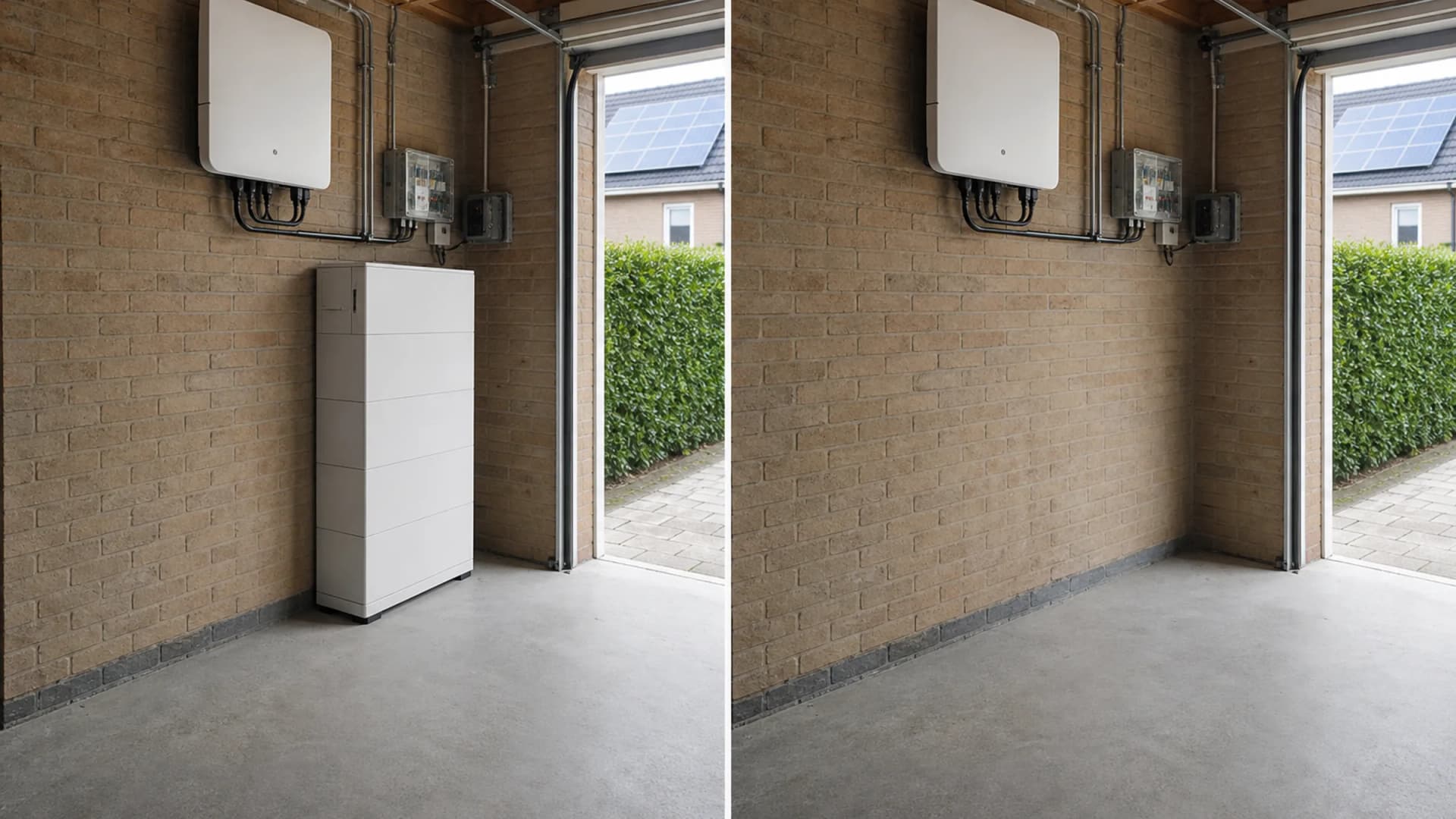
A smart home battery stores today's power for later, so you use more of your own electricity after sunset.
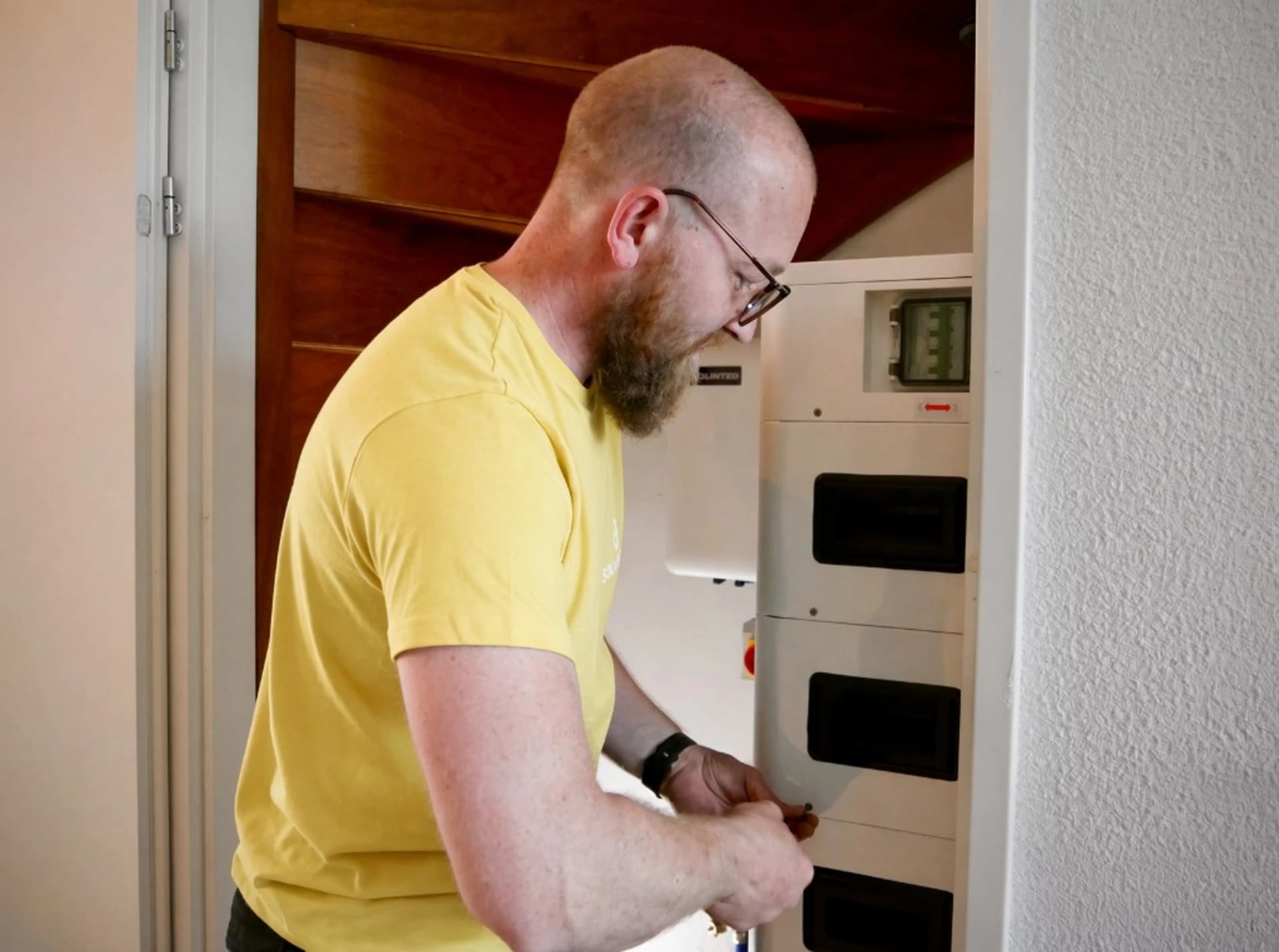
We install your home battery
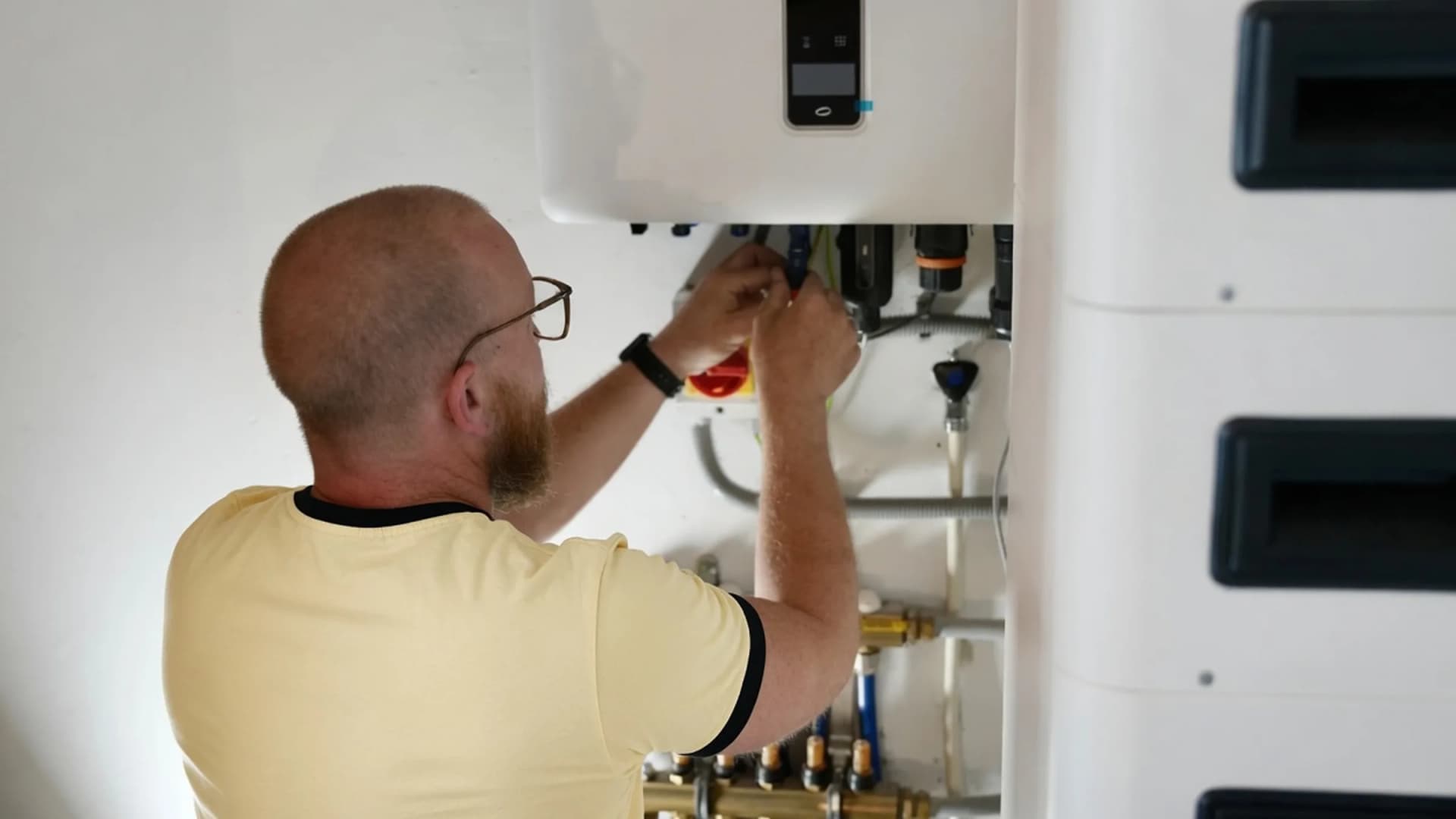
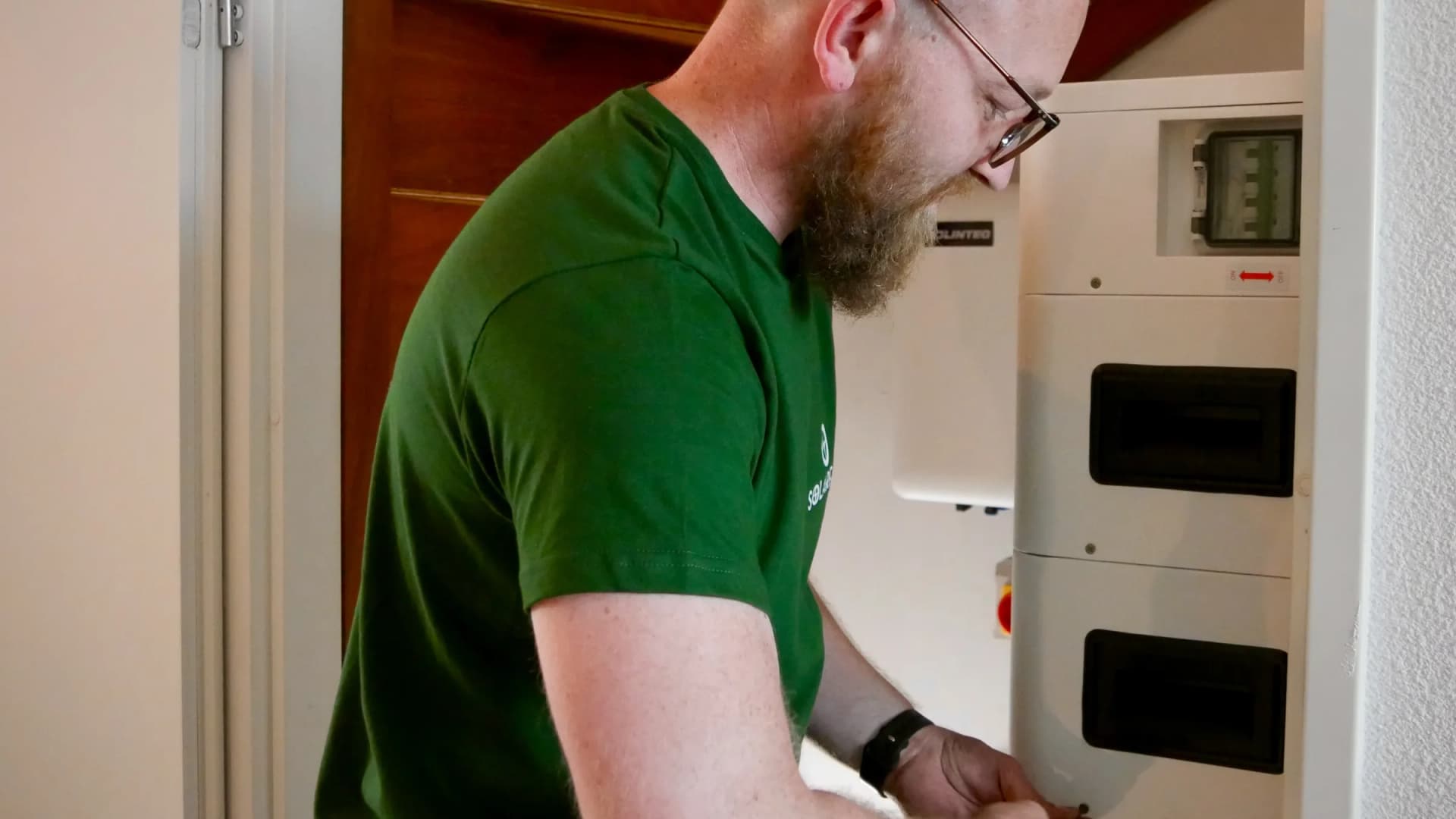
Usually within three weeks. Our installers fit the battery neatly and safely by your fuse box. We leave your home clean and make sure you know exactly how it all works.
- Charge smart when power is cheap
- Keep power until you need it
Frequently asked questions
The 21 percent VAT on purchase and installation, if you meet the conditions and allocate the battery to your business assets. That is 21 percent of the amount excluding VAT, not of the price including VAT. On €12,100 including VAT that is €2,100; on €6,000 including VAT about €1,041. If you also use the battery privately, you repay VAT on that share yearly, during the 5-year adjustment period.
As soon as possible after purchase, the Tax Administration advises, and in any case within 6 months after the year in which you bought the battery. The invoice date must also fall in a filing period in which you are not a KOR participant.
Only if you deregister first. That takes effect on the first day of a calendar quarter and processing takes 4 weeks. So deregister well before the purchase; if you buy the battery while still in the KOR, the full deduction lapses.
Then you may not reclaim the VAT in full. Through adjustment you can reclaim one fifth of the VAT yearly in the 4 years after first use, but only if that amount is at least 500 euros per year. For smaller systems little or nothing usually remains.
Yes, by default you file quarterly and pay 21 percent VAT on the payments from your energy supplier. There is no flat rate for home batteries, so you calculate the amounts yourself using your EMS data. Annual filing is only possible under conditions.
Yes. Once you are liable for VAT, you also declare the payment for exported solar power. This applies even if you bought the panels at 0 percent VAT, or if your partner already reclaimed the VAT on the panels.
Yes, the core of the route is trading power, not generating it. You do need an EMS and a dynamic energy contract, and an energy supplier that pays for feed-in.
No. The Tax Administration asks for a dynamic contract, not a specific supplier. Frank Energie is our partner for that. We link Hyxi and KStar to it if you take their contract or already have one. Dyness via Smart Grid One. If you already have another dynamic contract, the refund route can still apply, as long as the invoice and the contract are in the same name.
You can, but if you rejoin within 5 years of first use you may have to repay part of the reclaimed VAT once you exceed the adjustment threshold of 500 euros per year. VAT previously deducted for solar panels counts towards that.

Discover what smart energy can do for you
In about an hour you get insight into your savings, the options for your home and when the investment pays back. Straightforward, honest advice so you know exactly where you stand.
Smart energy at home
- Upgrade your home with our smart battery
- Our solar panels deliver up to 25% more energy
- A heat pump to minimise your energy use
- Charge your electric car easily at home with an EV charger
Booking an advice call is easy
Fill in your details below. Within a day we will contact you to schedule a no-obligation advice call together.
Related articles