Plug-in home battery or fixed home battery: which fits you?
9 min read
A plug-in home battery goes into a wall socket: about 800 watts, you handle the safety, no energy label. A fixed system covers more.
All comparisons
The downsides of a plug-in home battery: about 800 watts, you own the connection, no energy label. A fixed home battery is wired in by an installer and brings more power, grid control and the label benefit. Renting or starting small? The plug-in makes sense. Want to truly cover your evening use? Go fixed.
Introduction
 Home battery
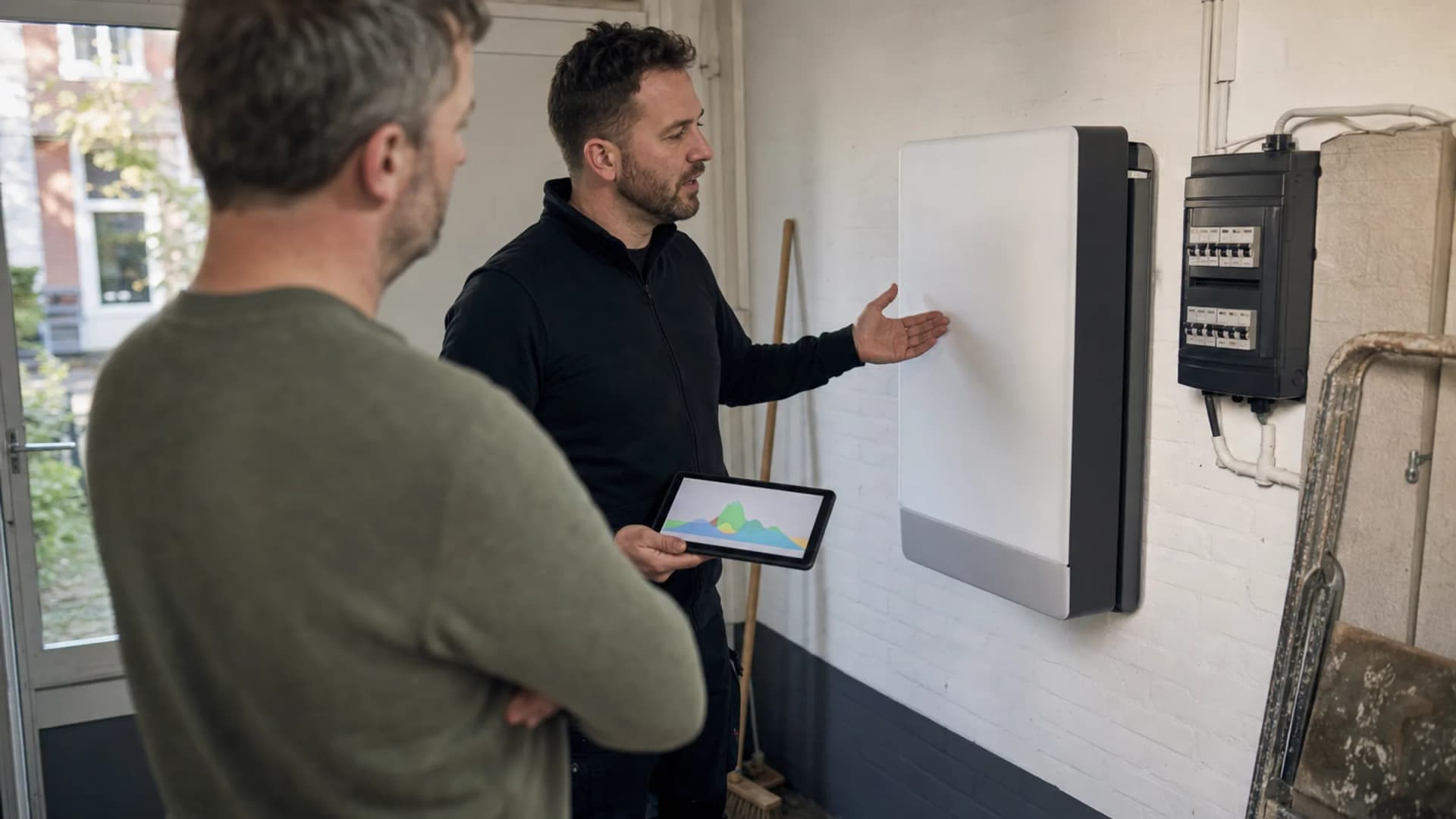
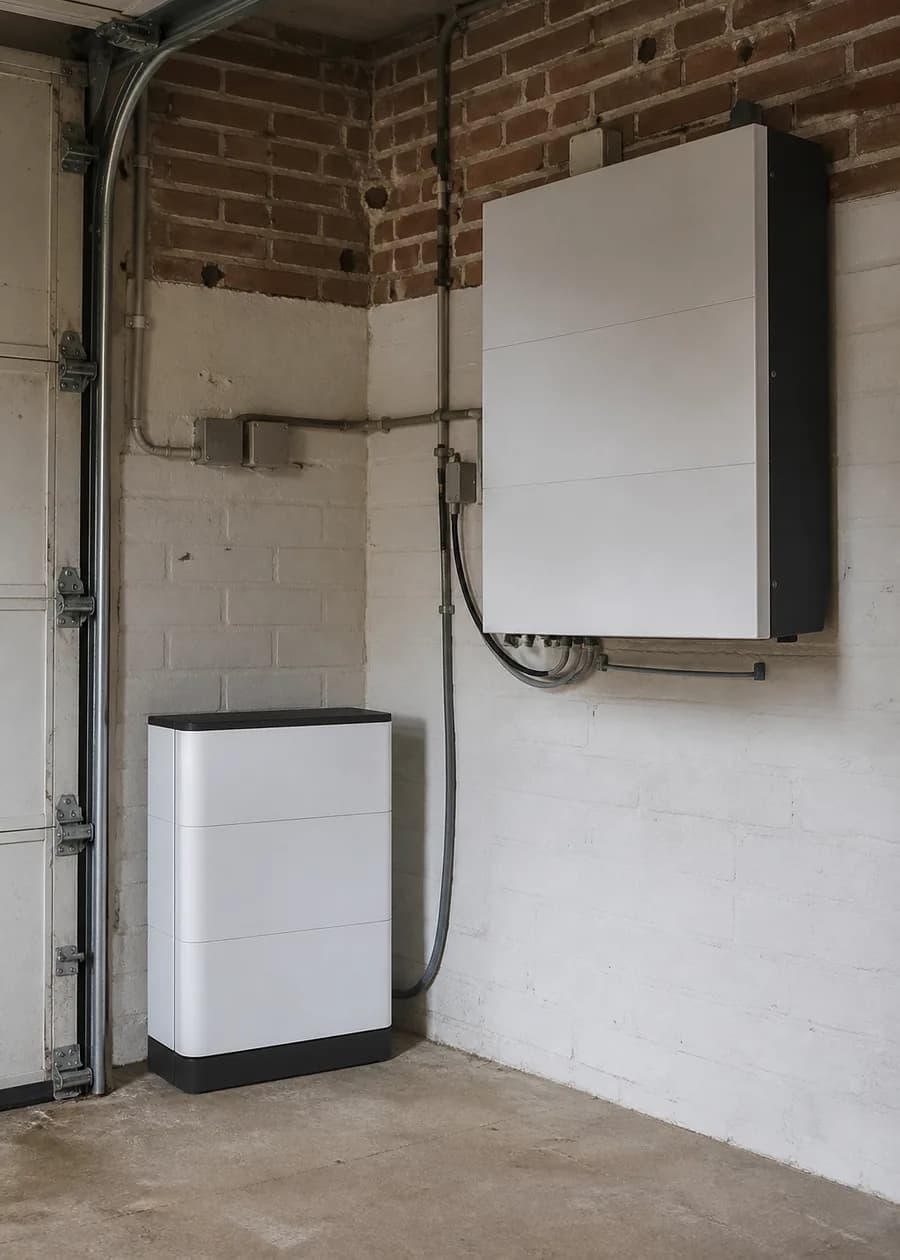
A plug-in home battery goes straight into a wall socket. Handy, until you feel the downsides. It charges and discharges at about 800 watts. Safe connection is your job. And it does not count toward the energy label. A fixed home battery is wired to the fuse box and covers those three points better. Below we put them side by side; how to pick the right size afterwards is covered in which home battery suits you.
The options side by side
Plug-in battery
Pros
- Connect it yourself, no installer needed
- Low entry price, no installation costs
- Portable: take it along when you move
- An option for renters and apartments too
Cons
- Charges and discharges at about 800 watts at most
- Misses part of your surplus on sunny days
- Limited smart control, usually no grid participation
- Safe placement and connection are your own responsibility
Fixed home battery
Pros
- Far more charge and discharge power
- Capacity sized to your household, roughly 5 to 26 kWh
- Dynamic charging and grid control possible
- Counts toward the energy label from 5 kWh (with solar panels)
- Connected and tested by a certified installer
Cons
- Higher upfront investment
- Needs a fixed spot and work in the fuse box
- Stays behind in the home when you move
What exactly is a plug-in battery?
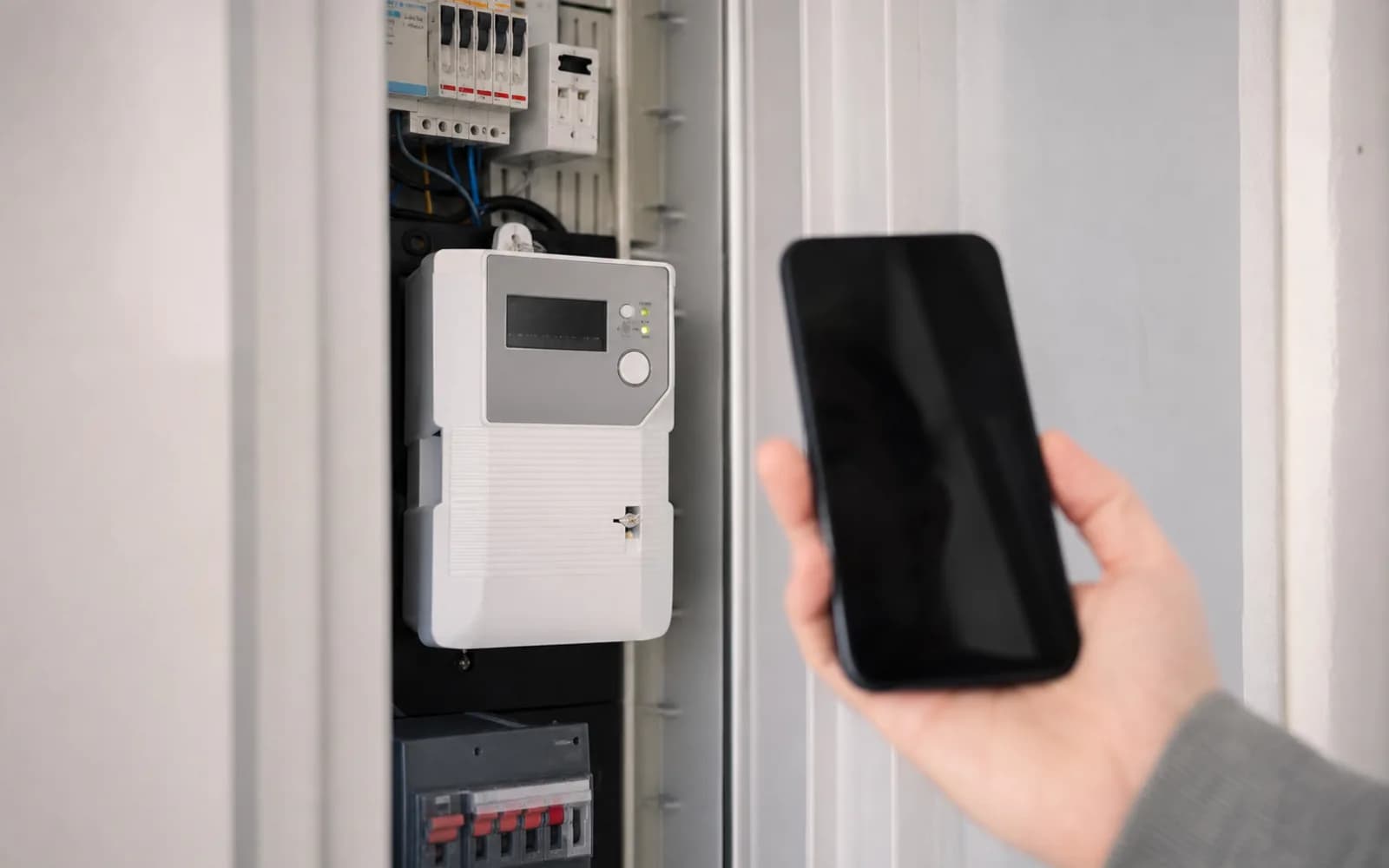
A plug-in battery is a compact unit you connect to an earthed wall socket yourself. A small meter in the fuse box, usually on the P1 port of your smart meter, sees when your solar panels generate more than you use. The battery then charges through the socket and feeds that power back to your home in the evening. It all runs automatically, with an app to watch along.
Capacity often starts around 1 to 2 kilowatt-hours; modular systems grow with extra units toward 5 kilowatt-hours or more. The big difference with a fixed system is power: a plug-in battery charges and discharges at about 800 watts at most, where fixed home batteries start around 2,000 watts according to Vereniging Eigen Huis (Dutch).
Downsides of a plug-in home battery
The first downside is power. About 800 watts sounds like enough for the fridge and the lights, until the kettle goes on. Then you simply buy the rest from the grid. On a sunny afternoon the reverse happens: the battery stores only part of your surplus, and the rest still flows to the grid.
Two more points a fixed system does cover. Safe connection is your responsibility with a plug-in home battery: its own circuit, an earthed socket, never an extension lead. And it does not count toward the energy label, even if the pack is large enough. Grid control and dynamic charging are usually out too. That does not make the plug-in home battery wrong. It is just small. If that matches how you use power in the evening, it is fine. If you sit structurally above that base load, fixed is the difference.
Power: where the real difference sits
That 800 watts sounds abstract, but you notice it both ways. When charging: if your panels generate 2,000 watts more than you use on a sunny afternoon, the plug-in battery stores only 800 watts of that and the rest still flows to the grid. And when discharging: a kettle or washing machine alone asks more than the battery can deliver, so for those peaks you simply buy grid power. A plug-in battery mainly covers your base load: fridge, lighting, devices on standby.
| Plug-in battery | Fixed home battery | |
|---|---|---|
| Connection | Yourself, into an earthed socket | Fixed, by a certified installer |
| Charge and discharge power | Up to about 800 watts | From about 2,000 watts |
| Capacity | Often 1 to 5 kWh, modular | Roughly 5 to 26 kWh, sized to fit |
| Smart control | App, limited integrations | Dynamic charging, grid control, energy management |
| Energy label | Does not count | Counts from 5 kWh, with solar panels |
| Registration with grid operator | Yes | Yes |
| When moving house | Comes along | Stays in the home |
Power and capacity differ per model; the order of magnitude follows the product information cited by Vereniging Eigen Huis.
For completeness: on nights when a small system runs empty, you simply run on grid power, nothing switches off. What a fixed system costs and when it pays back is covered in what a home battery costs.
Safety: connecting it yourself means owning the risk
With a fixed system, the installer takes care of a safe connection on its own circuit. With a plug-in battery that responsibility is yours, and it is stricter than many people think. Power reaches such a battery from two sides at once, from the grid and from the battery itself. The circuit breaker no longer sees the full picture, so wiring can overload without anything tripping.
The key rules: connect the battery to its own circuit, or otherwise to a circuit with few other loads. Always directly into an earthed wall socket, never via an extension lead or power strip. Keep it out of escape routes, in a ventilated room with a smoke detector. Those placement rules apply just as much to fixed systems; we list them in which home battery suits you.
Registration applies to both: Netbeheer Nederland (Dutch) designates Energieleveren.nl for it, the same portal used for solar panels. That includes plug-in batteries, as Vereniging Eigen Huis stresses too. Grid operators use the registration to plan the grid per neighbourhood.
Smart control: where the fixed battery pulls ahead
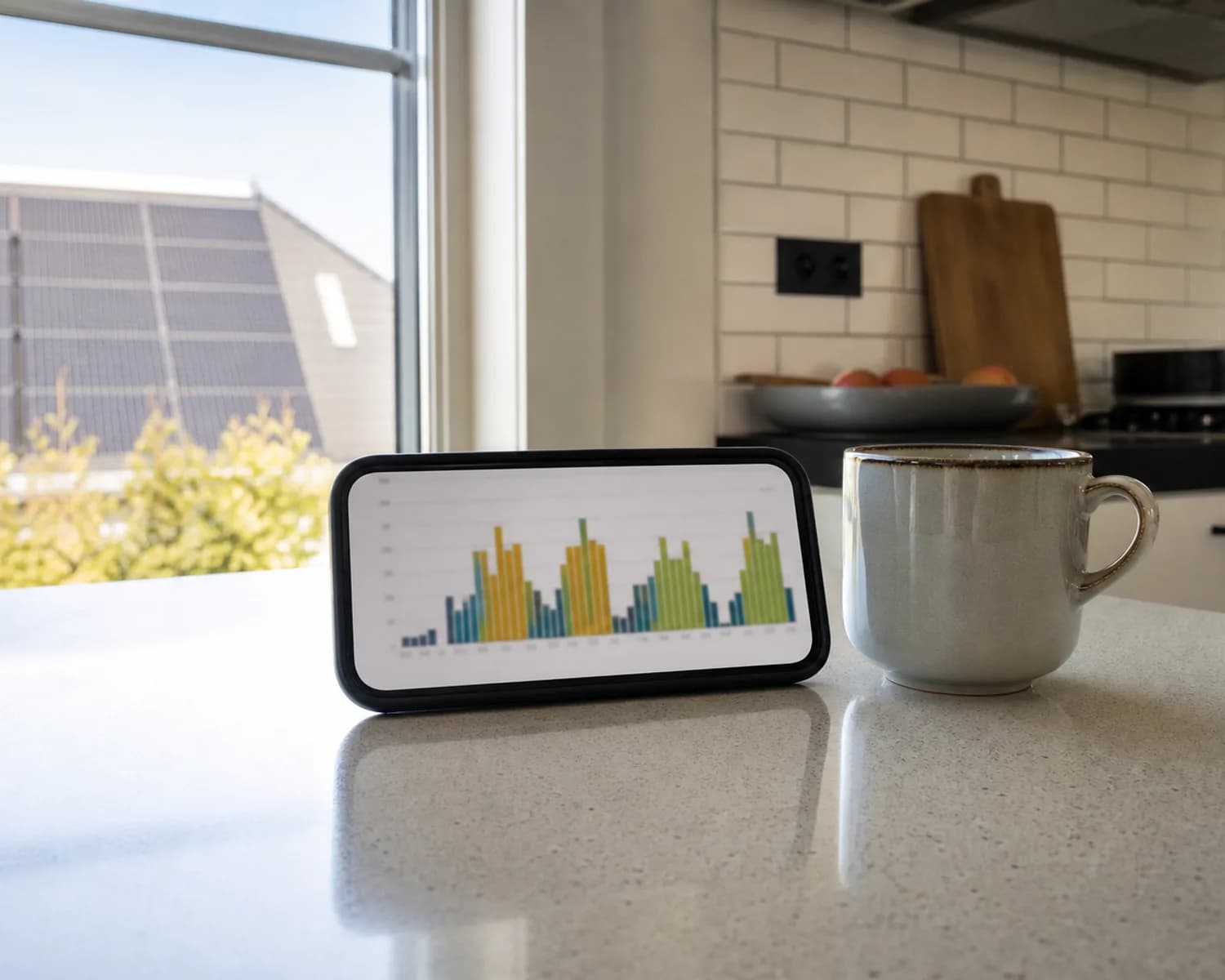
A fixed home battery with a steerable inverter can do more than buffer solar power. Paired with a dynamic energy contract it also charges during the cheap hours of the day, and through grid control it helps the grid during peak moments in exchange for a payment. Plug-in batteries have their own app and sometimes a link to dynamic tariffs, but are harder to steer from an energy management system and generally do not take part in grid control.
Since late May 2026, a fixed home battery of 5 kilowatt-hours or more also counts toward your home's energy label, in combination with solar panels. That benefit only applies to fixed installations; a loose plug-in battery falls outside it. How the label benefit works is covered in our blog home battery counts toward your energy label.
How SolarFast advises on this
We supply and install fixed home batteries, usually Dyness systems between 5 and 10 kilowatt-hours on a hybrid inverter. Still, advice conversations regularly start with the plug-in battery, and we get that: it is an accessible way to start with storage. Renting, living in an apartment without space near the fuse box, or wanting to first experience what storage does for you? Then a plug-in battery is a fine first step, and we will say so.
If you use serious power in the evening, have a heat pump or EV charger, or want to join grid control and dynamic charging, you outgrow a plug-in battery quickly. During the site survey we use your actual consumption to calculate what a fixed system delivers. Put your situation to us or start on our home battery page.
Verdict
The plug-in battery and the fixed home battery are not rivals but different tools. Starting small, renting or moving soon: plug-in battery. Truly covering your evening use, joining grid control and improving your energy label: fixed system. In doubt? Look at your evenings. If your use hovers around a few hundred watts of base load, a plug-in battery does a lot of good. If you sit structurally above that, the power of a fixed system is exactly the difference.
Solar panels are still a smart investment in 2026. A few things matter if you want the most from your own power.
Your energy use
Planning to drive, cook or heat electrically? Factor that into how many panels you install now.
Spread the yield
Spread panels across roof faces so you generate through the day and use more of your own energy.
Your data
Choose a system with its own 4G connection and data storage in Europe so your information stays secure.
Boost your energy
A smart home battery stores today's power for later, so you use more of your own electricity after sunset.
We install your home battery
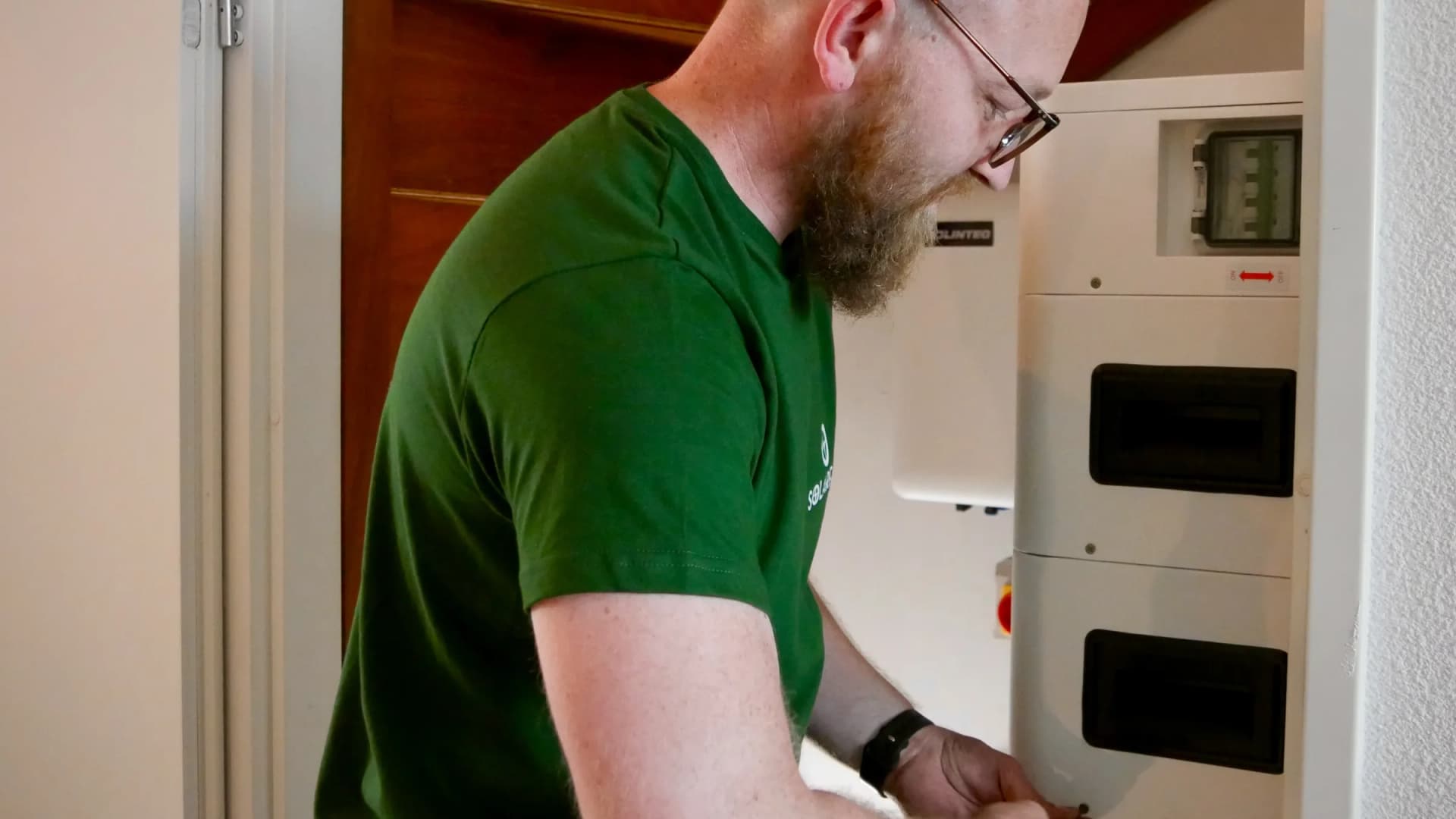
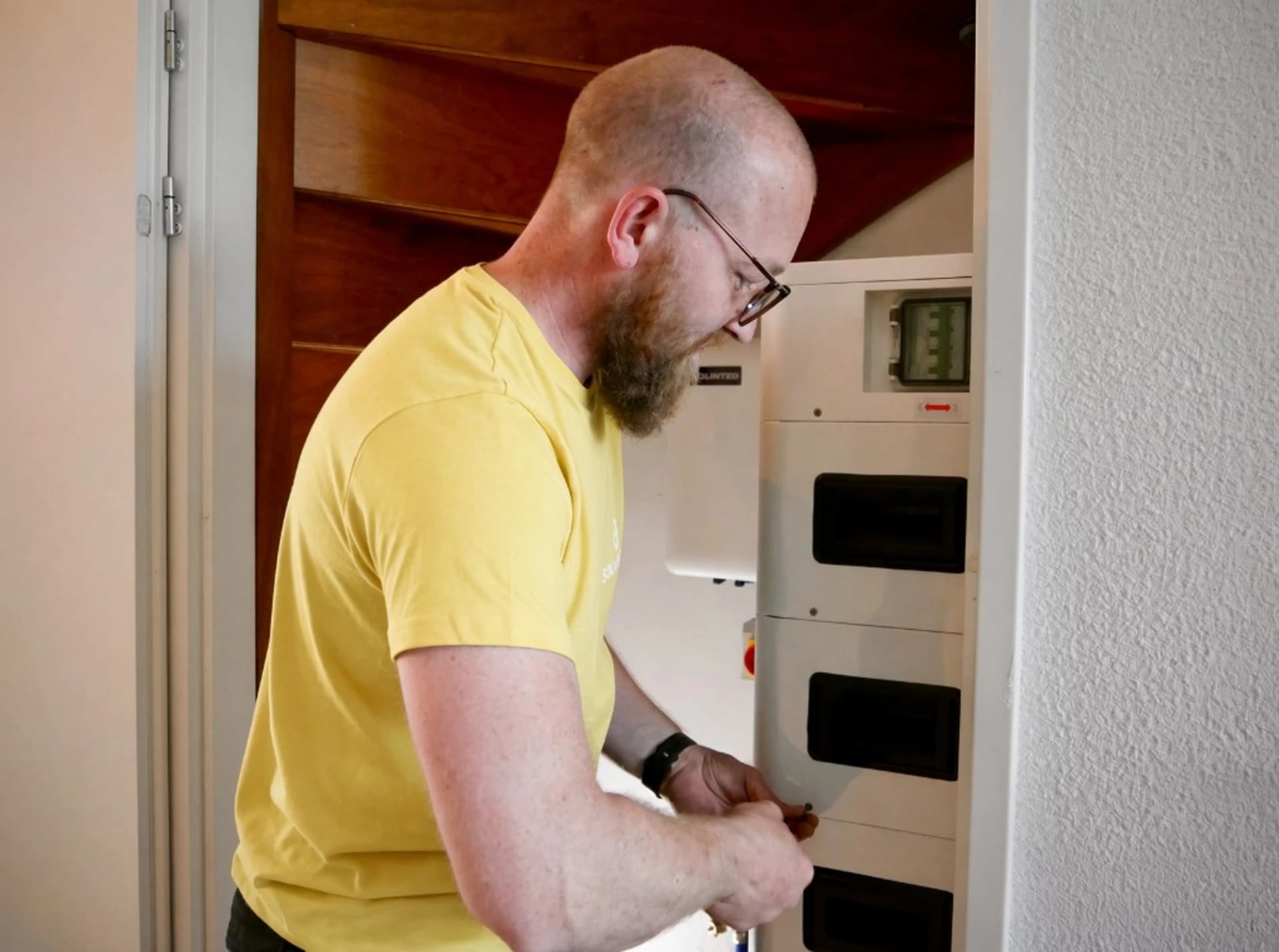
Usually within three weeks. Our installers fit the battery neatly and safely by your fuse box. We leave your home clean and make sure you know exactly how it all works.
- Charge smart when power is cheap
- Keep power until you need it
Frequently asked questions
It charges and discharges at about 800 watts, so heavy appliances are not fully covered. Safe connection is your responsibility. It usually does not join grid control, and it does not count toward the energy label. A fixed system covers those points.
Yes, a plug-in battery is designed for self-installation: directly into an earthed wall socket, preferably on its own circuit and never via an extension lead. The safety rules are your responsibility though; with a fixed system the installer handles that.
Yes. Just like a fixed system, you register a plug-in battery via Energieleveren.nl, so the grid operator knows what storage hangs in the neighbourhood. Registration is free.
Your base load, yes: fridge, lighting and devices on standby. Heavy appliances such as a kettle or washing machine ask more than the roughly 800 watts a plug-in battery delivers; the remainder simply comes from the grid.
Generally not. Grid control requires a system that can be steered remotely. Fixed home batteries with a suitable inverter can do that; plug-in batteries are not or only partly built for it.
No. Only a fixed home battery of 5 kilowatt-hours or more counts toward the energy label since late May 2026, in combination with solar panels.
Well placed and properly connected, it is safe in principle. The risks come from wrong use: extension leads, an overloaded circuit or a spot in an escape route. Follow the placement rules, put a smoke detector in the room and inform your insurer.
Yes, that happens often. You start with a plug-in battery and have a fixed system installed once your consumption or plans call for it. During the survey we simply work with your current usage; the plug-in battery can move on to a next home or owner.

Discover what smart energy can do for you
In about an hour you get insight into your savings, the options for your home and when the investment pays back. Straightforward, honest advice so you know exactly where you stand.
Smart energy at home
- Upgrade your home with our smart battery
- Our solar panels deliver up to 25% more energy
- A heat pump to minimise your energy use
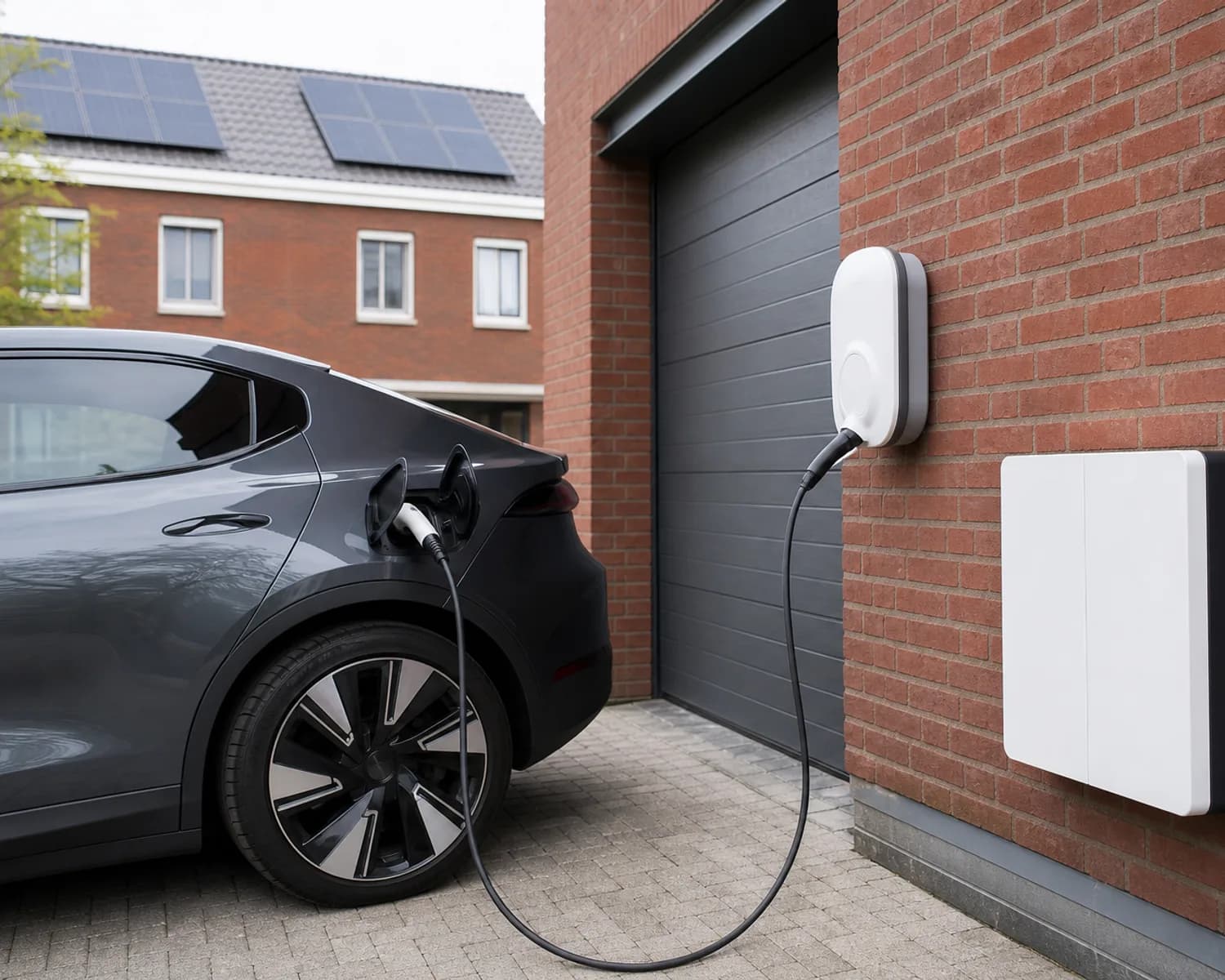
- Charge your electric car easily at home with an EV charger
Booking an advice call is easy
Fill in your details below. Within a day we will contact you to schedule a no-obligation advice call together.
Related articles