Single-phase or three-phase home battery: what do you need?
8 min read
A single-phase home battery works on any connection; a three-phase system charges and discharges harder. Where the difference sits and when upgrading pays.
All comparisons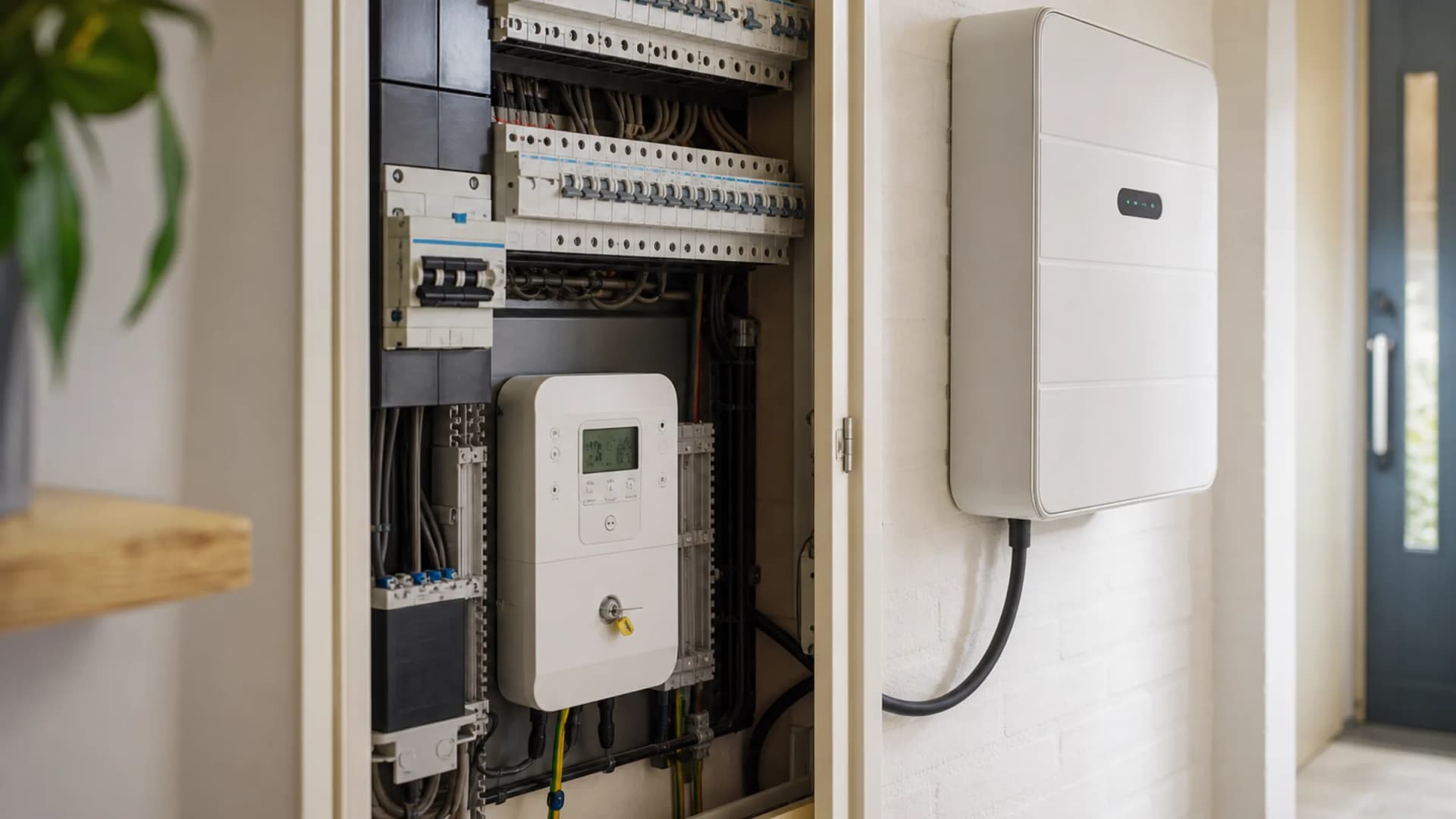
A single-phase connection only fits a single-phase home battery; on 3x25 amps both work. The phase makes no difference to your bill, because the smart meter nets all phases together. The real difference sits in charge and discharge power and in backup: keeping a three-phase fuse box fully running takes a three-phase system.
Introduction
 Home battery
Anyone picking a home battery runs into the question sooner or later: single-phase or three-phase? The answer starts not with the battery but with your fuse box, because that decides what is possible at all. After that it is about power: how fast the battery charges and discharges, and what keeps working when the grid drops out. Below we put the two versions side by side honestly; how to choose capacity and placement afterwards is covered in which home battery suits you.
The options side by side
Single-phase home battery
Pros
- Works on any connection, including 1x25 or 1x35 amps
- Simpler system, often lower priced
- No downside on your bill: the meter nets across all phases
- Plenty for most systems up to about 8 kWh
Cons
- Charges and discharges through one phase, shared with the rest of the house
- Large batteries fill more slowly
- Cannot put a three-phase fuse box fully on backup power
Three-phase home battery
Pros
- Heavier charging and discharging, spread neatly across three phases
- The logical pick for stacked modules or more than 8 kWh
- Full fuse box on backup power is possible (All-in-One)
- Fits households with a heat pump or EV charger
Cons
- Requires a three-phase connection (3x25 amps)
- More expensive inverter and more installation work
- Overkill with modest consumption and a small battery
1 vs 3 phase: first check which connection you have
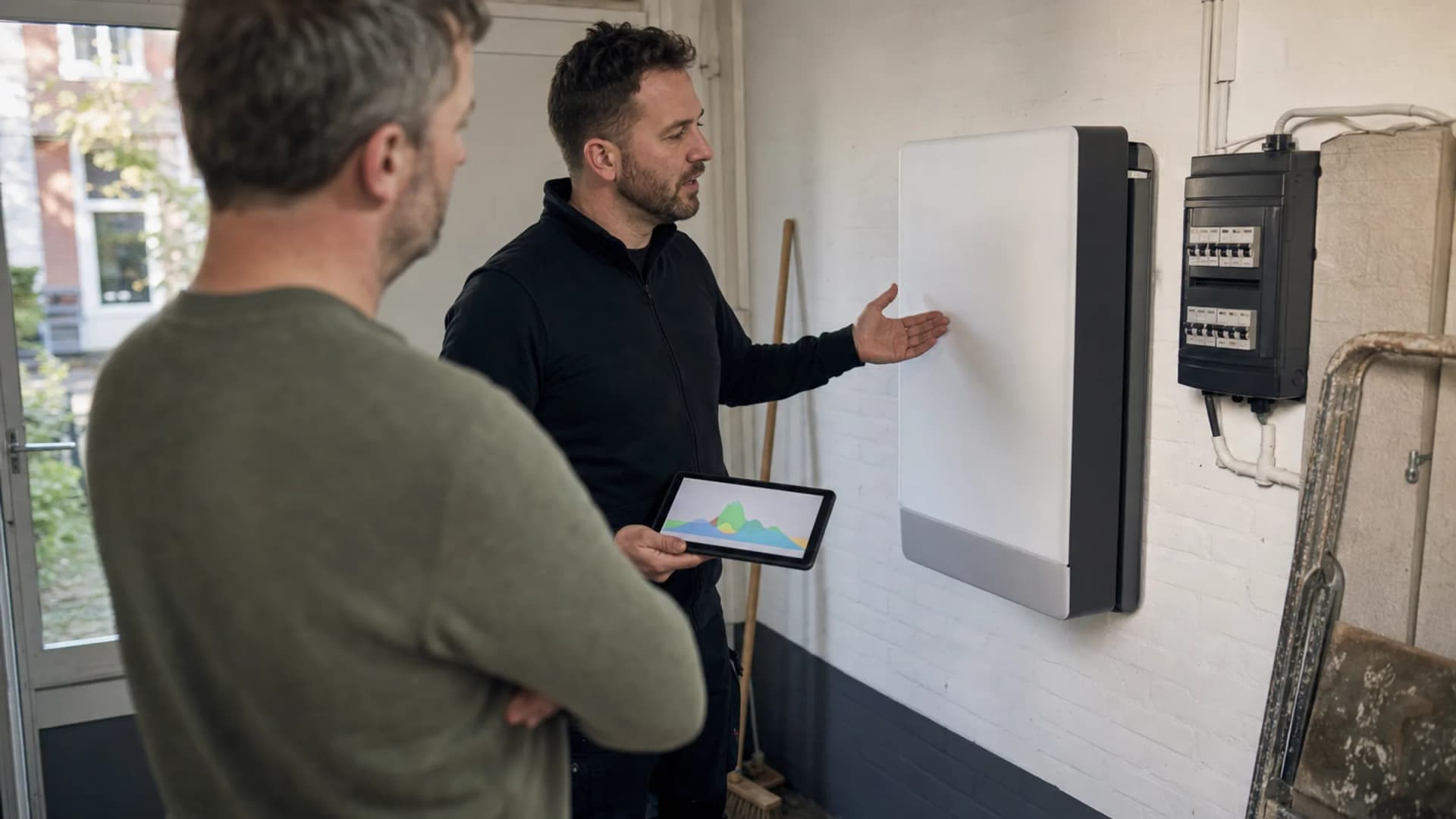
Open your fuse box and look at the main switch. If it is one position wide, you have a single-phase connection: all power comes in over one phase wire. If the main switch is three positions wide, you have three-phase (usually 3x25 amps) and the fuse box spreads the circuits across three phase wires. Many existing homes are single-phase; in new builds and homes with a heat pump or EV charger, 3x25 has become the standard.
That connection sets the limits. A three-phase home battery needs all three phase wires, so it does not fit a single-phase connection. The other way round is fine: a single-phase battery works well on a three-phase connection, and in practice that happens regularly. Upgrading from single-phase to 3x25 is possible through the grid operator, but costs a one-off fee and only makes sense if you will use it for more than the battery alone.
Your bill: the smart meter nets all phases together
A persistent misunderstanding: if the battery discharges on phase 1 while the dishwasher runs on phase 2, you would "lose" power to the grid. That is not how it works. The smart meter determines the balance of all three phases together at every moment and only updates that total. If the battery discharges 800 watts on one phase and the house uses 800 watts on another, the meter registers nothing on balance. That behaviour is fixed in the meter standard (DSMR) that Dutch smart meters follow; there is no separate government page explaining it, but you can see it on the meter itself.
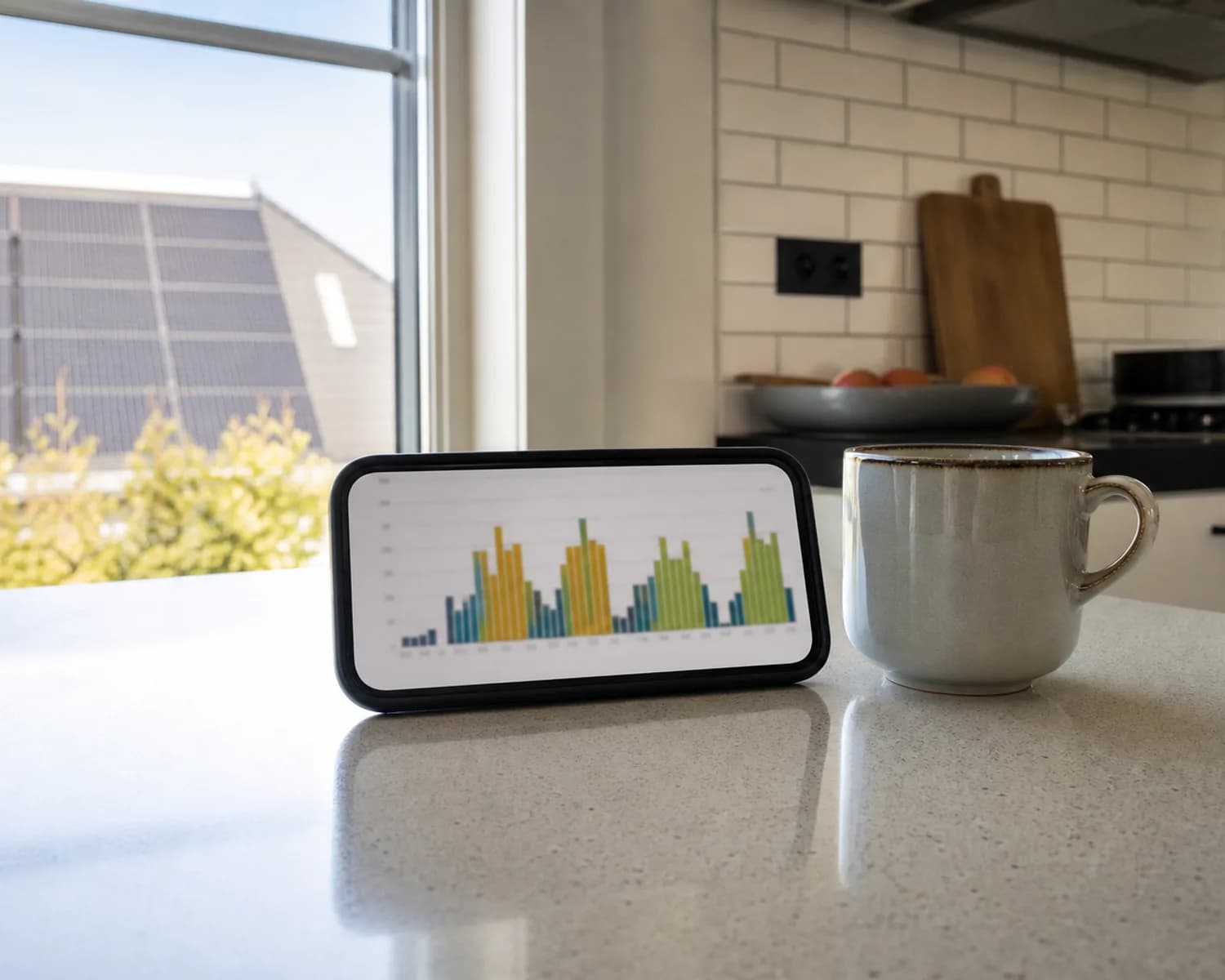
Look at the display: it shows four registers, consumption and export in two tariffs each, and no separate counters per phase. The manual of widely installed smart meters at grid operator Liander (Dutch) shows that same setup. For the choice between single-phase and three-phase it simply means: your energy bill is not an argument. The difference sits in power and backup.
Backup power: here the phase does matter
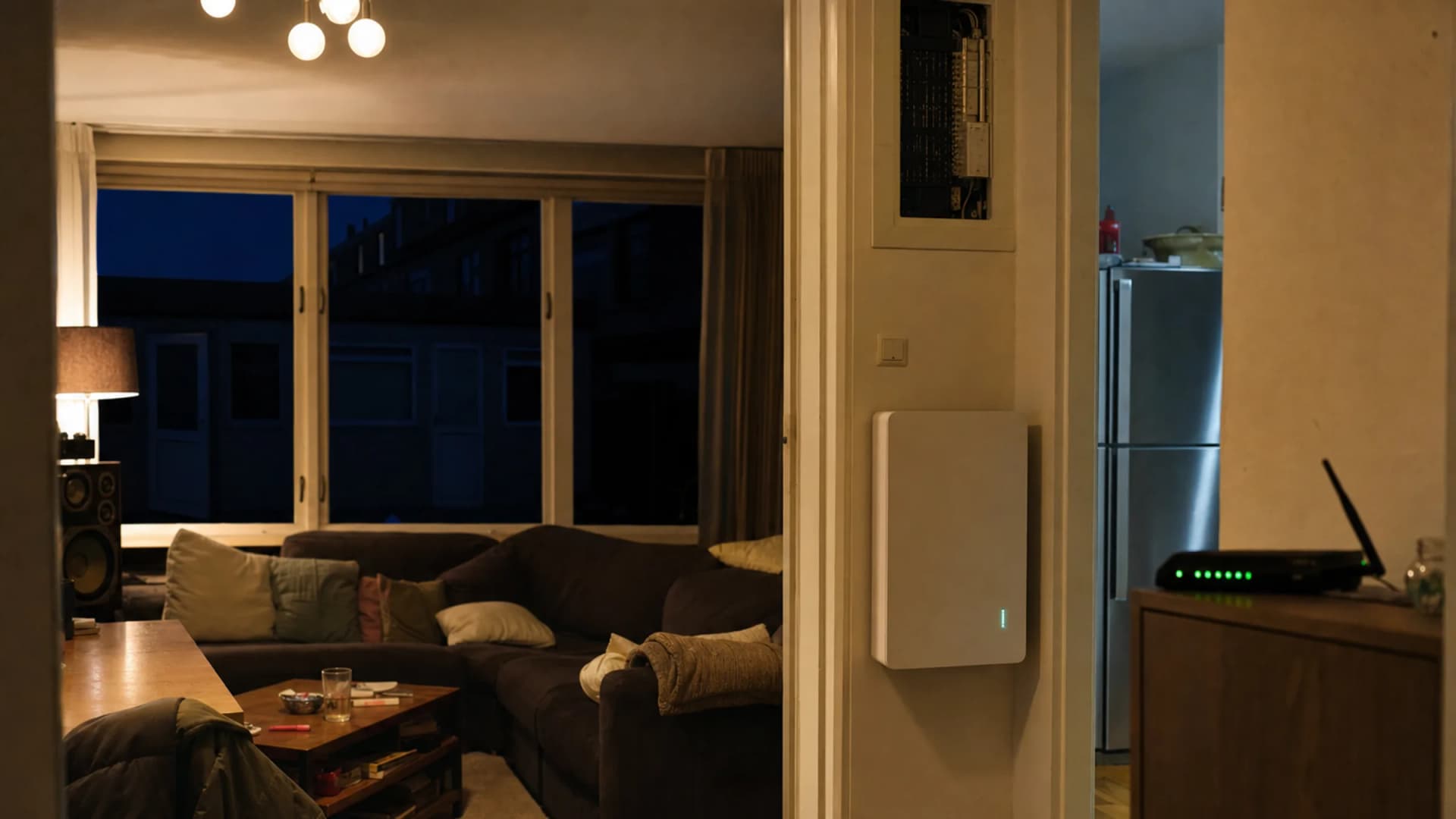
For the bill the phase is irrelevant, for backup power it is not. When the grid drops out, the battery only feeds what is physically wired to the backup provision. With hybrid backup that is one or two circuits, such as the fridge and the router; a single-phase system handles that fine. If you want the whole fuse box to keep running, induction hob, heat pump and EV charger included, the system must be able to feed all three phases and you end up with a three-phase All-in-One.
A three-phase home battery with backup power for the full fuse box is the most complete variant: everything keeps working and the system has the power to feed heavy circuits too. How the switchover works, what keeps running and how long the battery lasts is covered in backup power with a home battery.
How SolarFast handles this
During the site survey we look at three things: your main fuse, the free space and circuits in the fuse box, and your consumption profile. The right version follows from that. Up to about 8 kWh of storage we usually advise a single-phase system, unless there is a reason to go heavier: stacked modules, lots of simultaneous consumption or the wish to put the whole fuse box on backup power. We only include a connection upgrade in the advice when it genuinely pays off, because above 3x25 amps your fixed grid fees rise too.
Not sure what your fuse box can handle? Put your situation to us and we will take a look. Or read on first on our home battery page.
Verdict
The fuse box has a vote, and often it simply decides. On single-phase, a single-phase home battery is the choice and it does its job; your bill will not notice. On 3x25 amps, choose by consumption: a single-phase system suffices for most households up to about 8 kWh of storage, a three-phase system wins with stacked modules, heavy simultaneous consumption or backup power for the whole fuse box. Edge case? Let the site survey decide instead of the brochure.
Solar panels are still a smart investment in 2026. A few things matter if you want the most from your own power.
Your energy use
Planning to drive, cook or heat electrically? Factor that into how many panels you install now.
Spread the yield
Spread panels across roof faces so you generate through the day and use more of your own energy.
Your data
Choose a system with its own 4G connection and data storage in Europe so your information stays secure.
Boost your energy
A smart home battery stores today's power for later, so you use more of your own electricity after sunset.
We install your home battery
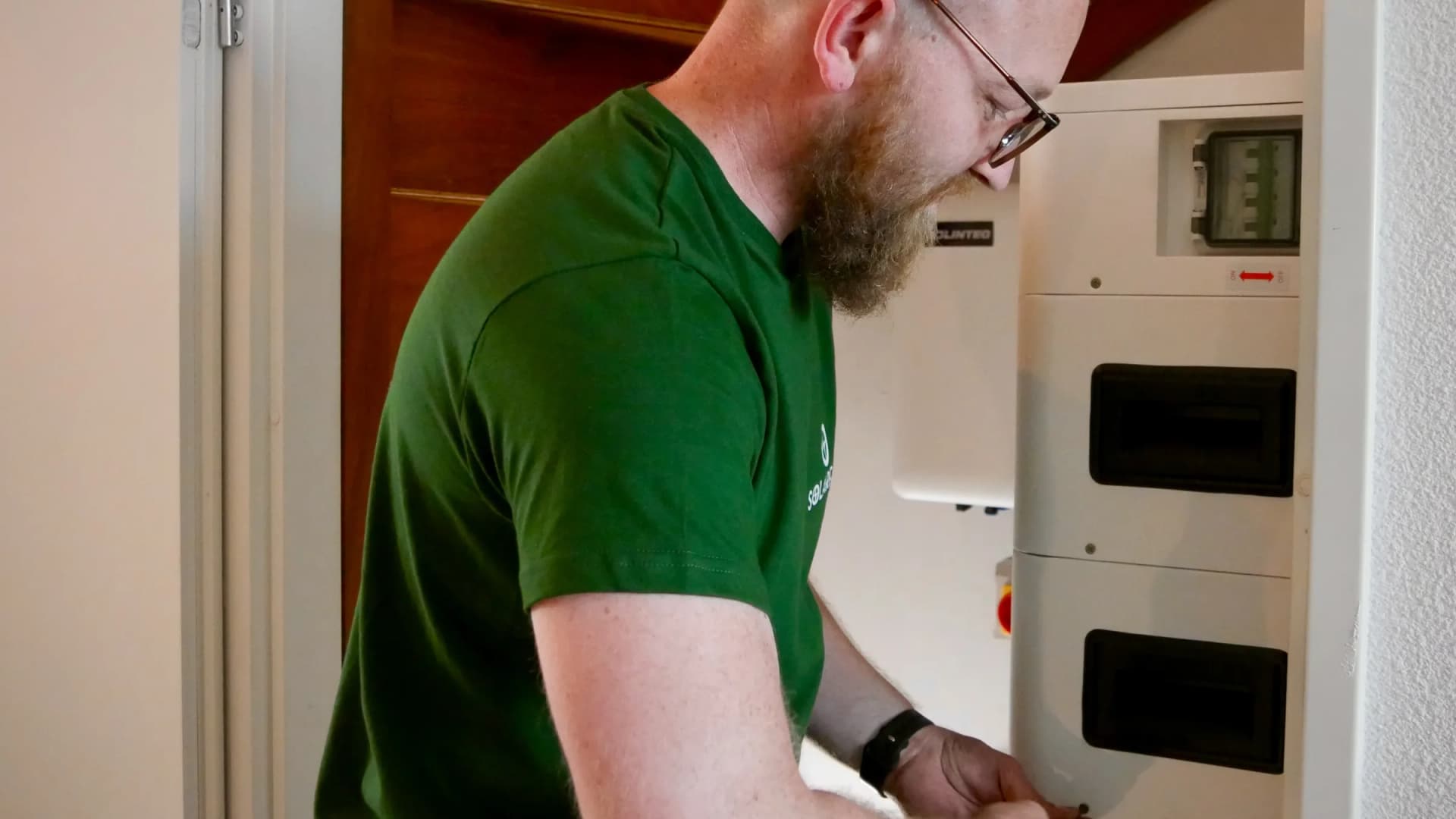
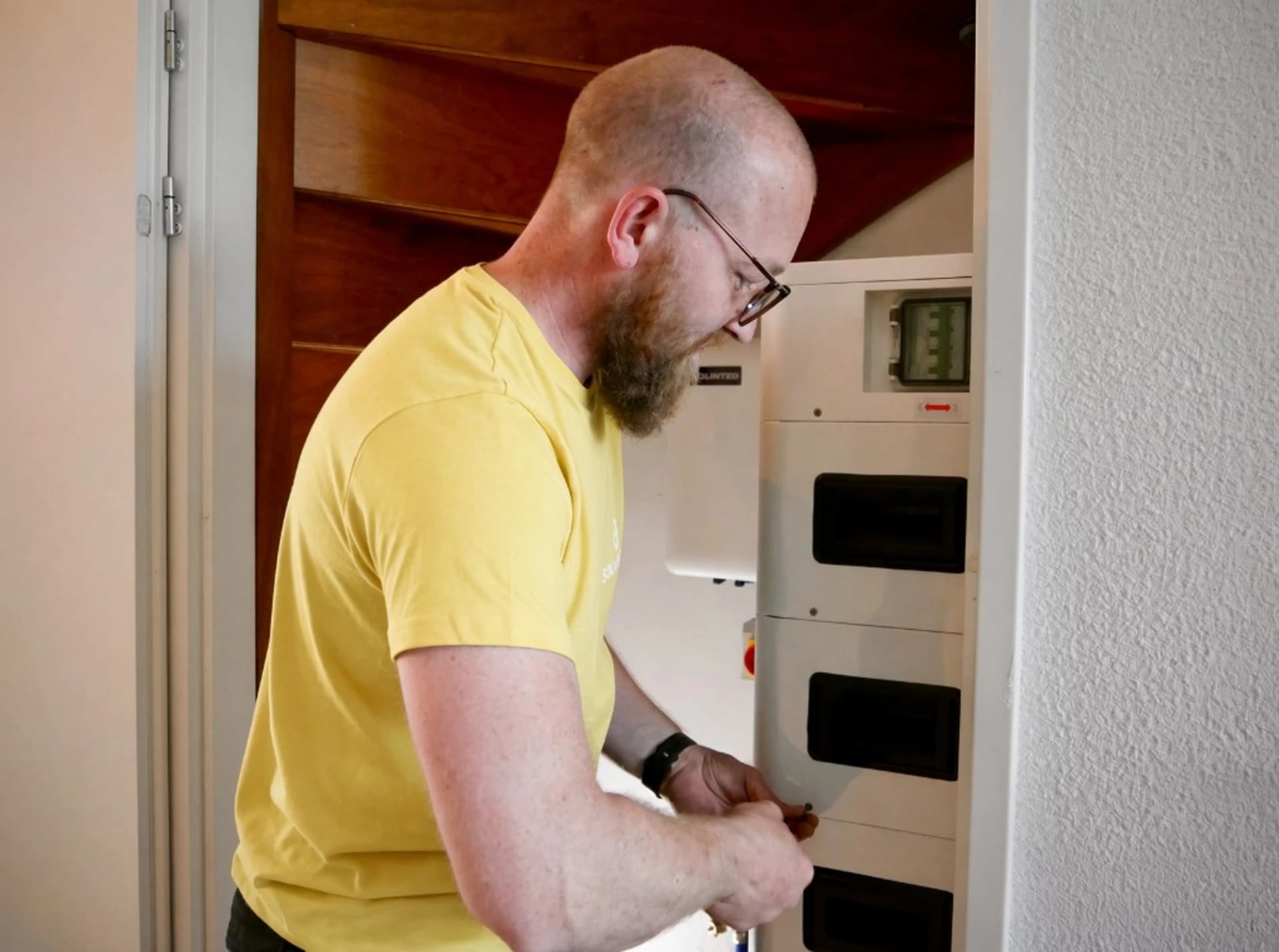
Usually within three weeks. Our installers fit the battery neatly and safely by your fuse box. We leave your home clean and make sure you know exactly how it all works.
- Charge smart when power is cheap
- Keep power until you need it
Frequently asked questions
On single-phase the battery charges and discharges through one wire, which you share with the rest of the house. On three-phase the system spreads the power across three phases, so it can charge and discharge harder. For your bill it does not matter: the smart meter nets all phases together. Backup for the whole fuse box only works with a three-phase system.
No. A three-phase system needs all three phase wires. On a single-phase connection you install a single-phase battery, or you have the connection upgraded to 3x25 amps first.
Yes, that works fine and happens regularly. The smart meter nets all phases together, so for your bill it does not matter which phase the battery sits on.
No. The meter determines the balance across the three phases at every moment and only registers that total. If the battery discharges on phase 1 while you consume on phase 2, the meter cancels them out.
Not for one or two backup circuits; a single-phase system handles that. If you want the full fuse box on backup power (All-in-One), you need a three-phase system on a three-phase connection.
Usually not. A single-phase system works on any connection. An upgrade only comes into view with heavy systems or full backup, and above 3x25 amps your fixed grid fees rise; we calculate that for you first.
With a higher charging power, yes. That is mainly interesting with a dynamic contract: you store more during the cheapest hours. For the daily buffering of solar power, the power of a single-phase system is generally enough.
A three-phase system has a heavier inverter and takes more installation work, so it costs more. How much exactly depends on capacity and fuse box; you get a tailored quote within 24 hours.
Both. The survey of your fuse box and consumption drives the advice: usually single-phase up to about 8 kWh, and three-phase for stacked systems, heavy simultaneous consumption or full backup.

Discover what smart energy can do for you
In about an hour you get insight into your savings, the options for your home and when the investment pays back. Straightforward, honest advice so you know exactly where you stand.
Smart energy at home
- Upgrade your home with our smart battery
- Our solar panels deliver up to 25% more energy
- A heat pump to minimise your energy use
- Charge your electric car easily at home with an EV charger
Booking an advice call is easy
Fill in your details below. Within a day we will contact you to schedule a no-obligation advice call together.
Related articles