Backup power with a home battery: how it works
Updated on 8 min read
Backup power with a home battery only works with a backup provision. What stays on: the fridge, or the whole meter cupboard.
All articles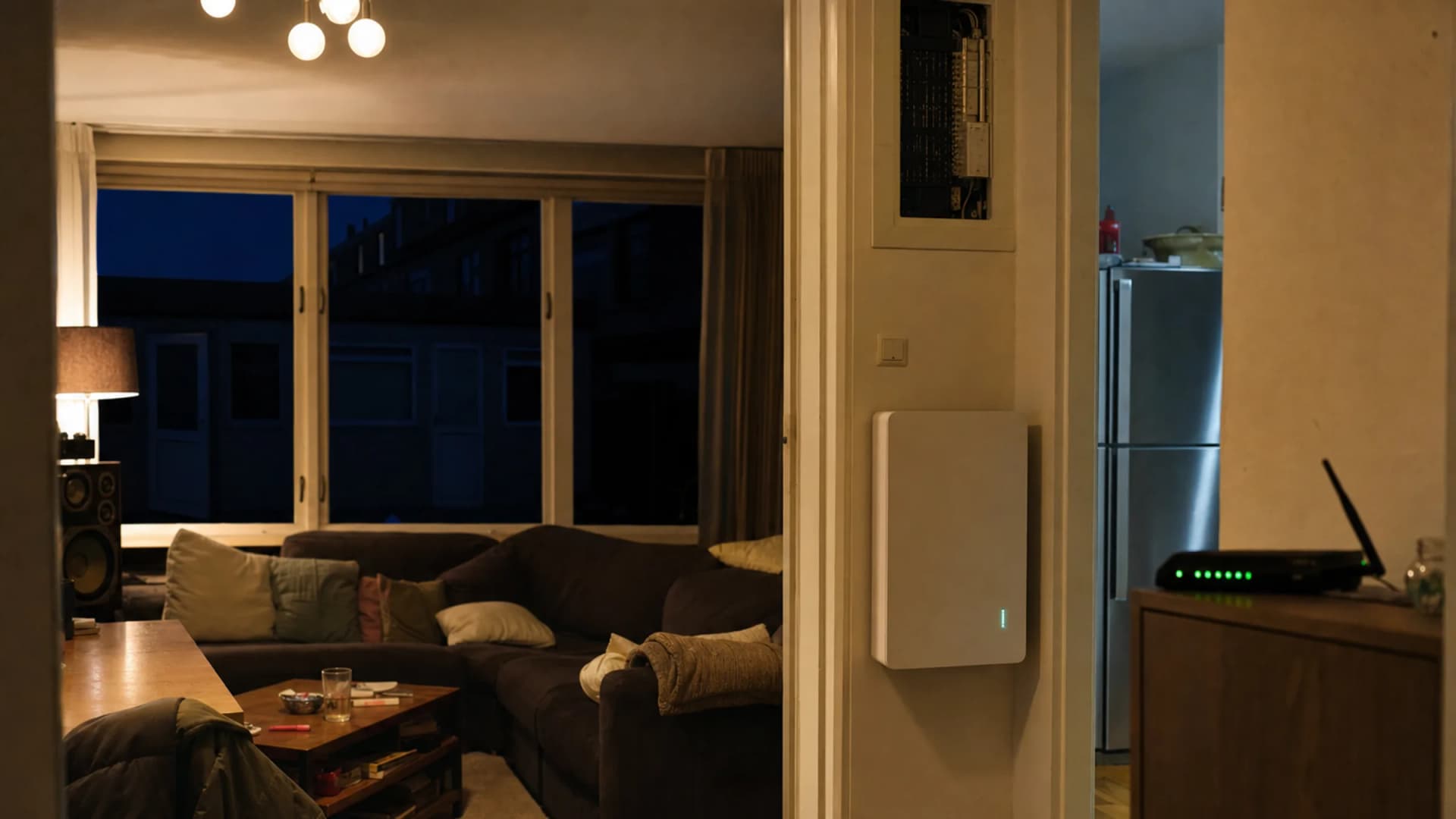
A grid-connected home battery switches off during a power outage, unless a backup provision is installed. That backup function is optional: without it you sit in the dark, battery and all. With hybrid backup one or two circuits keep working, such as the fridge and your router. With an All-in-One system the entire fuse box can keep running.
A home battery does not provide backup power by itself
 Home battery
It sounds logical: there is a full battery on the wall, so during an outage the lights simply stay on. That is not how it works. A grid-connected home battery is designed to stop as soon as the grid drops out, partly so engineers can work on the fault safely. Without a dedicated backup provision you sit in the dark, battery and all.
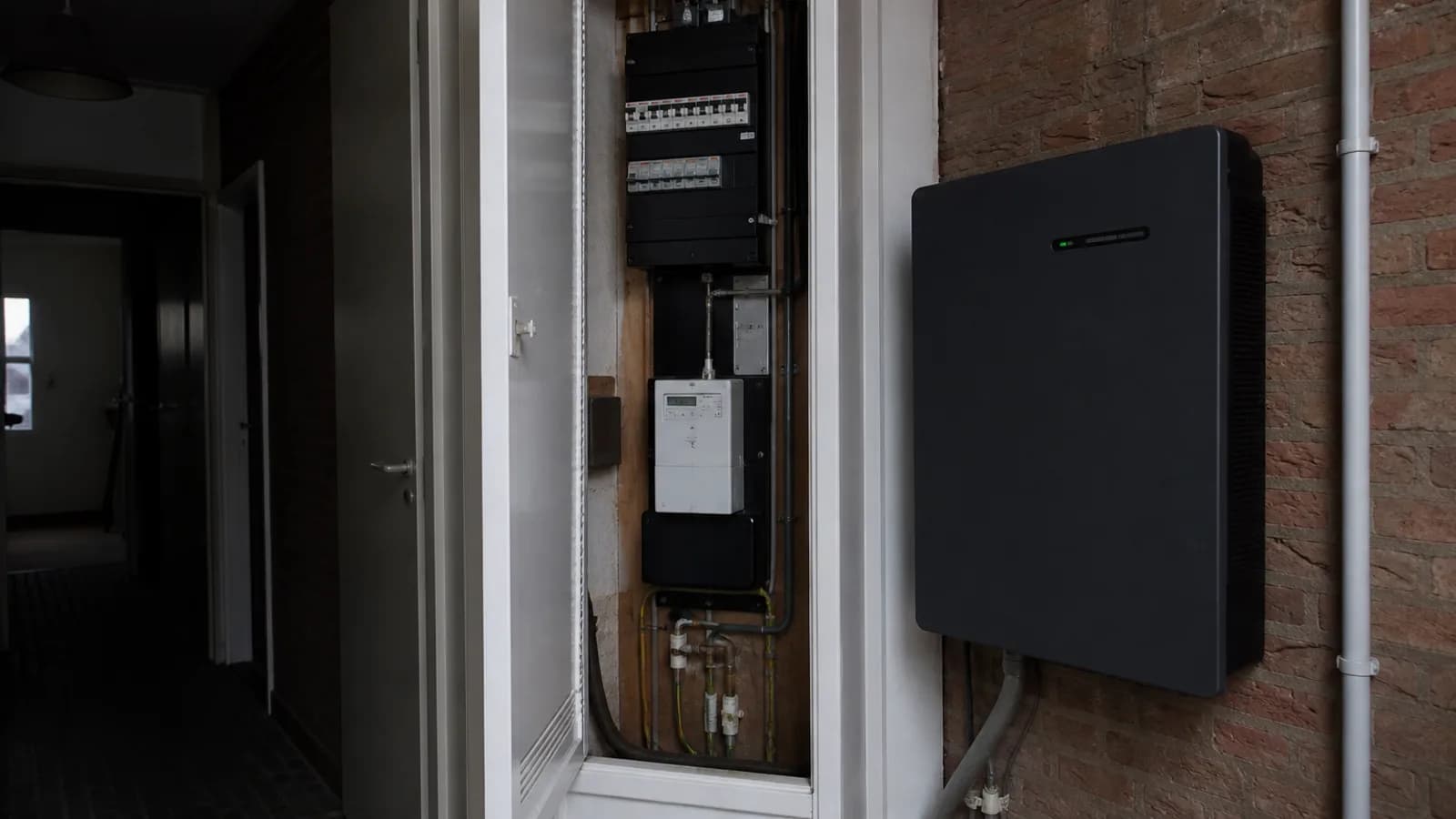
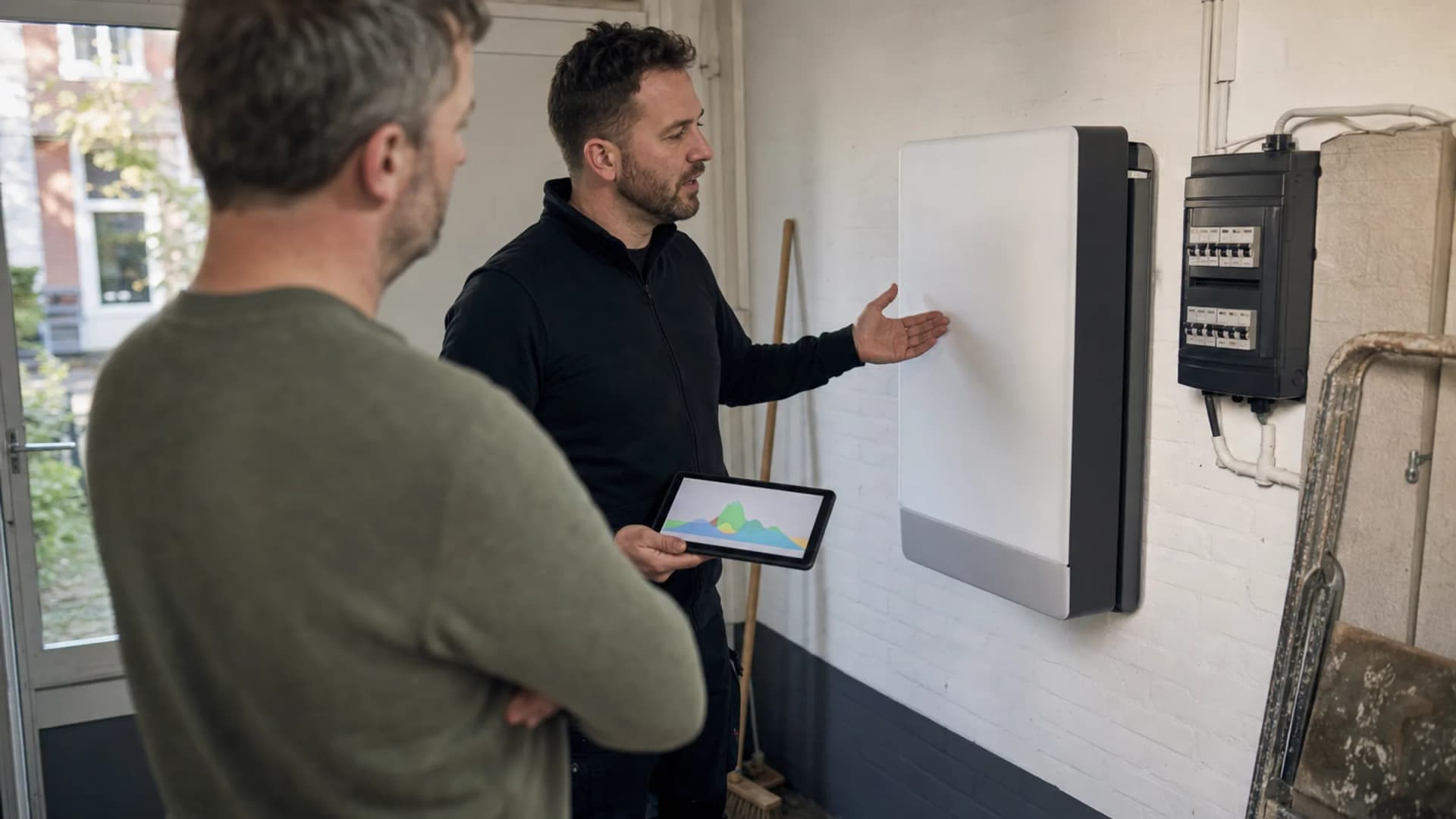
Backup power is not a property of the battery itself, but of the installation around it. A home battery with a backup function has a provision that safely disconnects your home (or part of it) from the grid during an outage and keeps feeding it from the battery. An emergency battery for the home is that in practice: a fixed battery plus backup, not a portable pack for one appliance. Whether you want that option is one of the choices when buying; the other considerations are in our guide which home battery suits you.
First, honestly: how often does the power go out?
The Netherlands has one of the most reliable grids in Europe. According to the annual reliability figures from Netbeheer Nederland (Dutch), the average outage time has been well under half an hour per connection per year for years, and an unplanned outage lasts a good hour on average. The chance of experiencing one is small, and it is usually over quickly.
For most households backup power is therefore comfort, not necessity. It becomes a different story if your home office cannot go down, there is medical equipment in the house, or a freezer full of supplies. So weigh up what an hour without power really costs you; that decides whether the extra cost of a backup provision pays off for you.
Hybrid backup: one or two circuits keep running
The most chosen variant in our installations is hybrid backup. The system automatically detects that the grid has dropped out and switches over to backup power; on the HyxiPower ALL-IN and KStar ALL-IN systems we install, that switchover on HyxiPower takes 0.01 seconds, so short that most appliances never notice. Typically a maximum of two B16 circuits can be connected to the backup. HyxiPower hybrid and Dyness have no full backup.
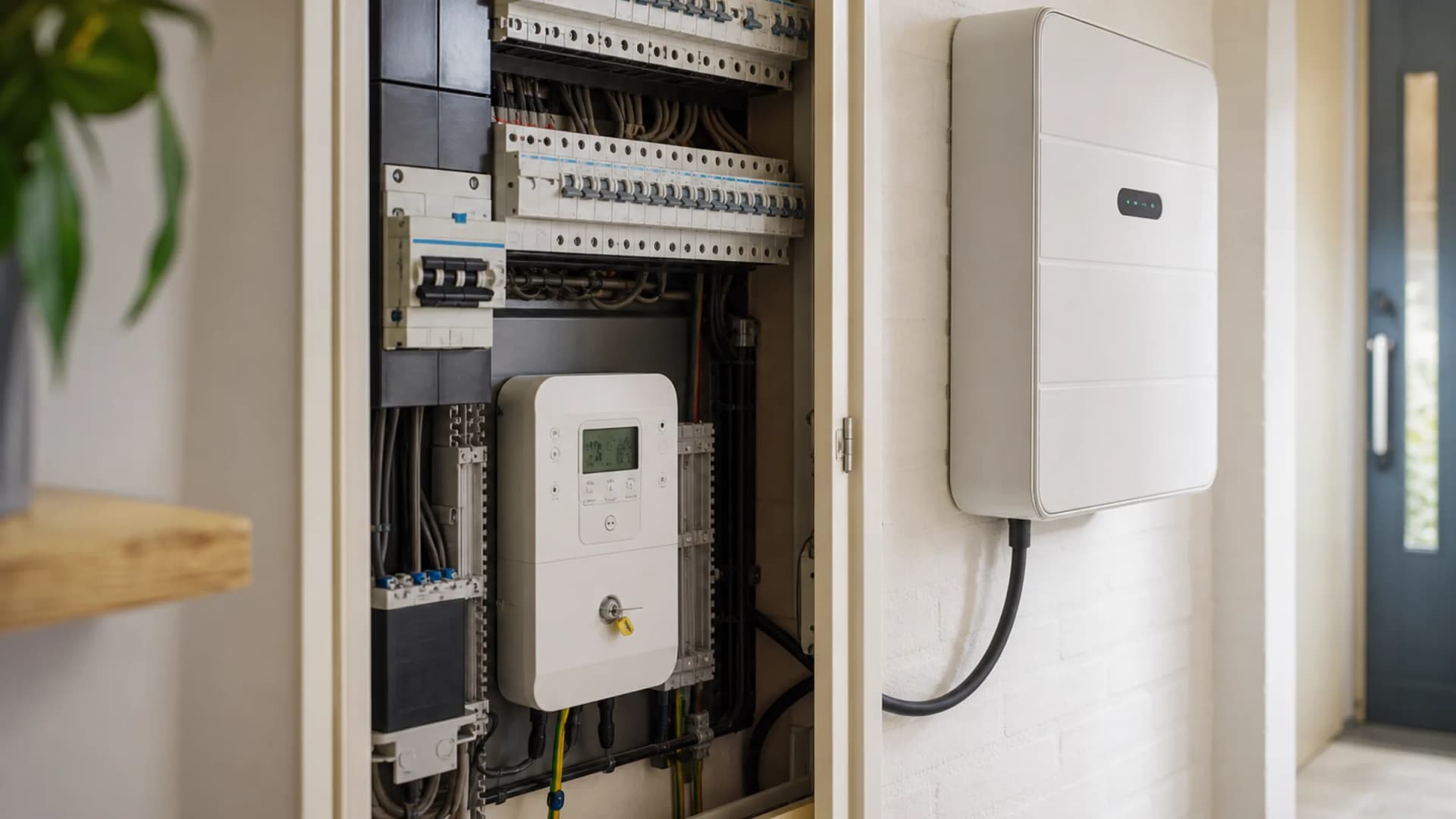
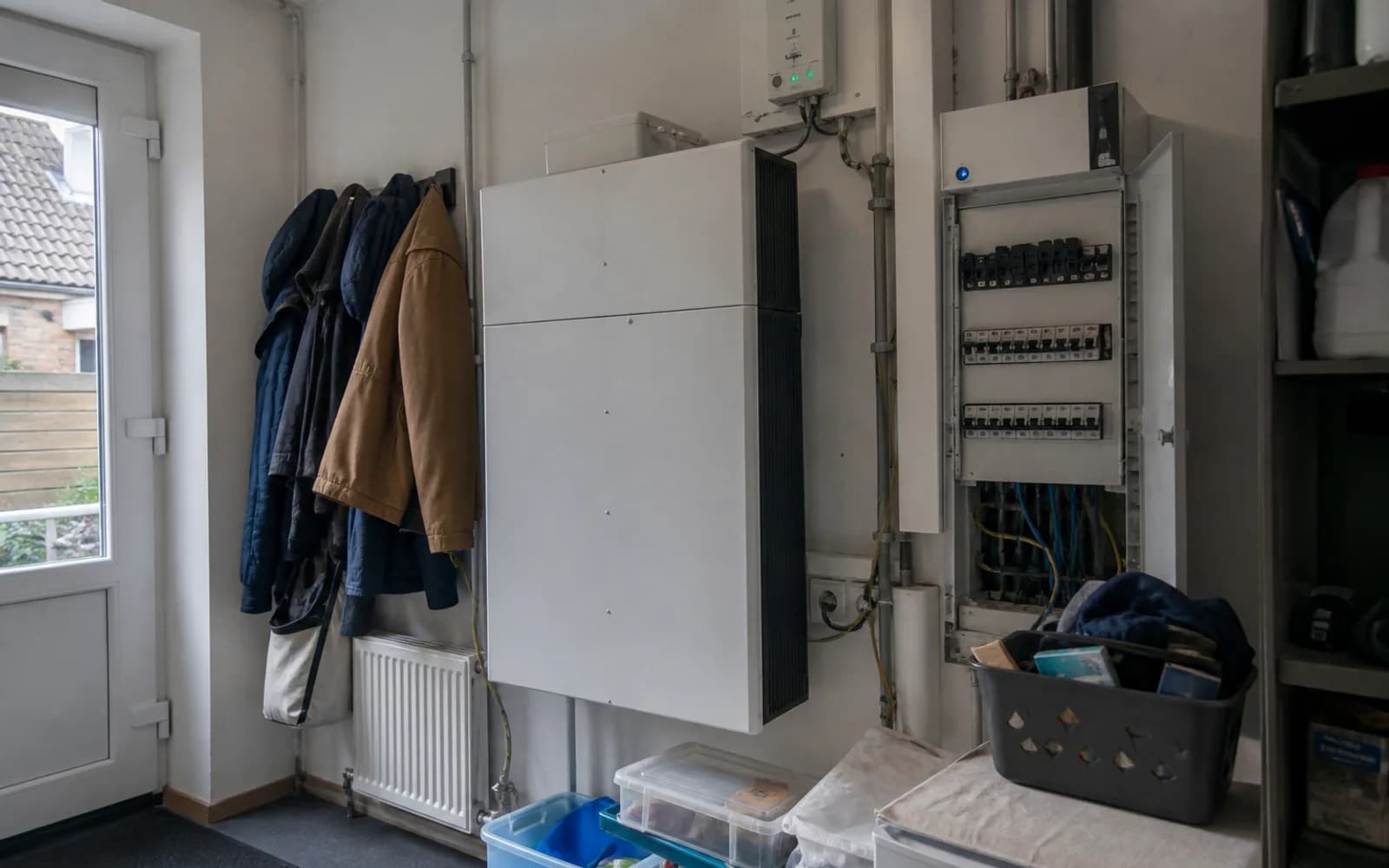
You choose those two circuits deliberately. In practice they are the fridge and freezer, lighting, internet and router, some sockets and often the central heating boiler, which needs power for its pump and controls even on gas. Heavy consumers such as an induction hob, heat pump or EV charger are usually not connected under hybrid backup: they drain the battery in a few hours.
All-in-One: the whole fuse box on backup power
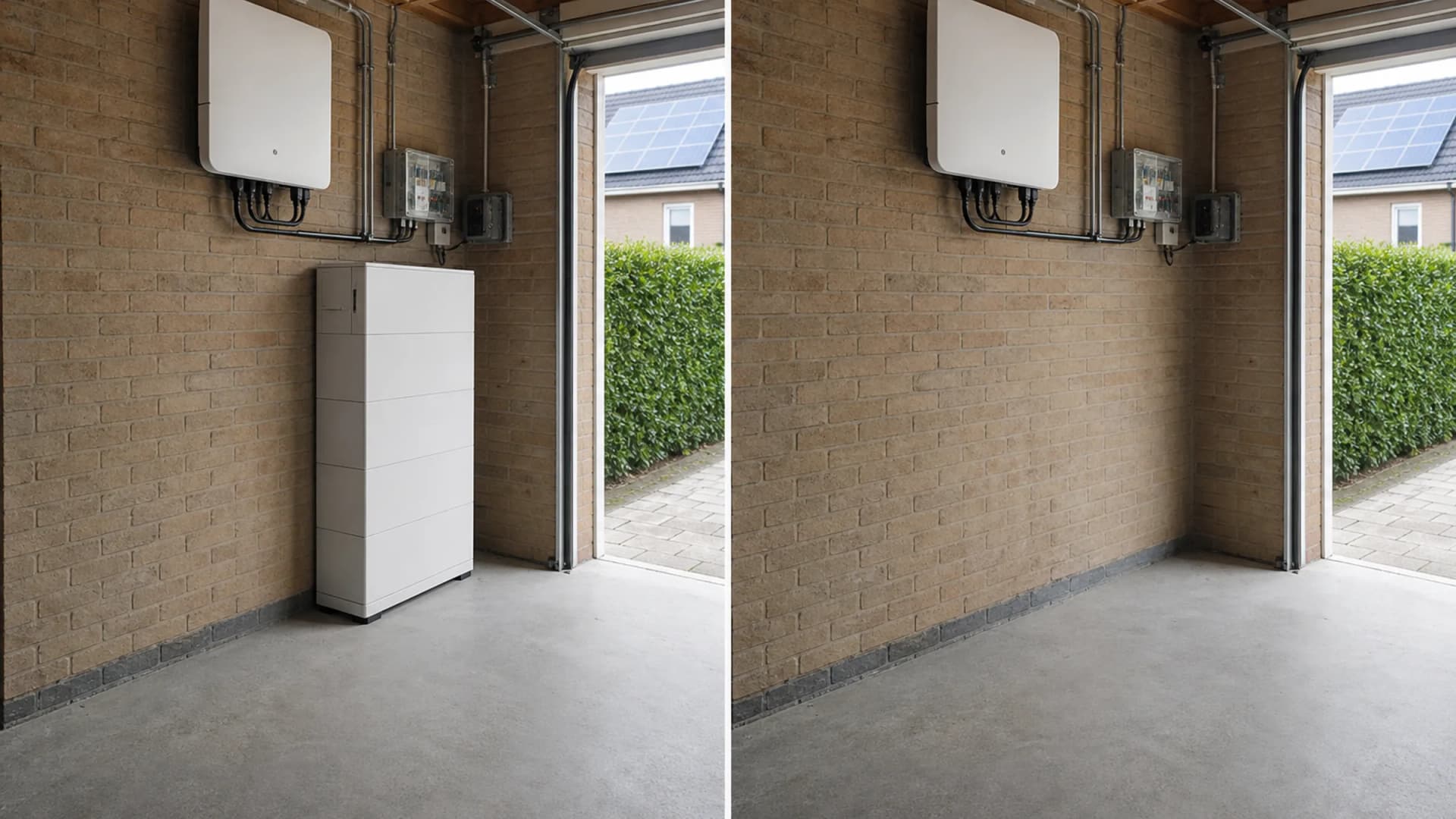
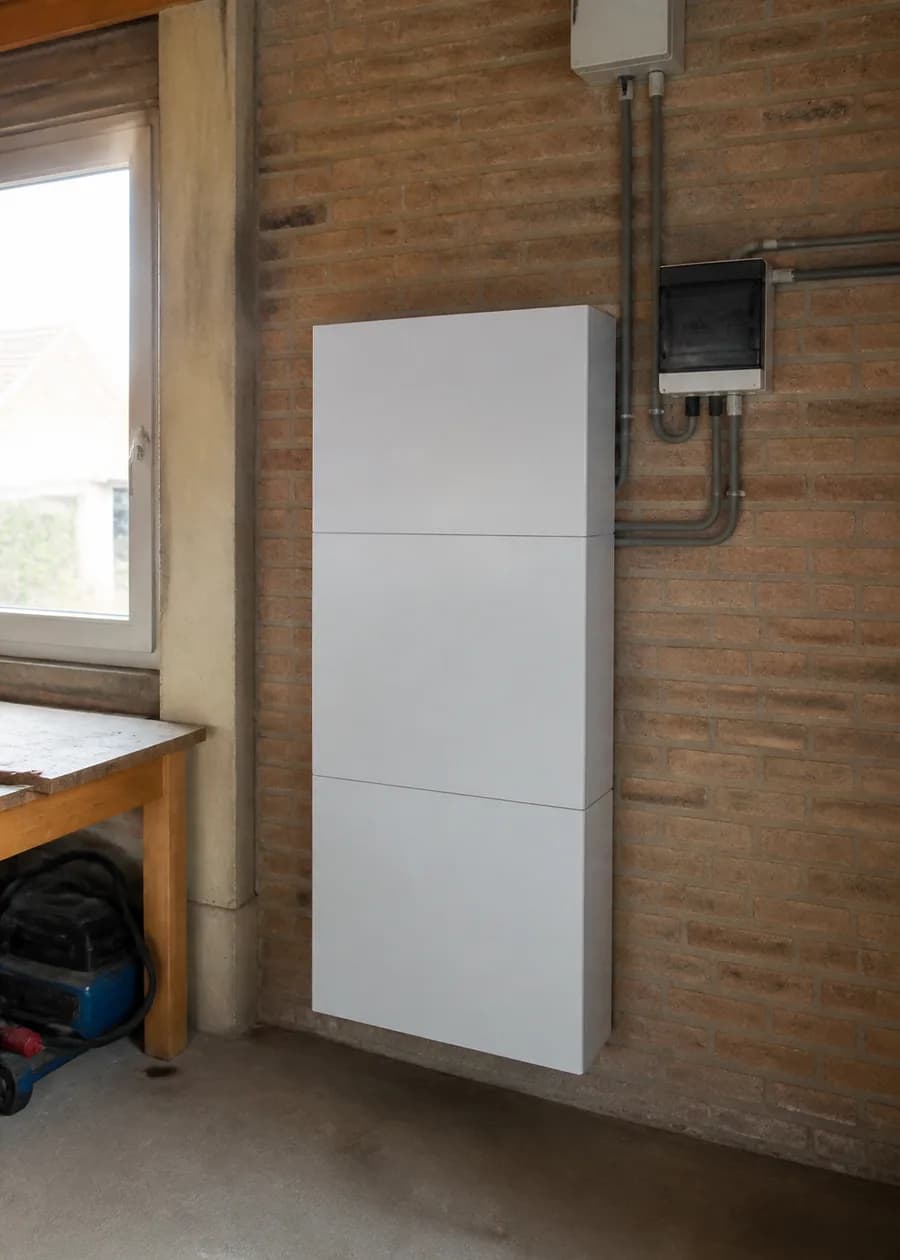
If you want the whole house to keep functioning, that is possible with an All-in-One system: the entire fuse box is placed on backup power, so all circuits can stay active. The induction hob, the heat pump and the EV charger then keep working during an outage too. In return, such a system needs more space and budget. On three-phase, backup power has a power ceiling; what that means for your fuse box is in 1-phase or 3-phase home battery. What the variants look like and how the switchover works is on the HyxiPower home battery page.
| Hybrid backup | All-in-One | |
|---|---|---|
| What keeps working | One or two circuits (typically max. two B16) | All circuits in the fuse box |
| Typical appliances | Fridge, lighting, router, heating boiler | Induction hob, heat pump and EV charger too |
| Space and budget | More compact and more affordable | Needs more space and budget |
| Best for | Basic comfort during an outage | A home that must keep running fully |
Based on the HyxiPower configurations we install; the site survey decides what fits in your fuse box.
How long can you last on a battery?
That depends on two things: how much is in the battery and what you connect to it. A worked example with round numbers: fridge, router and some lighting together draw in the order of 150 to 200 watts. A 10 kWh battery that is half full keeps that going for roughly a day; a full battery twice as long. A 20 kWh pack keeps the same circuits going for roughly twice as long. For outages averaging a good hour, that is more than enough.
If you also connect heavy consumers through an All-in-One system, it goes fast: a heat pump or EV charger easily draws several kilowatt-hours per hour. The whole fuse box on backup mainly means everything can keep working; how long is up to you, by being frugal during an outage. What a battery with the matching capacity costs is covered under what a home battery costs.
A plug-in battery or power station as backup?
A plug-in battery that feeds back through a wall socket goes just as quiet during an outage as a fixed battery without backup: it too must not put voltage on the grid during a fault. Some models have their own outlet to power one appliance directly. People sometimes call that a plug-in battery with backup, but it is not a backup provision for your fuse box. The differences between the two types are in our comparison plug-in battery or fixed home battery.
If you only want an emergency battery for a single device, for example to keep your router or a medical device running for a few hours, a portable power station can be enough. We do not sell those, but it is only fair to say you do not need a fixed home battery for that single purpose. A fixed battery with backup becomes interesting once you also want it to work the rest of the year: storing your own solar power and charging and discharging smartly.
How we handle backup power at SolarFast
During the site survey we first look at which circuits are genuinely critical for you and whether your fuse box allows a backup provision. Then we advise a configuration: no backup if saving money is the goal, hybrid backup for the essential circuits, or All-in-One if the whole house must keep running. We size the battery capacity on your normal consumption, because the battery spends 99 percent of its time simply storing your own power.
You get a no-obligation quote within 24 hours and after approval we usually install within three weeks. Not sure which variant fits? Put your situation to us or browse the options on our home battery page first.
Solar panels are still a smart investment in 2026. A few things matter if you want the most from your own power.
Your energy use
Planning to drive, cook or heat electrically? Factor that into how many panels you install now.
Spread the yield
Spread panels across roof faces so you generate through the day and use more of your own energy.
Your data
Choose a system with its own 4G connection and data storage in Europe so your information stays secure.
Boost your energy
A smart home battery stores today's power for later, so you use more of your own electricity after sunset.
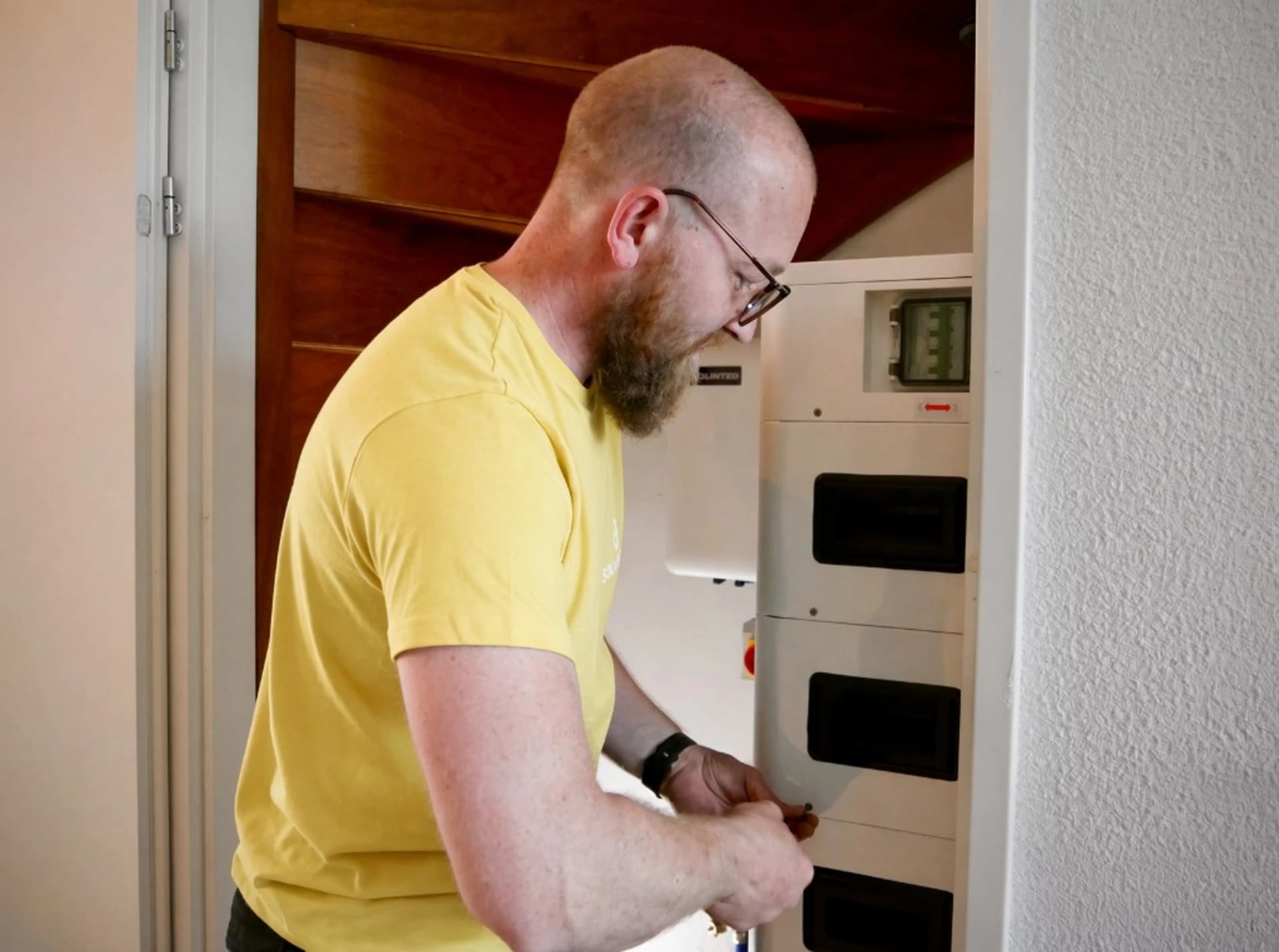
We install your home battery
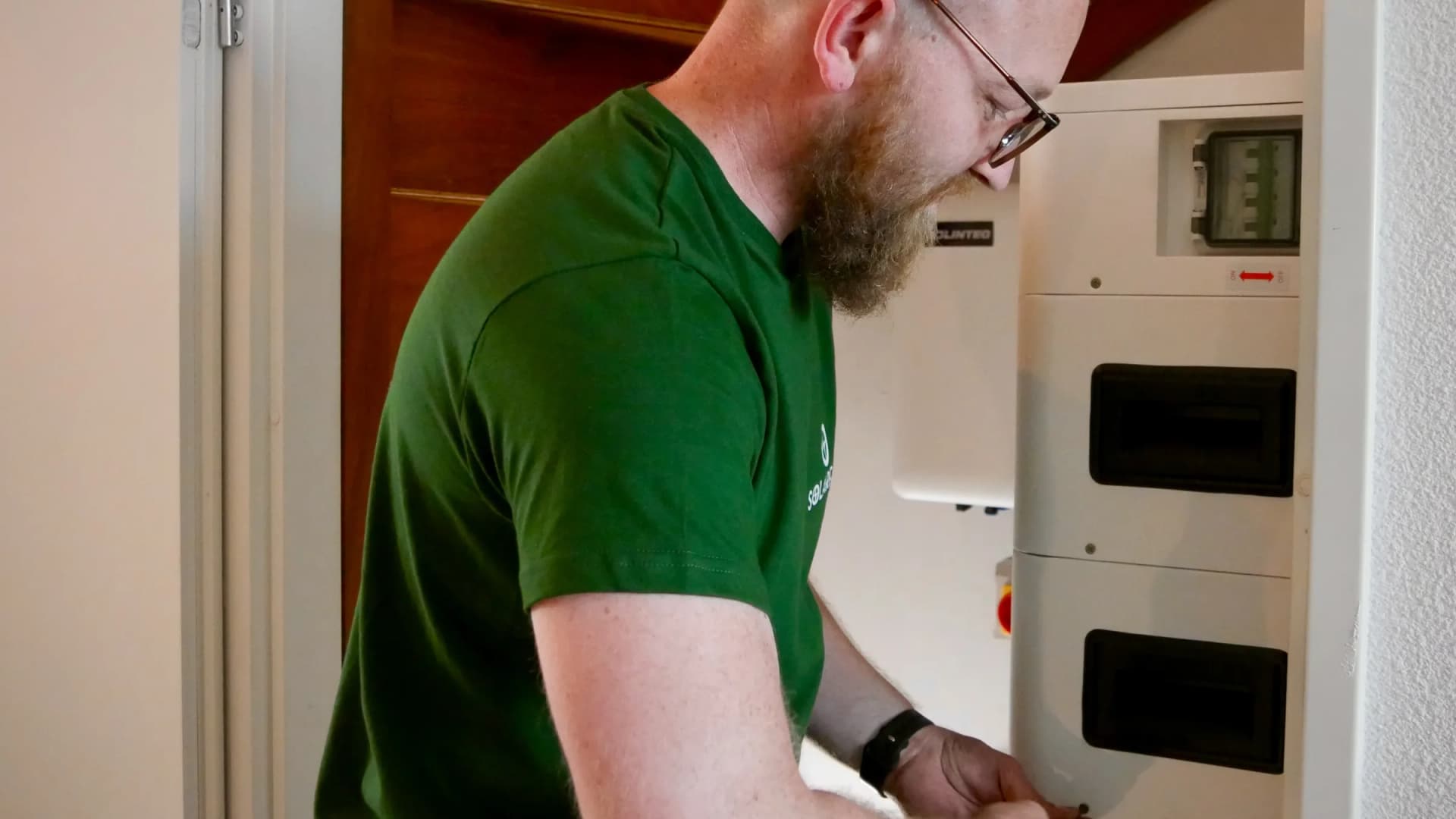
Usually within three weeks. Our installers fit the battery neatly and safely by your fuse box. We leave your home clean and make sure you know exactly how it all works.
- Charge smart when power is cheap
- Keep power until you need it
Frequently asked questions
Only if a backup provision is installed. Without it, a grid-connected home battery actually switches off during a power outage, even when full.
Hybrid backup keeps one or two circuits running, typically a maximum of two B16 circuits, for example the fridge and your router. With an All-in-One system the entire fuse box can go on backup power, so all circuits keep working.
With hybrid backup usually the fridge and freezer, lighting, internet and router and often the heating boiler. Heavy consumers such as an induction hob, heat pump or EV charger are usually left off; with an All-in-One system they can keep working.
On the HyxiPower systems we install, switching to backup power takes 0.01 seconds. Most appliances never notice; your computer simply stays on.
That depends on the capacity and on what you connect. A few essential circuits totalling 150 to 200 watts last roughly one to two days on a 10 kWh battery. 20 kWh is roughly double on the same circuits. Connect a heat pump or EV charger as well and it goes many times faster.
People usually mean a fixed home battery with backup, so the fridge or a few circuits keep working when the grid drops out. A portable power station is different: it feeds one appliance from its own outlet, not your fuse box. We do not sell those packs.
No. HyxiPower ALL-IN and KStar ALL-IN can do backup; HyxiPower hybrid and Dyness have no full backup. Say so at the quote stage, and we include the provision in the design.
For most households, no: the average outage time is less than half an hour per year according to Netbeheer Nederland. It changes with a home office that cannot go down, medical equipment or a well-stocked freezer; then backup is worth considering.
Not for your fuse box. A plug-in battery feeds back through a wall socket and therefore goes quiet during an outage too. Some models have their own outlet for a single appliance, but that is not a backup provision for your home.

Discover what smart energy can do for you
In about an hour you get insight into your savings, the options for your home and when the investment pays back. Straightforward, honest advice so you know exactly where you stand.
Smart energy at home
- Upgrade your home with our smart battery
- Our solar panels deliver up to 25% more energy
- A heat pump to minimise your energy use
- Charge your electric car easily at home with an EV charger
Booking an advice call is easy
Fill in your details below. Within a day we will contact you to schedule a no-obligation advice call together.
Related articles