Which home battery do I need? How to find the right size
Updated on 12 min read
Which home battery do I need? Evening and night use sets the kWh. Then your fuse box (single or three phase), solar surplus and inverter come into play.
All articles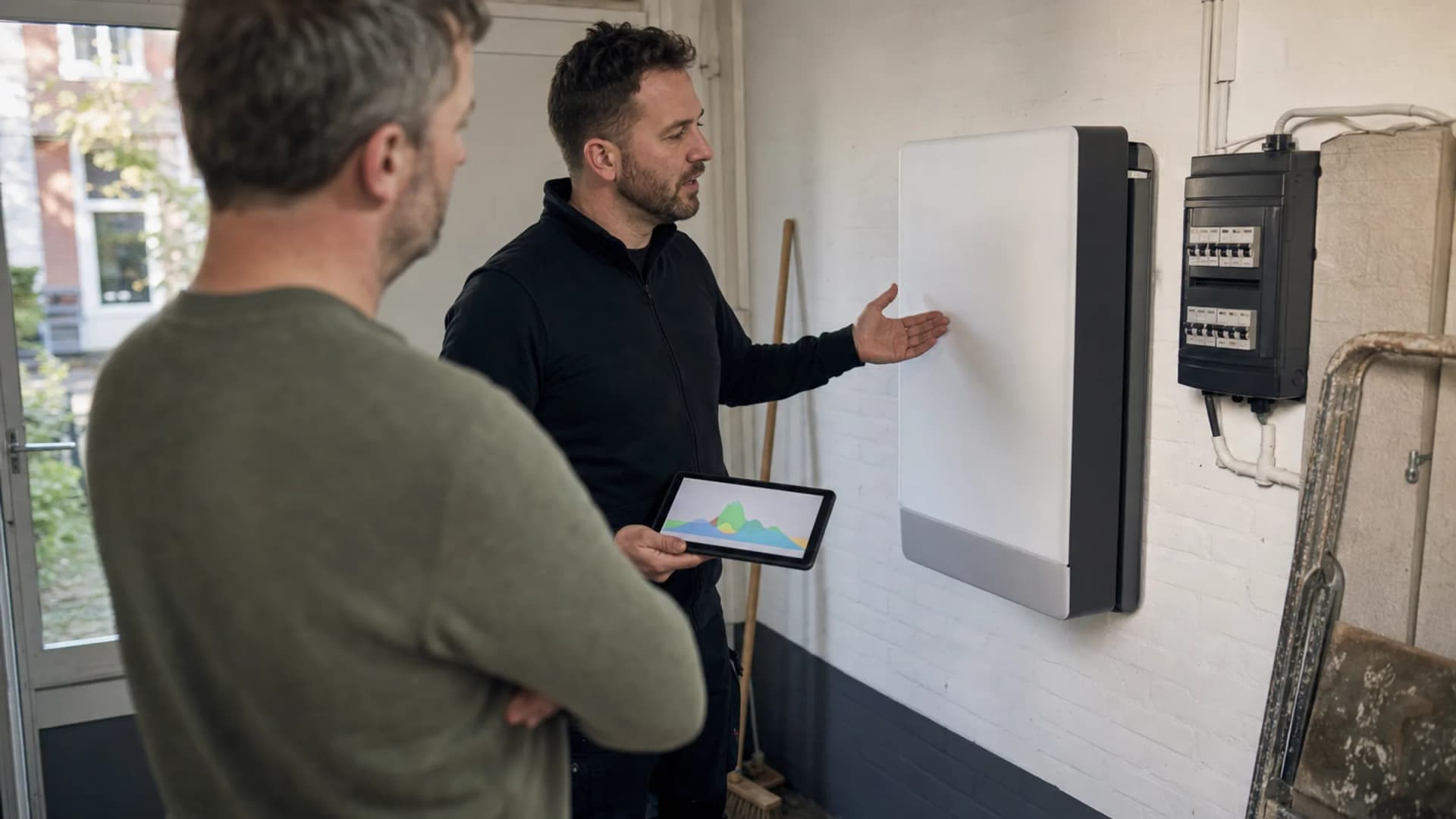
Which home battery you need follows from four things: your evening and night use, your fuse box (single or three phase), how much solar power you have left over during the day and whether your current inverter fits a battery. Evening use sets the kWh. Our range runs roughly from 5 to 26 kWh.
What capacity and what power rating? Four questions in order
 Home battery
Go through these four questions in order. Each one rules out options. Not sure of an answer? We work it out together during the site survey.
- How much do you use in the evening and at night? That number sets the capacity in kWh. How to add it up and which class fits is explained below.
- Single phase or three phase? On single phase the battery shares its power with the rest of your home. We install the largest sizes in our range, towards 26 kWh, on three phase. The power in kW must also suit your main fuse; we check that during the site survey.
- How much solar power is left over during the day? That surplus charges the battery, and in the evening and at night you use that power from the battery. If the battery is bigger than your daytime surplus, solar alone will not fill it. Going bigger mainly makes sense if you also charge from the grid, for example on a dynamic contract.
- Which inverter is on the wall now? If you already have solar panels, we check whether your current inverter can work with a battery. With a hybrid inverter too, we look at your exact model. For the battery itself, our range offers two routes: an all-in-one with battery and hybrid inverter in one cabinet, or a separate battery with a matching hybrid inverter. The survey decides which route fits.
Start with your consumption, not the brochure
It is tempting to start with brands and spec sheets. The other way round works better: first measure how much power you use during the hours your solar panels produce nothing, then look for a battery that matches. A battery only earns money on power that actually flows through it. Every kilowatt-hour of storage you rarely use is dead capital.
In practice: open your energy app or smart meter data and check what you use between roughly five in the afternoon and seven in the morning. That evening and night use varies far more between households than the yearly total suggests, certainly with a heat pump or electric car in the mix. We size the battery on that number, not on the average household from a brochure.
| Measured evening and night use | Fitting capacity class | What to watch |
|---|---|---|
| 3 to 4 kWh | Around 5 kWh | The smallest fixed systems; often enough without a heat pump or EV charger |
| 5 to 8 kWh | 8 to 10 kWh | Room to grow; check that the inverter can handle the power |
| More than 8 kWh | 10 kWh or more, sometimes stacked | Three-phase is often the logical fit; the site survey decides what the fuse box allows |
Rules of thumb from our own installation practice; the site survey decides. If you generate little during the day, how much the battery can charge from the grid matters too.
We regularly see two pitfalls in quotes from elsewhere: a battery bigger than the solar panels can ever fill, and a battery that runs empty by eight every evening. Both a waste of money. Still unsure whether storage suits your situation at all? Read the comparison with or without a home battery first. What capacity costs and when it pays back is covered under what a home battery costs.
How to calculate capacity: add up what you use in the evening
Calculating capacity does not start with a brochure formula. Open your energy app or smart meter data and add up what your home uses between roughly five in the afternoon and seven in the morning. That evening and night use is the size. A battery bigger than that peak sits idle most of the week.
Once you have that number, pick the class next to it: around 5 kWh for 3 to 4 kWh of evening use, 8 to 10 kWh for 5 to 8 kWh, and 10 kWh or more if your evening use sits above that. A heat pump or EV charger pushes the number up; without those two, the smallest fixed battery is often enough.
During the survey we check it against your actual meter data. The table above is a rule of thumb, not a quote.
kWh is the tank, kW is the tap
Capacity in kilowatt-hours tells you how much power fits in the battery. Power in kilowatts tells you how fast it can charge and discharge. Two batteries with the same capacity can therefore perform very differently on an evening of cooking, a running dryer and a car on the charger. We explain the difference between the two units under what is a kWh.
Why that power rating matters: during a peak the battery must actually be able to deliver. If it cannot, you still buy from the grid at the most expensive moment, while the battery sits there full. And if you want to charge during cheap hours, the charging power decides how much you can take in during that one cheap hour.
So look at the continuous charge and discharge power in the datasheet, not just the peak figure used in advertising. During the site survey we check that this power matches your consumption peaks and your connection.
Single or three phase: your fuse box has a say
Many existing homes have a single-phase connection; for newer or upgraded homes 3x25 amps is the standard. A home battery works fine on single phase, but its power shares that one phase with the rest of your house. A three-phase system can charge and discharge harder and spreads the load neatly across the three phases.
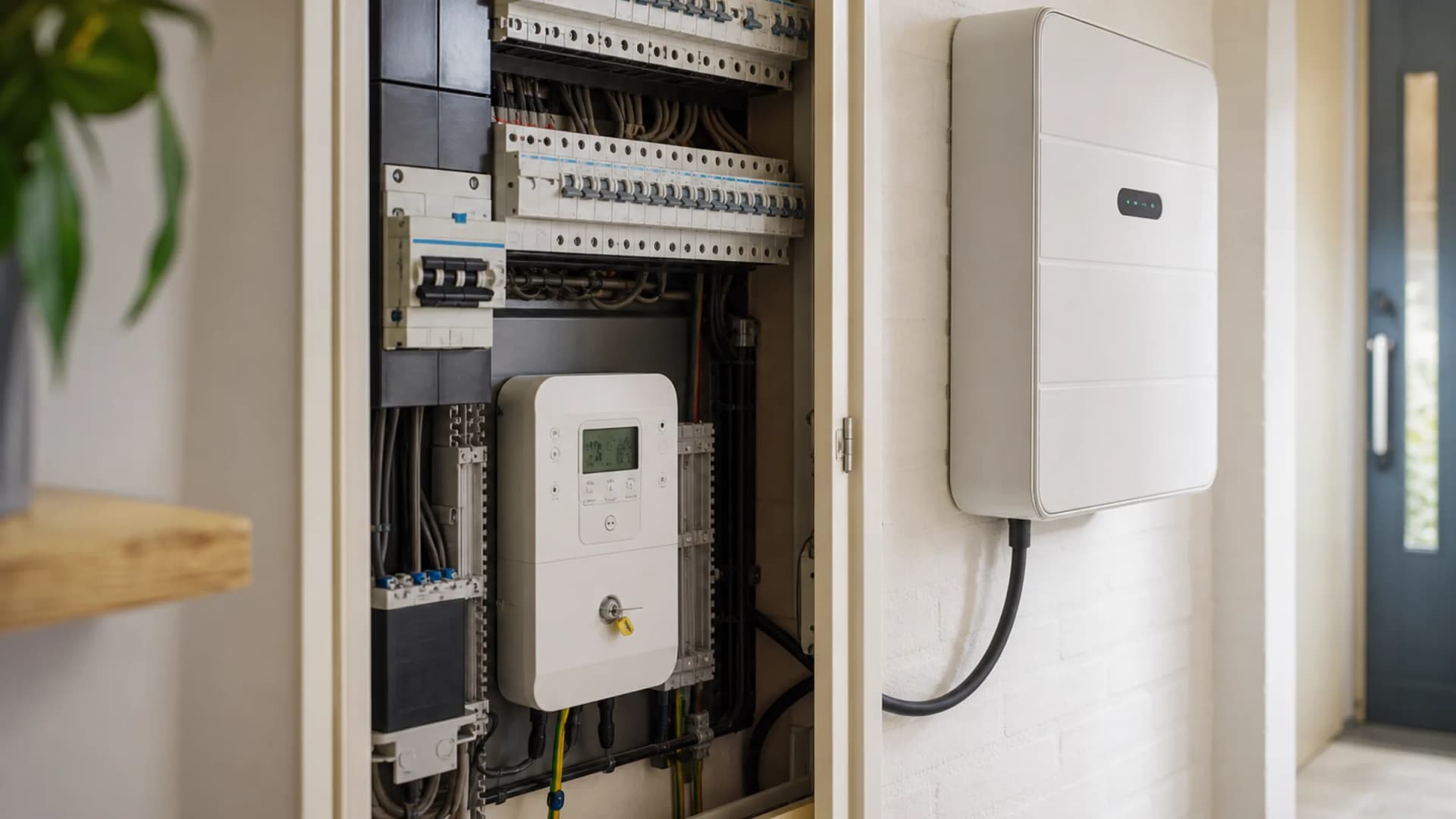
During the survey we look at your main fuse, the free circuits in the fuse box and where the inverter goes. Heavy systems or stacked modules quickly call for three phase. Upgrading the connection is possible, but above 3x25 amps your fixed grid charges also rise. We only include that in the advice when it genuinely pays. The full trade-off, including what the smart meter does with the phases, is in single-phase or three-phase home battery.
Placement: cool, ventilated and outside your escape route
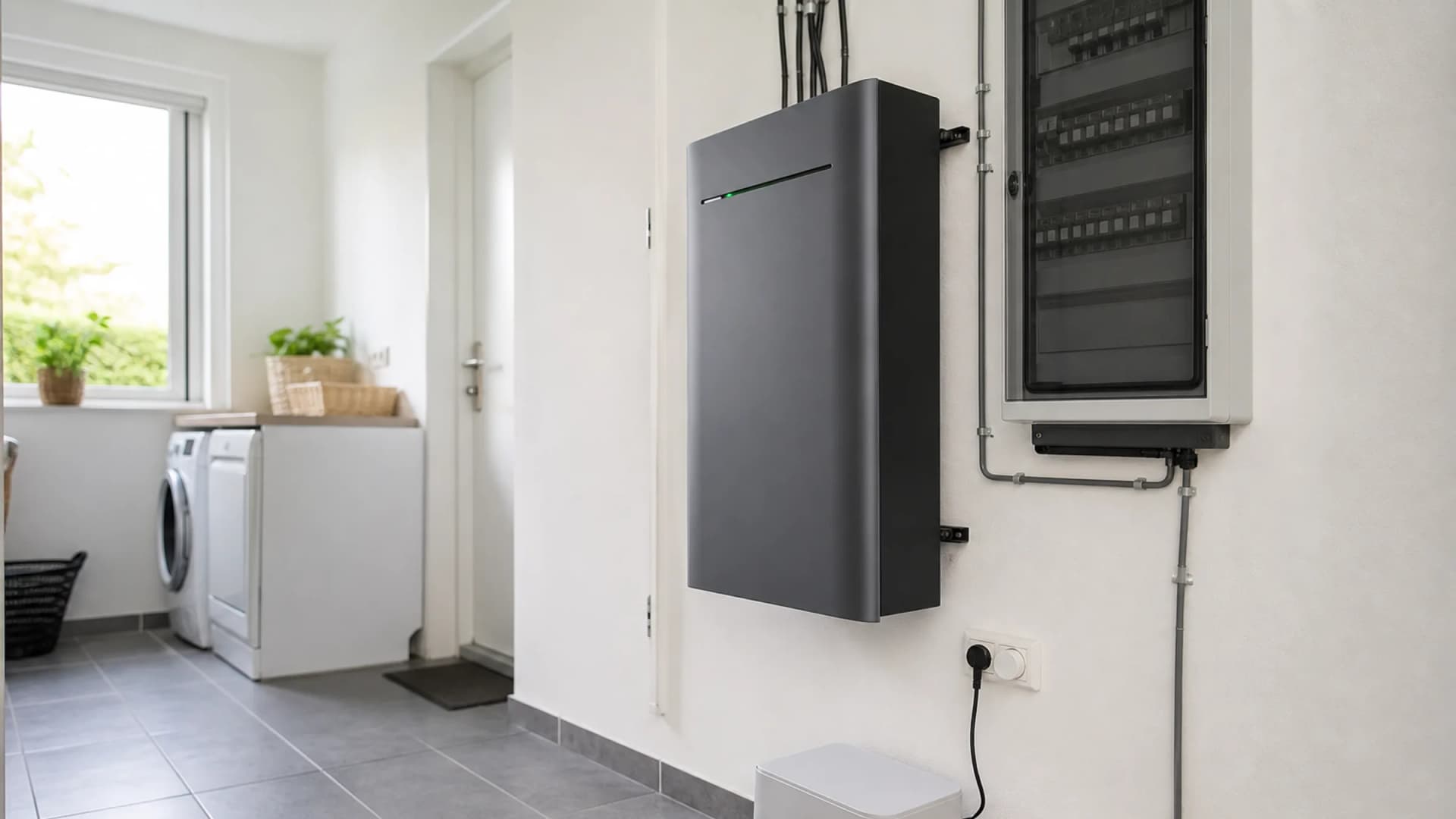
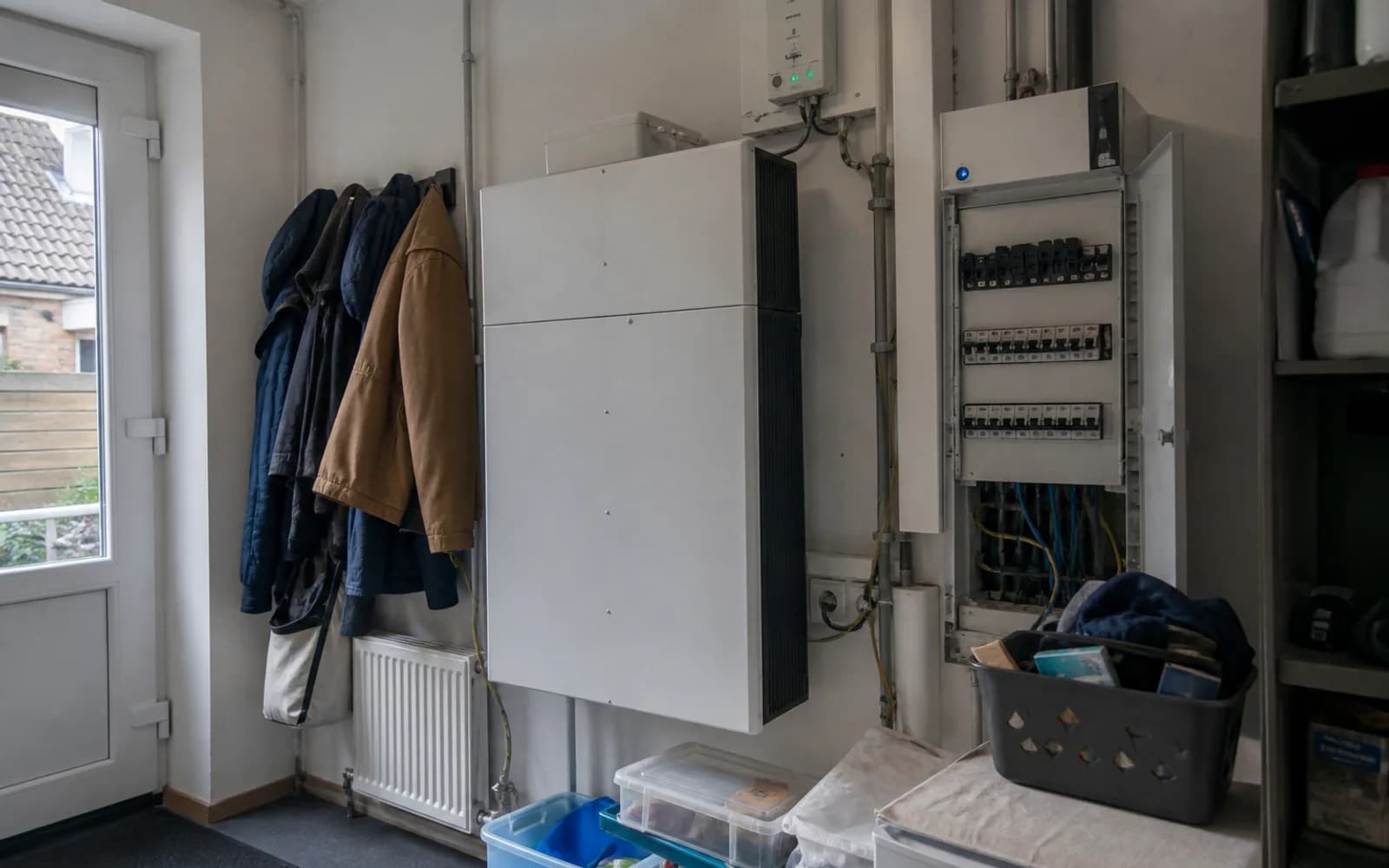
For the location, the advice of the Dutch fire service (Dutch) applies: the most fire-safe spot is a cool, well-ventilated space such as the shed, otherwise the garage or the attic. Never hang the battery in your escape route, mount it on a non-combustible surface, fit a smoke detector in the same room and have the installation done only by a certified installer.
The fire service also advises checking the datasheet for qualification under the IEC-EN 62619 standard, and asking whether the battery management system shuts the battery down on a fault or rising temperature. Those are exactly the questions you are allowed to ask a seller.
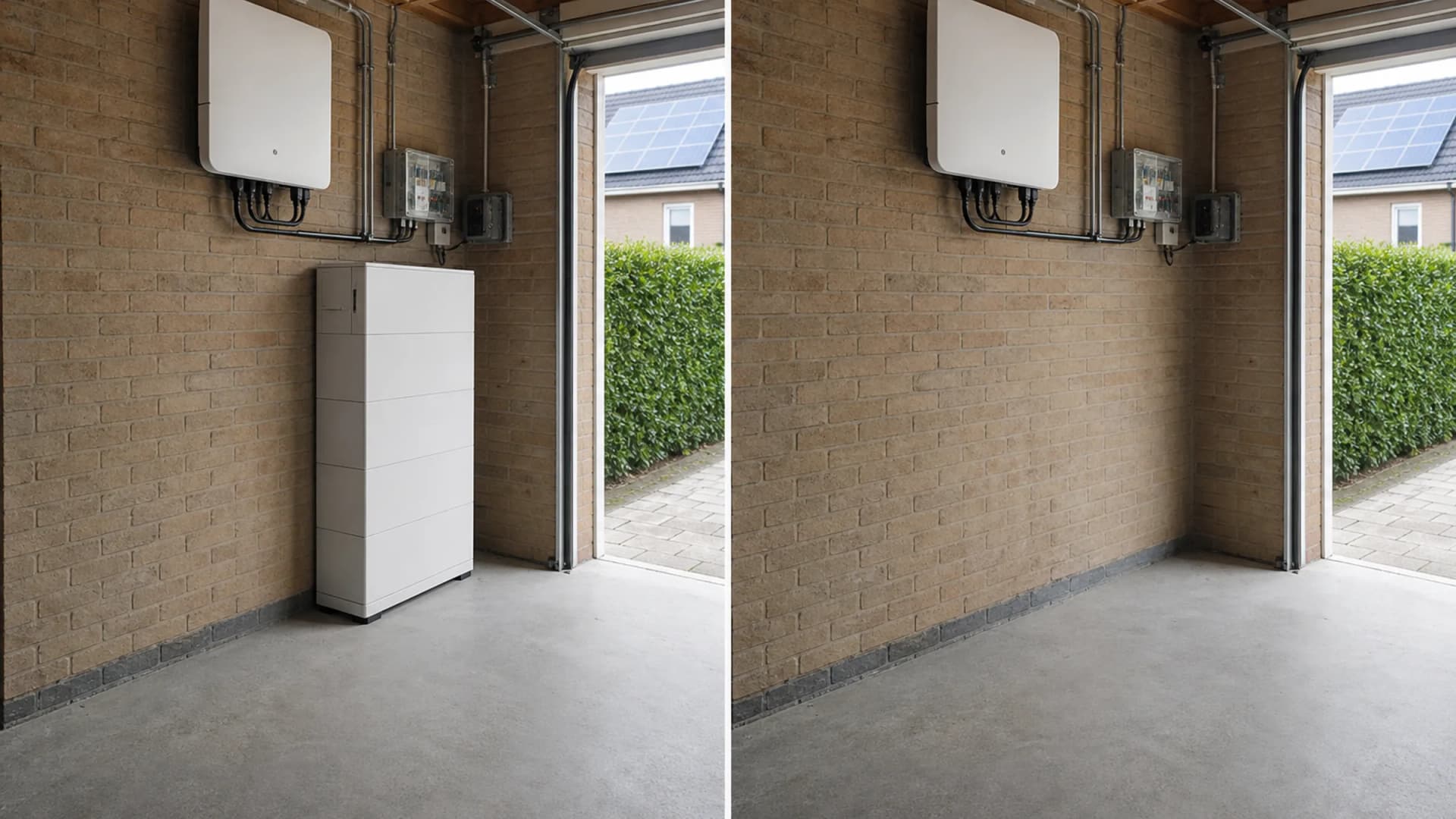
From our own practice, three points come on top. Distance to the fuse box: long cable runs cost money and power. The surface: battery modules are heavy, so the wall or floor must carry them. And the environment: dry and frost-free, so no crawl space and not right next to the boiler. A full room-by-room walkthrough, from shed to attic, is under where to place a home battery.
Control: the difference between a dumb and a smart battery
The simplest battery charges on solar surplus and discharges as soon as your home needs more than the panels deliver. A fine base, every system starts there. It gets more interesting with an energy management system and a dynamic energy contract: the battery then charges during the cheapest hours and discharges when power is expensive, including in winter when the panels do little.
A battery that can be steered remotely can also join grid control: for a payment it helps the grid during peak moments. And if you want to genuinely trade with it, you need that combination of EMS and dynamic contract anyway; it is also the basis for the VAT refund on a home battery.
So when choosing, look beyond the box on the wall at what the software can do and which energy contracts it works with. A cheap battery without open control can end up costing you more than a smarter battery that moves with your contract.
Backup power is a choice, not a default
Do not assume every home battery powers your house during an outage. Without a dedicated backup provision, a grid-connected system actually switches off during a power cut. If you do want backup, there are two flavours: hybrid backup keeps one or two circuits running, for example the fridge and your router, and a full backup system can take over the entire fuse box. The latter needs more space and budget.
Which variants we supply and how the switchover works is on the HyxiPower home battery page. Weigh up beforehand what an outage really costs you; for most households backup is comfort, for a home office or medical equipment it can weigh heavier.
Registration and insurance are part of it
A battery system with a power rating of 0.8 kilowatts or more must be registered, as stated by the Netherlands Enterprise Agency (RVO) (Dutch). You do that via Energieleveren.nl, the same portal where solar panels are registered. Grid operators use the registration to plan the grid per neighbourhood. Check in your quote who handles the registration, so the step does not slip through.
Also inform your insurer about the placement; that too is fire service advice. It prevents discussion about cover if anything ever happens, and tells you upfront whether your insurer sets requirements for the location or the installation.
How we choose together at SolarFast
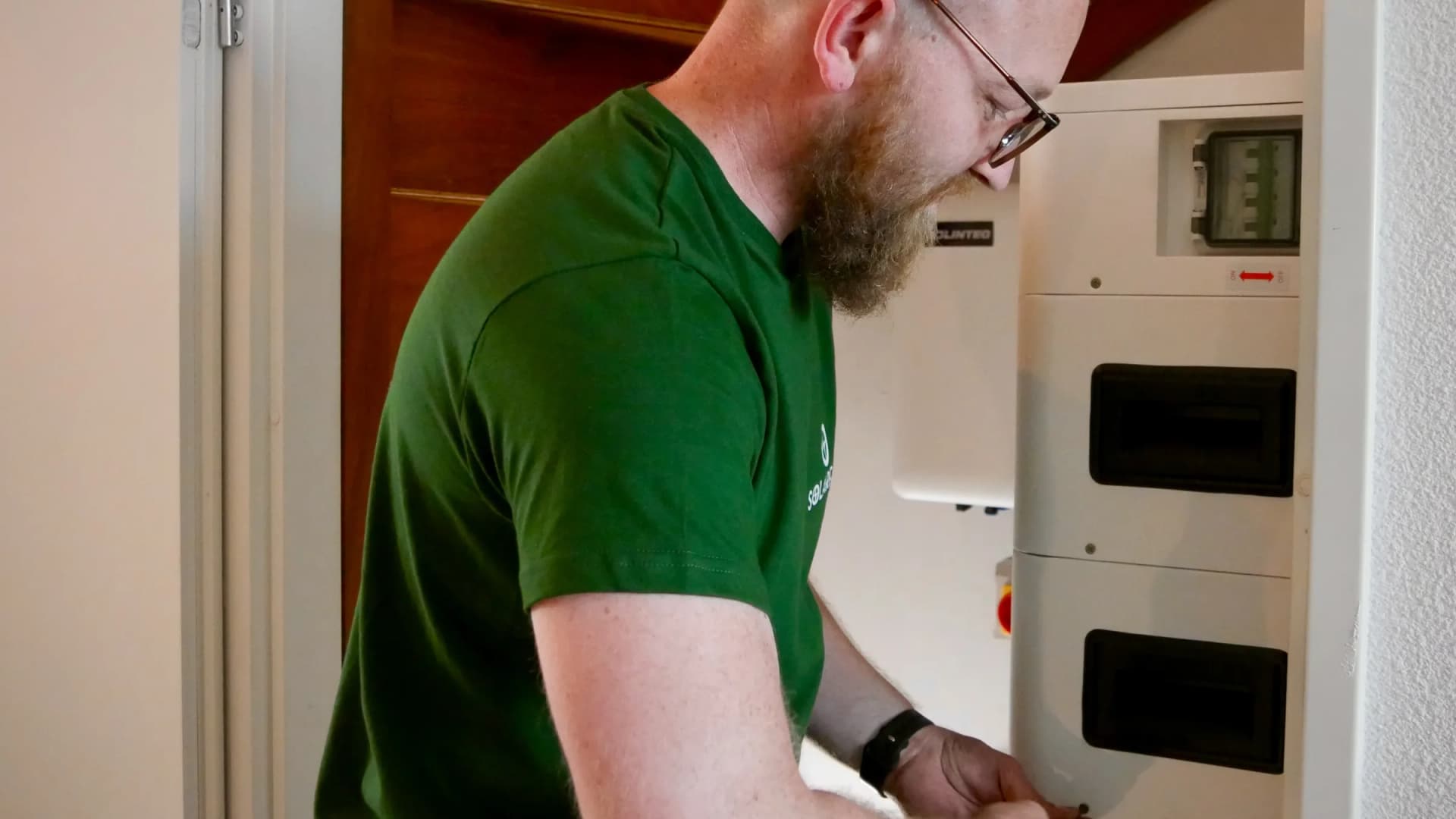
During the site survey we look at your fuse box, your evening and night use from the meter data, the spot where the battery can hang and your wishes around control and backup. That produces an advice with capacity, power and configuration that fit your home. Backup is not on every line.
You usually get a no-obligation quote within 24 hours, no deposit required, and installation typically follows within three weeks of approval. Want to talk it through first? Put your consumption to us or browse the options on our home battery page.

From your meter data to a quote
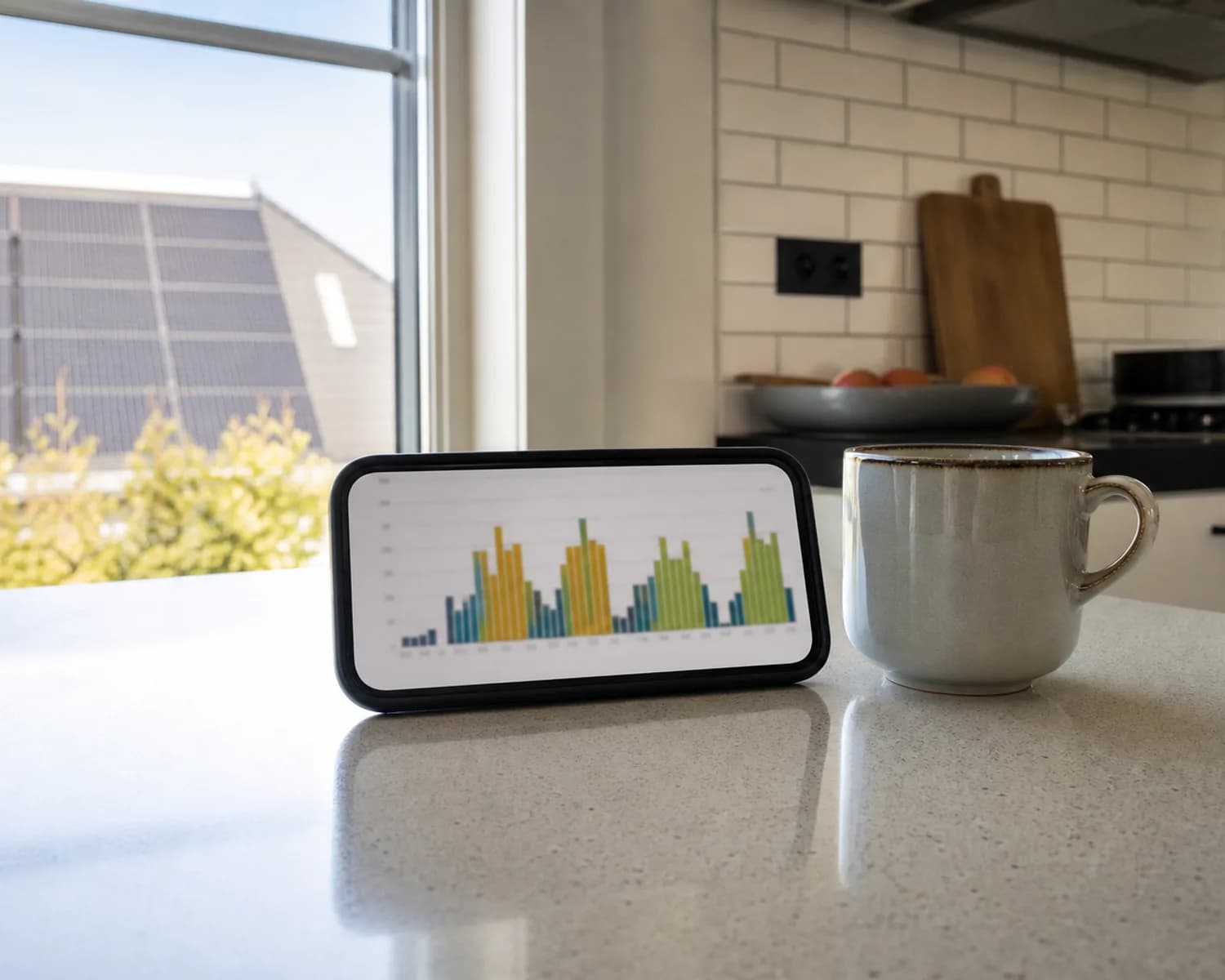
A laptop and a keyboard in the bedroom, the dryer after dinner: all that use counts towards your meter data. During the site survey we use that data to work out which capacity, power and configuration fit your home.
You usually get a no-obligation quote within 24 hours, no deposit required. Installation typically follows within three weeks of approval.
Solar panels are still a smart investment in 2026. A few things matter if you want the most from your own power.
Your energy use
Planning to drive, cook or heat electrically? Factor that into how many panels you install now.
Spread the yield
Spread panels across roof faces so you generate through the day and use more of your own energy.
Your data
Choose a system with its own 4G connection and data storage in Europe so your information stays secure.
Boost your energy
A smart home battery stores today's power for later, so you use more of your own electricity after sunset.
We install your home battery
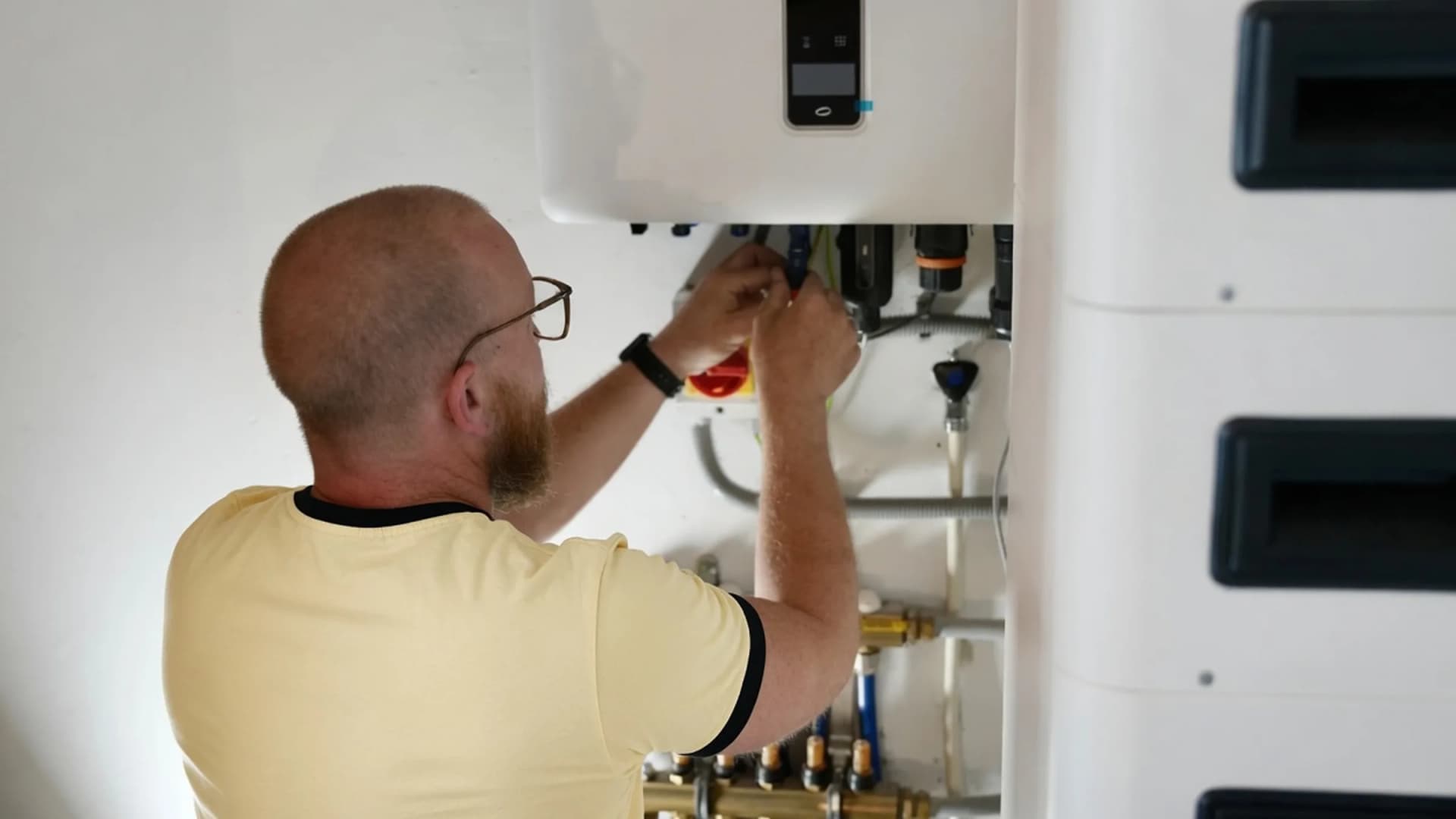
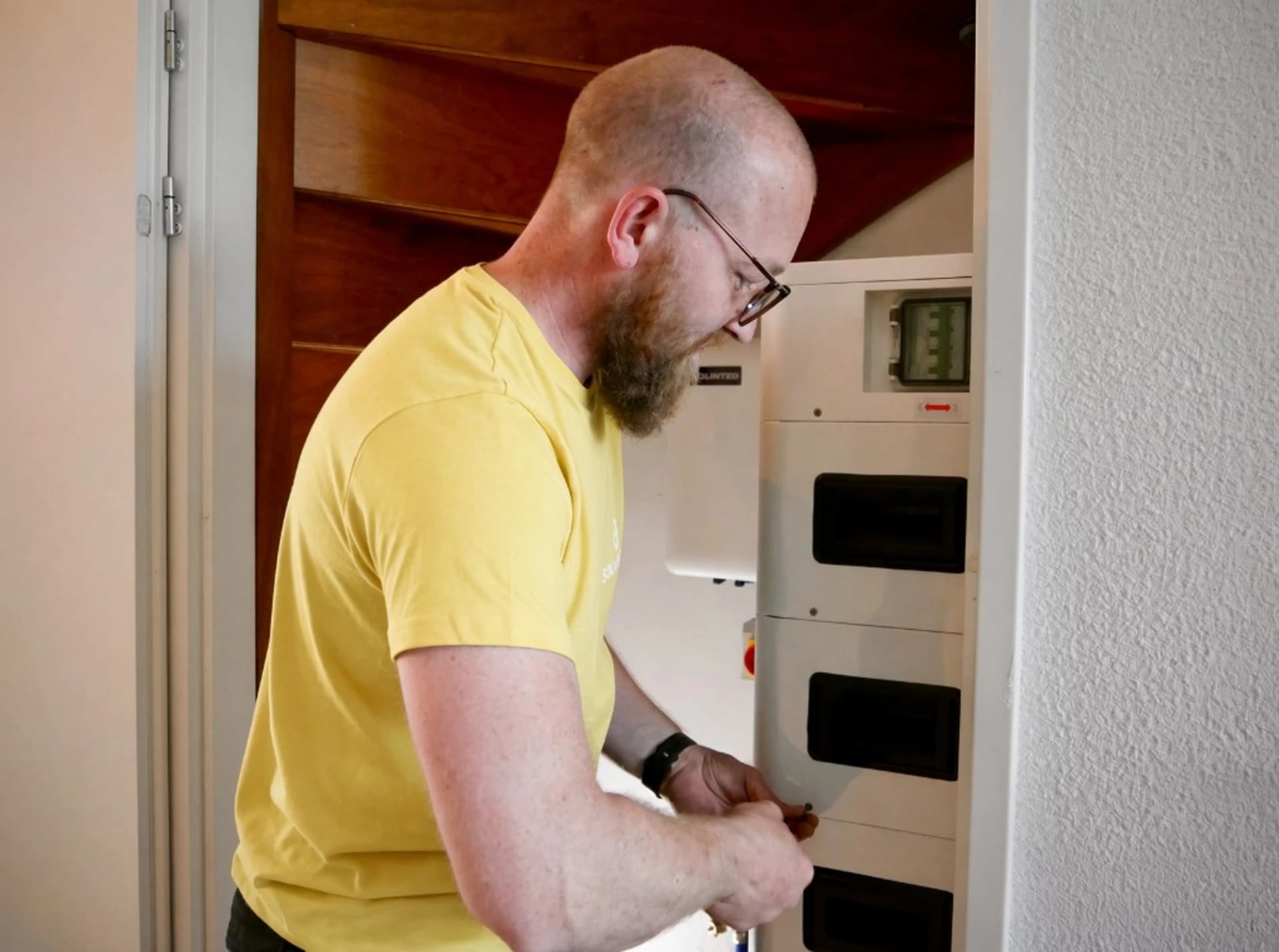
Usually within three weeks. Our installers fit the battery neatly and safely by your fuse box. We leave your home clean and make sure you know exactly how it all works.
- Charge smart when power is cheap
- Keep power until you need it
Frequently asked questions
It follows from four things: your evening and night use sets the kWh, your fuse box has a say in single or three phase, your solar surplus shows how much the battery can charge during the day, and your current inverter counts towards which route fits. During the site survey we verify it against your actual meter data.
Size follows your evening use, not a default box. Our range runs roughly from 5 to 26 kWh. More than your evening use mainly makes sense if you also want to charge the battery from the grid, for example on a dynamic contract.
In your energy app, add up what you use between roughly five in the afternoon and seven in the morning. That evening and night use is the size you need. Our range runs roughly from 5 to 26 kWh. During the survey we check it against your meter data; a brochure formula is not a substitute.
Usually not. 25 kWh is the large end of our range, which runs roughly from 5 to 26 kWh. That size only fits when your evening and night use is high, for example with a heat pump or charger, and often on three-phase with stacked modules. The survey of your meter data and fuse box decides whether that size fits your house, not a brochure.
How fast the battery can charge and discharge. If the discharge power is too low, you still buy grid power during consumption peaks, even with a full battery. Check the continuous rating in the datasheet, not just the peak figure.
Not necessarily. A battery also works on a single-phase connection, with limited power. For heavier systems or stacked modules, three phase is often the logical choice. The survey of your fuse box shows what fits.
A cool, ventilated spot outside your escape route: preferably the shed, otherwise the garage or attic. Mount it on a non-combustible surface and fit a smoke detector in the room, as the fire service advises.
Only if the system is designed for it. Most home batteries are indoor units. Check the specifications and the warranty terms before choosing an outdoor setup.
Yes. A battery system from 0.8 kilowatts of power must be registered via Energieleveren.nl, so the grid operator can account for it. Also inform your insurer about the placement.
With modular systems, often yes: you stack extra modules under the same inverter. Check beforehand that the inverter and your fuse box can handle that growth; we include it in the advice as standard.

Discover what smart energy can do for you
In about an hour you get insight into your savings, the options for your home and when the investment pays back. Straightforward, honest advice so you know exactly where you stand.
Smart energy at home
- Upgrade your home with our smart battery
- Our solar panels deliver up to 25% more energy
- A heat pump to minimise your energy use
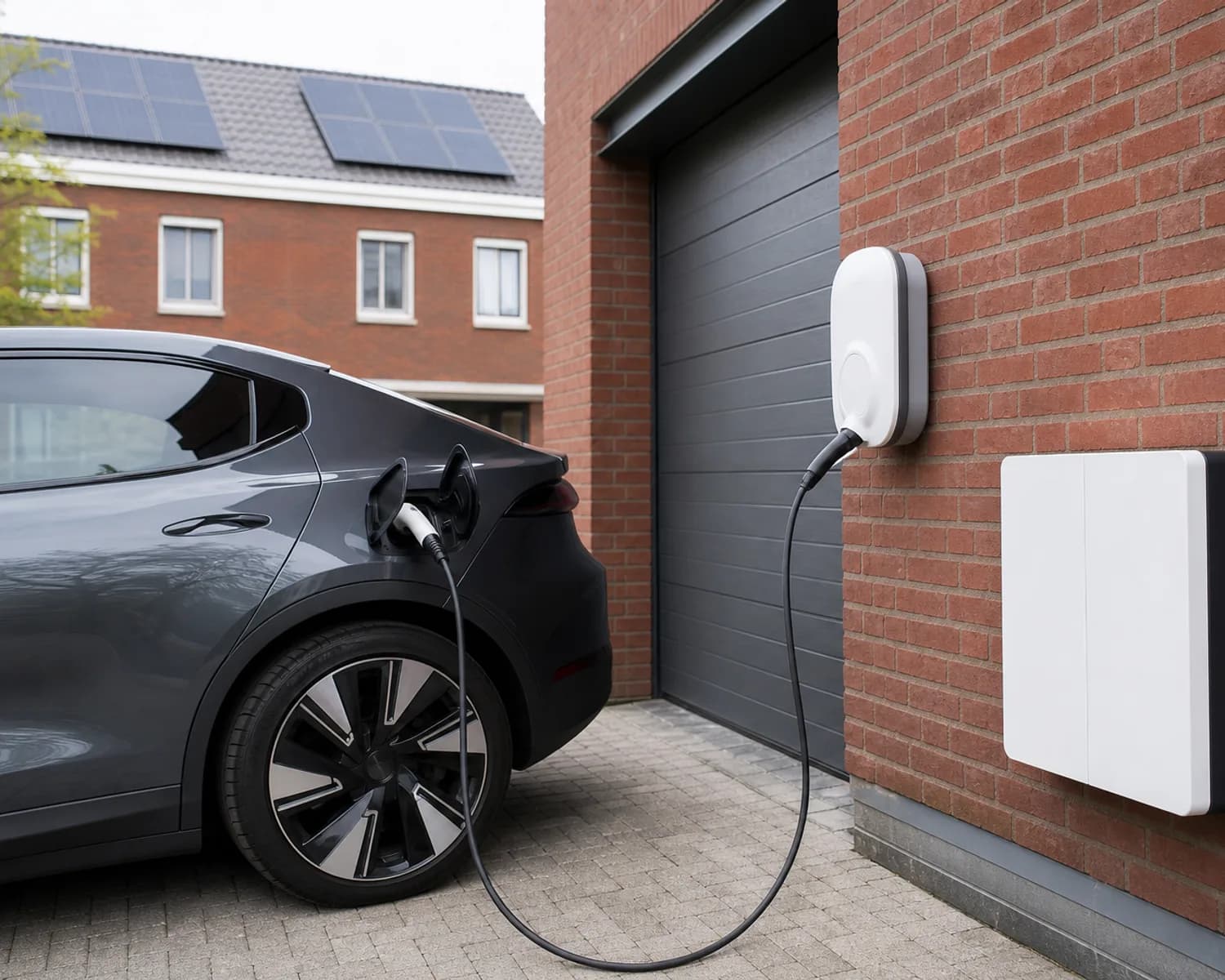
- Charge your electric car easily at home with an EV charger
Booking an advice call is easy
Fill in your details below. Within a day we will contact you to schedule a no-obligation advice call together.
Related articles