How many solar panels do I need? The calculation
Updated on 7 min read
Work out in three steps how many solar panels you need. For 4,000 kWh you land around 11 panels of 435 Wp, depending on your roof.
All articles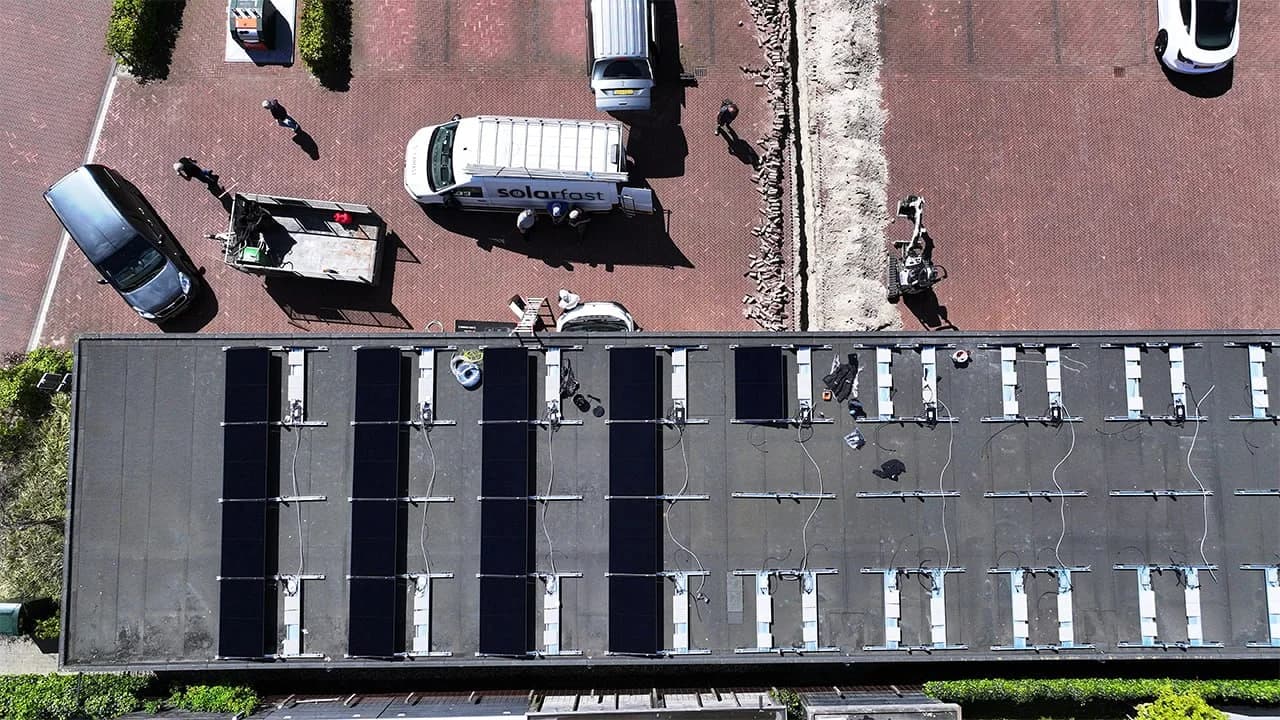
Divide your yearly use in kWh by 0.85 to 0.9 for the required power in watt-peak, then divide by the power per panel. For 3,000 kWh that lands at about 8 panels of 435 Wp, for 4,000 kWh about 11. Whether that fits is decided by your roof.
The calculation in three steps
 Solar panels
Step 1: take your annual statement and find your electricity use in kilowatt-hours. That number is the base; what a kWh is exactly, we explain separately. Step 2: divide that use by 0.85 to 0.9. That gives the power in watt-peak you need, because in the Netherlands an installation produces roughly 0.85 to 0.9 kWh per watt-peak per year, following the assumptions of Milieu Centraal (Dutch). Step 3: divide that power by the power per panel and round up.
Common panels now sit around 435 watt-peak. That makes the calculation for a south-facing roof look like this:
| Yearly use | Required power | Panels |
|---|---|---|
| 2,300 kWh | approx. 2,600 Wp | 6 |
| 3,000 kWh | approx. 3,450 Wp | 8 |
| 3,800 kWh | approx. 4,350 Wp | 10 |
| 4,000 kWh | approx. 4,600 Wp | 11 |
| 4,500 kWh | approx. 5,200 Wp | 12 |
Indicative for a south-facing roof at about 36 degrees. East-west or shade changes the outcome; during the survey we calculate with your roof.
The calculation gives a starting point, not a final answer. On an east-west roof each panel yields a bit less, so the count comes out slightly higher. How much each orientation differs is covered in our piece on solar panel yield.
Should you cover your entire consumption?
Generation equal to consumption is a logical starting point. While the net metering scheme runs, exported power is offset against your draw and every generated kilowatt-hour is worth the same. After that scheme ends, what counts most is how much of your own power you use directly; exporting earns less.
That is no reason to install fewer panels, but it is a reason to calculate smarter. Exporting a lot can trigger feed-in charges with some suppliers, while a larger system leaves room for a heat pump, EV charger or home battery later. So during the survey we look beyond last year's consumption at what will change in the coming years.
Does that number fit on your roof?
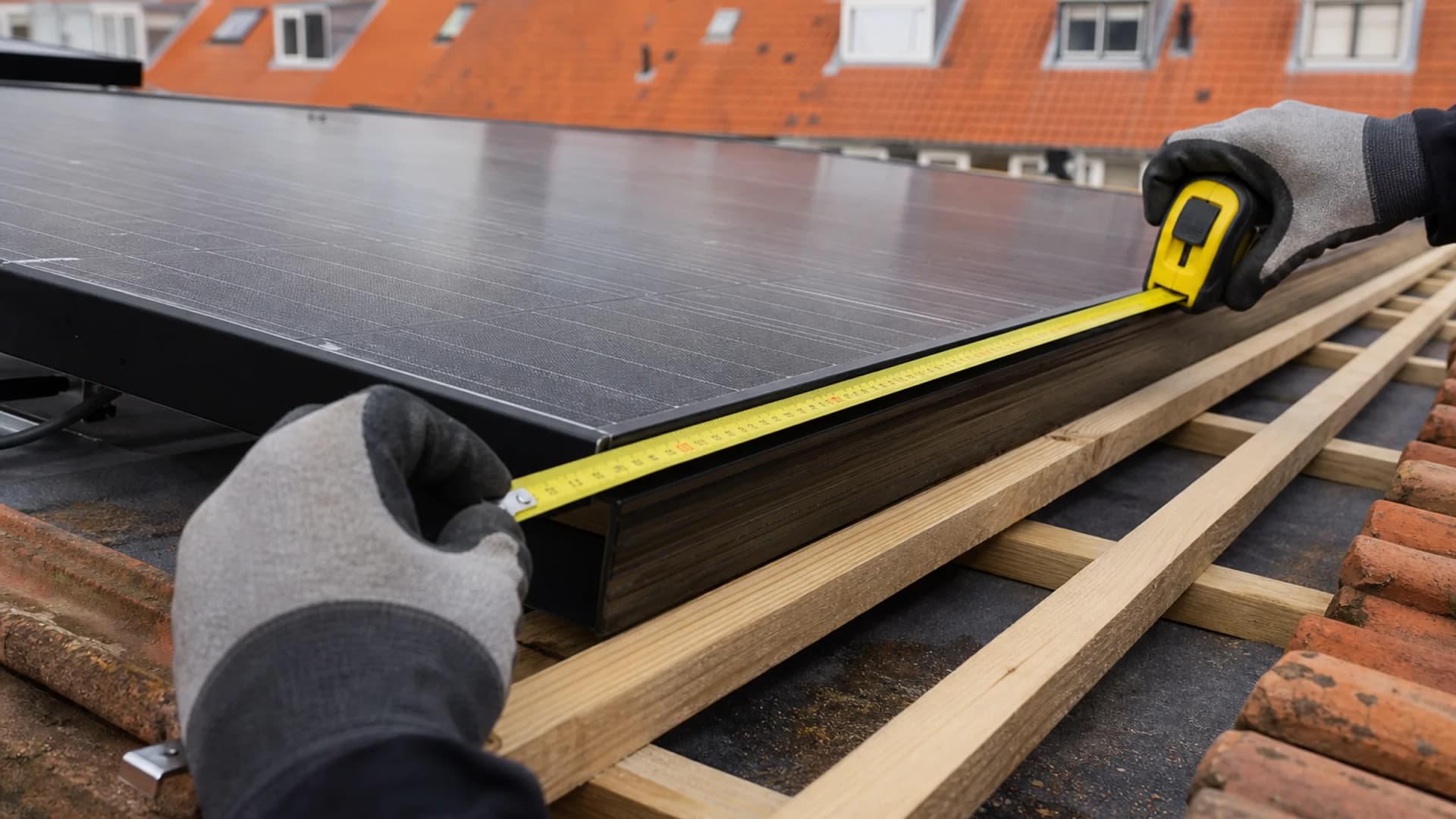
A common panel measures about 1.75 by 1.15 metres, so count on roughly 2 square metres per panel. Eight panels need about 16 to 18 square metres of uninterrupted surface on a pitched roof. Roof windows, a chimney or a dormer break up that surface; that is why we always draw the layout first.
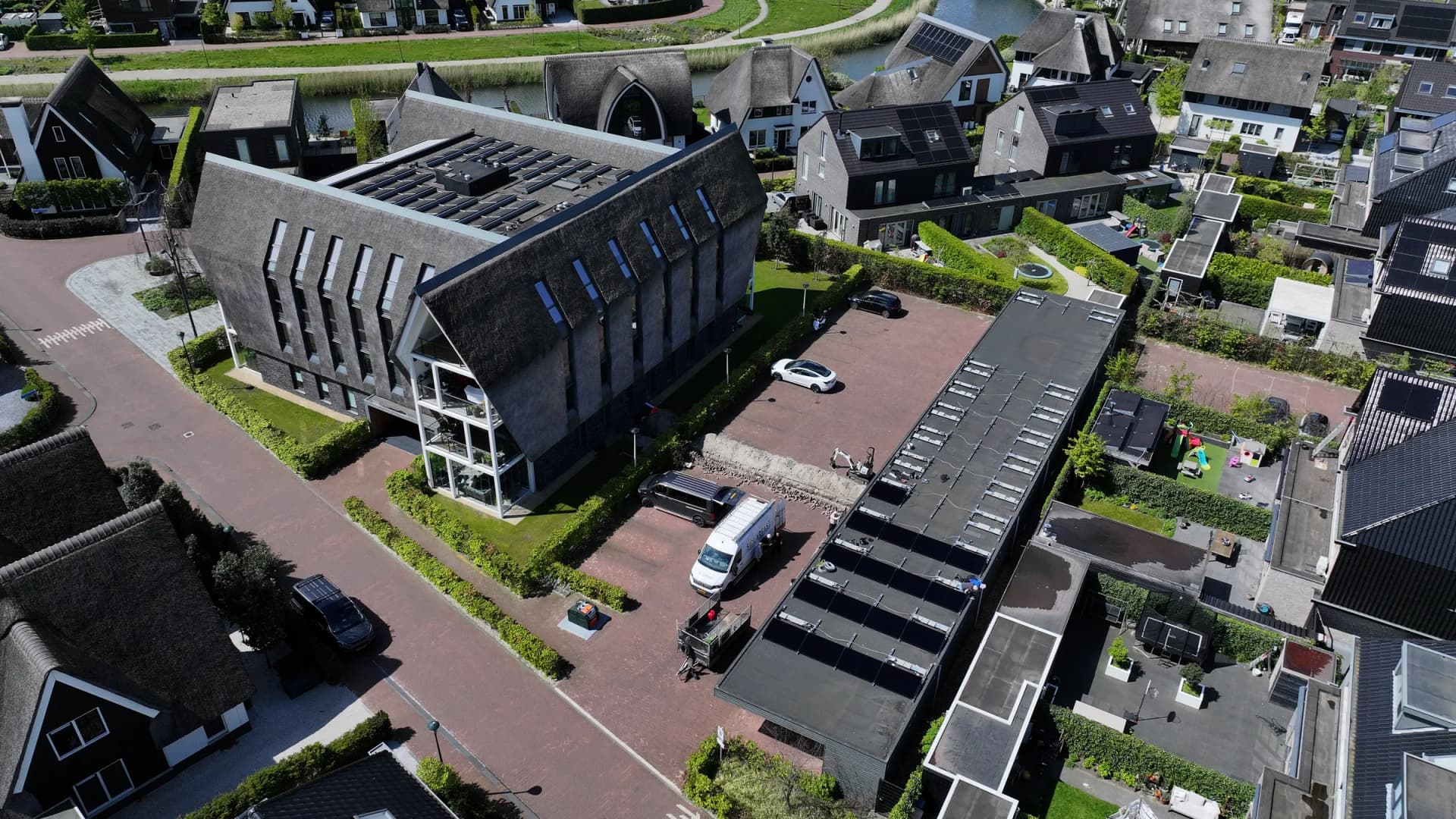
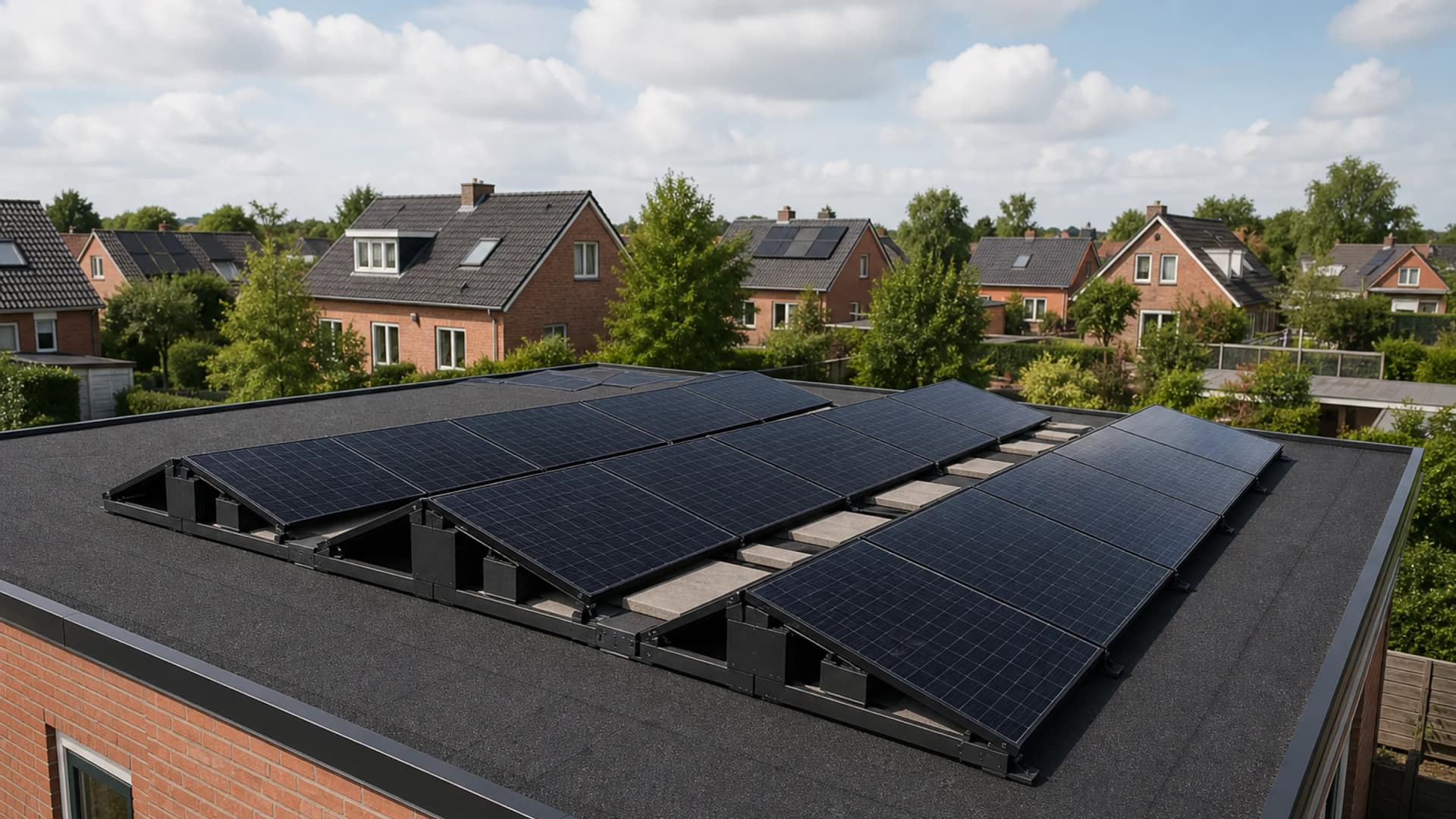
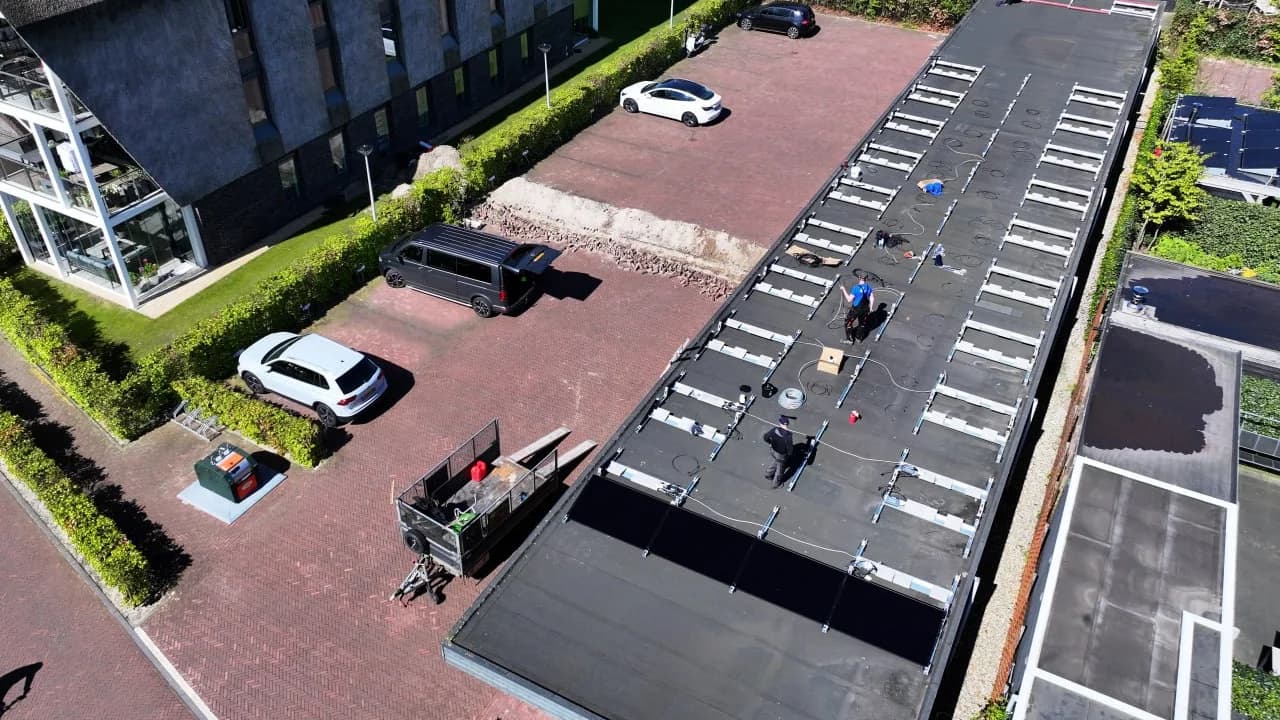
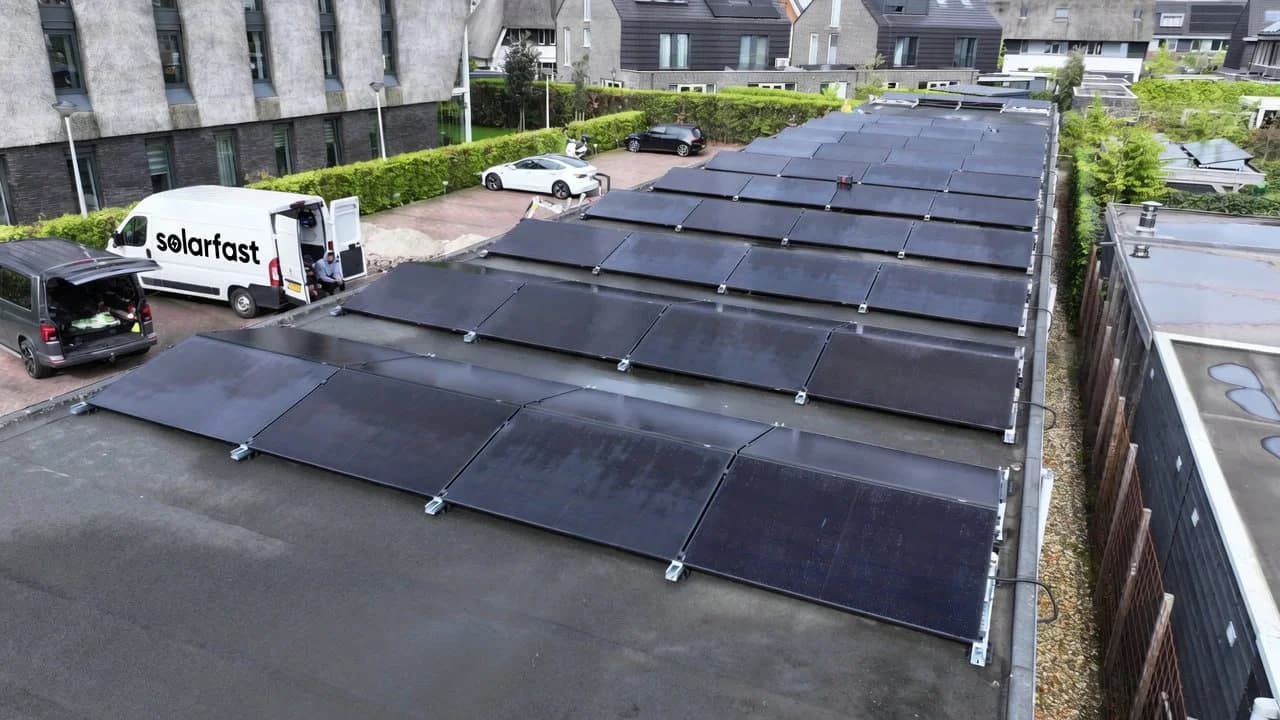
A flat roof works differently. Panels sit in ballasted frames there, and in a south-facing layout we keep spacing between rows so they do not shade each other. That quickly means well over double the roof area per panel. An east-west layout packs tighter and often uses a flat roof better. The edges count too: we keep clearance along the roof edge because of wind load.
Whether your roof is suitable in terms of load, orientation and shade can be checked upfront via the Milieu Centraal guide on roof suitability (Dutch). During the survey we assess it on site, including the cable route to the fuse box.
Shade and the inverter count as well
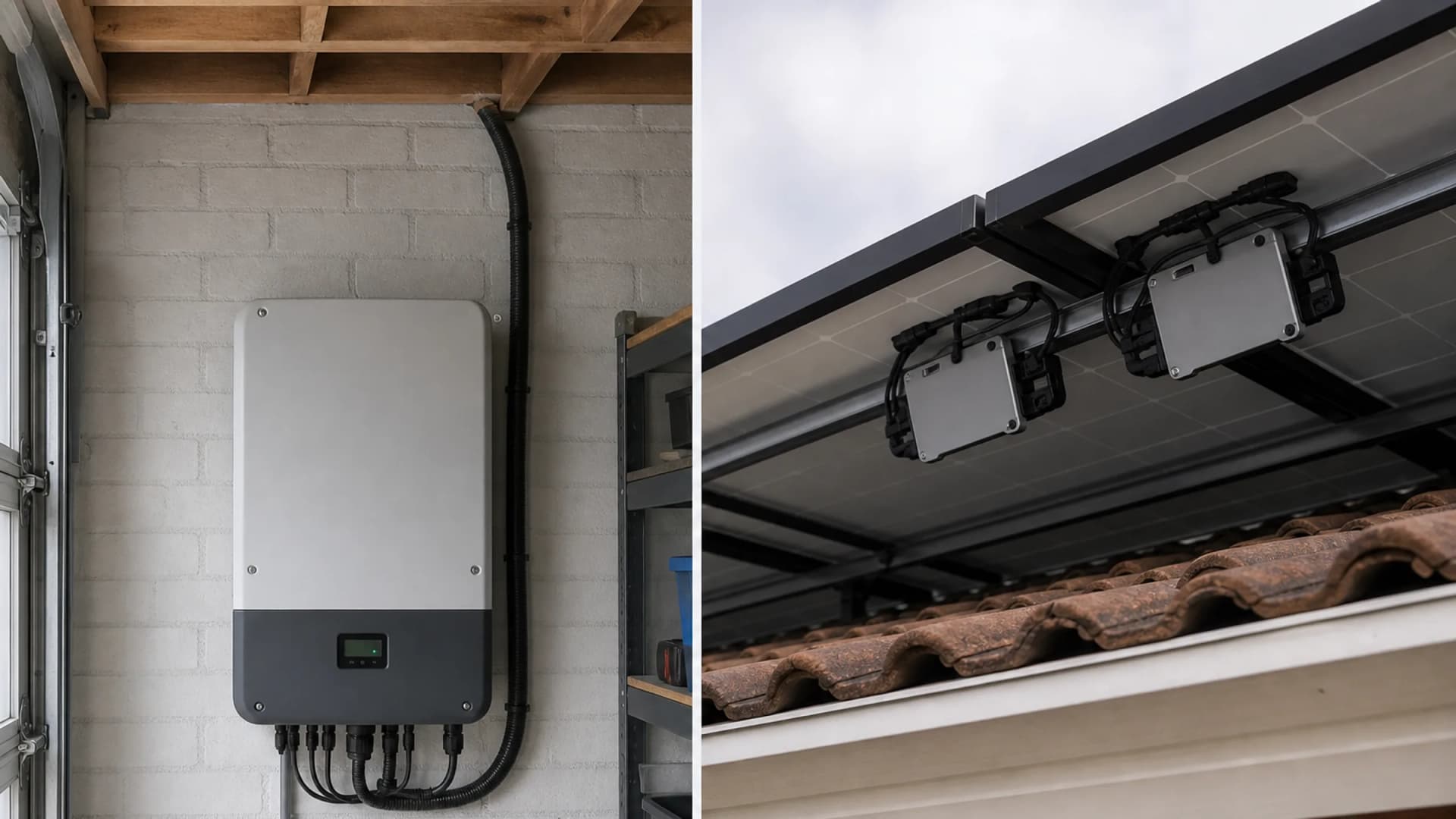
Shade from a tree, chimney or neighbouring building cuts yield harder than many people expect. Sometimes a different layout solves it, sometimes micro-inverters are smarter because each panel then performs independently. The trade-off is covered in our comparison of string inverter versus micro-inverters.
The panel count also drives the inverter choice. An inverter has an operating range: too many or too few panels on a string and the system underperforms. If you want to expand later, say so. Then we pick an inverter with headroom, or a micro system that grows per panel.
Calculate forward, not just backward
Your annual statement looks backward, but the installation will sit there for 25 years. If a heat pump, an electric car or a home office is coming, your use rises and with it the ideal panel count. That is why we ask about your plans during the survey, not just your meter readings.
From our practice: the scaffolding, the mounting and the connection are largely one-off costs. Adding a second round of panels later is more expensive per panel than sizing properly the first time. If the roof allows it and it fits your plans, going slightly larger is often the more logical choice. But that should follow from the calculation, not from sales talk.
How we determine the number at SolarFast
We start with your yearly use and your plans, inspect the roof for surface, shade and cable route, and draw out the layout. That produces a proposal with the panel count, the total power in watt-peak and the expected yearly yield for your roof, plus the matching inverter.
You get a no-obligation quote within 24 hours, no deposit required, and after approval we usually install within three weeks. Want to run your situation past us first? Send us your consumption and a photo of your roof or read on about what to look for when buying solar panels.
Solar panels are still a smart investment in 2026. A few things matter if you want the most from your own power.
Your energy use
Planning to drive, cook or heat electrically? Factor that into how many panels you install now.
Spread the yield
Spread panels across roof faces so you generate through the day and use more of your own energy.
Your data
Choose a system with its own 4G connection and data storage in Europe so your information stays secure.
Boost your energy
A smart home battery stores today's power for later, so you use more of your own electricity after sunset.

We install your solar panels in a day
We can often start within three weeks. A day later your panels are on the roof and everything is connected. We leave your home clean and make sure you know exactly how it all works.
- Use more of your own power during the day
- 0% VAT makes the investment even more attractive
Frequently asked questions
About 8 panels of 435 Wp with a favourable south-facing position. Divide your use by 0.85 to 0.9 for the required watt-peak and divide by the panel power. East-west or shade? Then the count comes out slightly higher.
About 11 panels of 435 Wp. In the table, 4,000 kWh sits between 10 panels for 3,800 kWh and 12 for 4,500 kWh. East-west or shade? Then you count a little higher.
Count on about 2 square metres per panel on a pitched roof; 8 panels need some 16 to 18 square metres of uninterrupted surface. A flat roof needs more because of row spacing and edge clearance, especially in a south-facing layout.
Pick panels with higher power per unit, use an east-west layout or accept covering part of your consumption. Partial coverage still saves every month; the survey shows what is feasible.
Neither, blindly. Too small leaves roof space and mounting costs unused, too large can trigger feed-in charges when you export a lot. We calculate both scenarios against your consumption and plans.
Fewer than the roof area suggests. A south-facing layout needs spacing against mutual shading and clearance along the roof edge because of wind. An east-west layout packs tighter and often uses the roof better.
Often yes, if the inverter has headroom and the roof surface allows it. Mention expansion plans upfront, then we pick an inverter that grows with you. A second mounting round costs more per panel than sizing properly at once.
Yes. We regularly install panels on carports and outbuildings when the main roof is too small or catches too much shade. The cable route to the fuse box decides whether it is practical.
Yes, your consumption rises considerably and with it the ideal panel count. Bring those plans into the advisory meeting, even if they are a few years away. Then we account for them in the roof layout and inverter choice.

Discover what smart energy can do for you
In about an hour you get insight into your savings, the options for your home and when the investment pays back. Straightforward, honest advice so you know exactly where you stand.
Smart energy at home
- Upgrade your home with our smart battery
- Our solar panels deliver up to 25% more energy
- A heat pump to minimise your energy use
- Charge your electric car easily at home with an EV charger
Booking an advice call is easy
Fill in your details below. Within a day we will contact you to schedule a no-obligation advice call together.
Related articles