
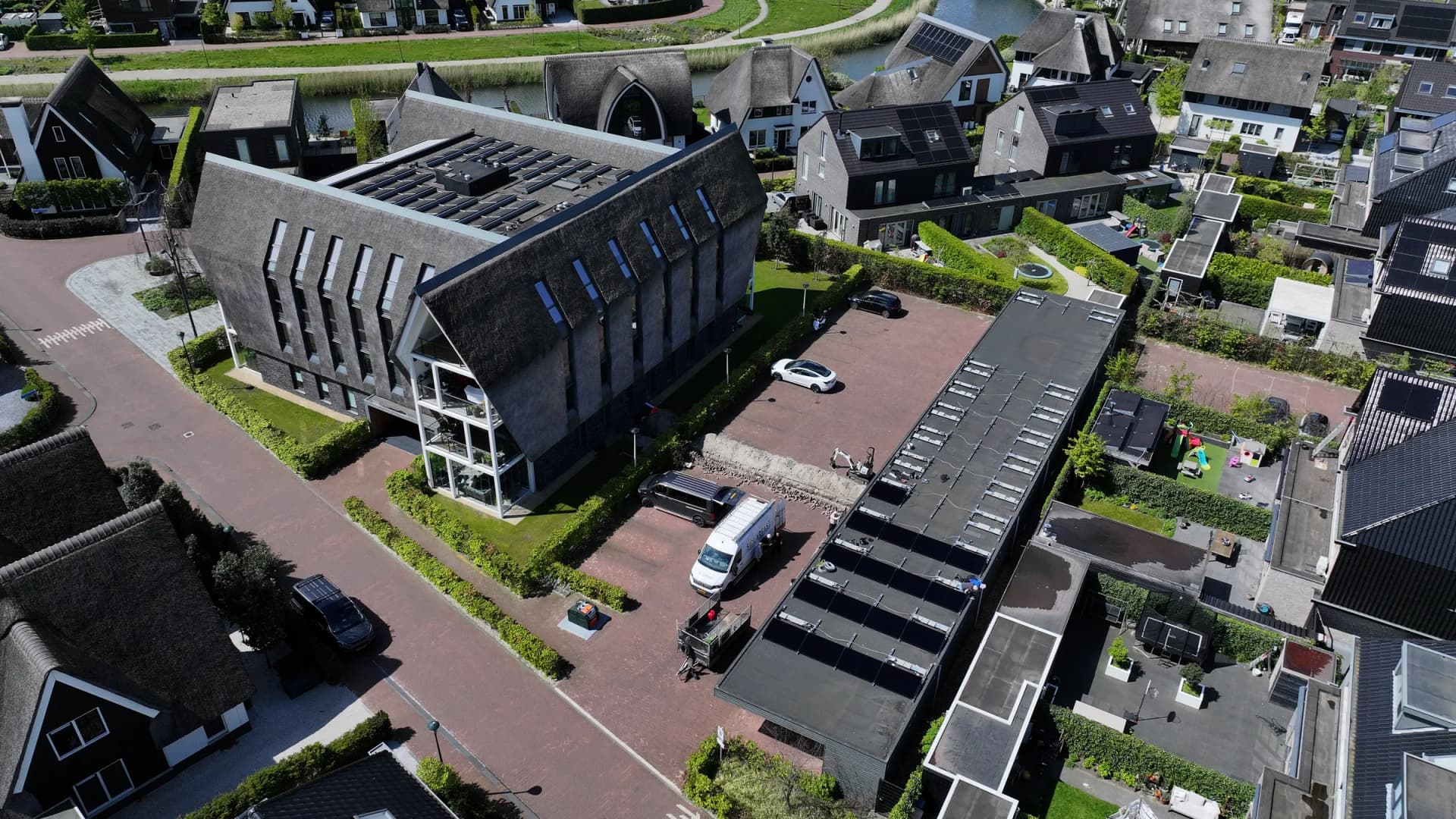
Solar panel annual yield: kWh and benefits
6 min read below · SolarFast knowledge base
Annual solar panel yield: count on 0.85 to 0.9 kWh per watt-peak. How to calculate it, what it saves on your bill, and the financial benefits.
In the Netherlands a panel produces roughly 0.85 to 0.9 times its watt-peak rating in kilowatt-hours per year. A 435 Wp panel lands around 370 to 390 kWh a year. What you save depends mainly on how much of that power you use yourself.
Get started
Solar panels
View and request a quoteRead more
Home batteries now count toward your energy label
Since 29 May 2026 a fixed home battery from 5 kWh counts toward the Dutch energy label. The conditions and what a better label means for mortgage and sale.
Customer story: the Jansen family
The Jansen family had solar panels installed by SolarFast and saw an immediate drop in their energy bill.
Share this article
How do you estimate and calculate kWh yield?
A panel's power is rated in watt-peak (Wp). To estimate yearly yield, multiply the total wattage by about 0.85 to 0.9. That gives kilowatt-hours (kWh) per year. It is an estimate: your roof, orientation and the weather determine the real result.
Common panels now often sit around 435 Wp. The examples below assume a south-facing roof at about 36 degrees and follow the yield assumptions Milieu Centraal uses.
| Panels | Power (Wp) | Yield per year |
|---|---|---|
| 6 | 2,610 | approx. 2,300 kWh |
| 8 | 3,480 | approx. 3,000 kWh |
| 10 | 4,350 | approx. 3,800 kWh |
Indicative for south-facing tilt (~36°). In your quote we calculate based on your roof and usage.
Yield by season
In the Netherlands a solar installation produces most of its yearly yield between March and September. A top month like June easily produces over four times as much as December. Over a full year that averages out to the rule of thumb of 0.85 to 0.9 kWh per Wp.
Illustrative NL average; your actual split depends on orientation, weather and shade. Not a guarantee.
Diffuse light in spring and autumn still generates output. You don't need a heatwave: bright but cool spring weather often gives a great result, because cells work slightly more efficiently at lower temperatures.
What determines your yield?
Four things weigh most on your yearly yield: roof orientation, tilt, shade from trees or chimneys, and the quality of panels and inverter. On a pitched roof, an angle between 20 and 50 degrees is usually favourable. South gives the highest peak; east-west spreads output better across the day, which often matches your usage more closely.
| Orientation | Yield vs. optimum |
|---|---|
| South (~36°) | 100% |
| South-west / south-east | approx. 95% |
| East / west | approx. 80% |
| North | approx. 60% |
Percentages are indicative for a pitched roof at about 36 degrees, derived from the roof orientation figures of Milieu Centraal. An east-west layout gives slightly less peak but spreads output better across the day.
Shade on part of your roof often costs more than you would expect. We look at this closely during the survey. Sometimes a different layout or an Enphase micro-inverter solves it, so shade on one panel does not drag down the whole system.
From kWh to euros on your bill
Yield in kWh is step one. Financially, what matters is how much of that power you use yourself. An average household uses about 30 to 35 percent of its solar power directly, Milieu Centraal estimates. The same source calculates that power from your own roof works out roughly three to four times cheaper over the system's lifetime than power you buy in.
What you don't use straight away goes back to the grid. While the net metering scheme runs, that feed-in is offset against your draw and worth the same as purchased power. For the surplus beyond your draw, and after net metering ends in 2027, you receive a feed-in payment that is usually much lower. Read our dedicated page or the ACM explanation of net metering.
Want to use more of your own generation? An east-west layout or a home battery helps. How much you save depends on your usage, your contract and the schemes at the time. That is why we prefer to calculate it for your situation rather than promise a fixed amount.
Financing via the Warmtefonds
You don't always have to make the investment in one go. Through the national Warmtefonds you can finance home improvements, including solar panels, on favourable terms. You spread the cost over several years while already saving on your energy bill once the panels are running.
On our solar panels page we explain how financing works and what you need to apply. No down payment at SolarFast: you pay after installation.
Home value and VAT
A home with low energy costs and a better energy label appeals to buyers. Panels are not only a saving on your monthly bill, but also an investment in your property. How much that adds in euros varies by home, market and label; financially you gain mainly through lower power costs and more self-use.
For private homeowners a favourable VAT regime applies: supply and installation of solar panels on or at a home has been charged at 0 percent VAT since 1 January 2023. Exceptions apply, for example integrated panels on new-build homes. Current rules are on the Dutch Tax Administration site.
Payback period
Panels typically last 25 years or more, with a slight yearly drop in output. Whether and when your investment pays back depends on your usage, your roof, purchase costs and the rates and schemes at the time. There is no fixed term that fits everyone; that is why we calculate it for your situation rather than promising a generic number.
In your quote we calculate payback based on your actual situation. No fixed promise on paper, but figures tailored to your roof and usage. Ask us if you want to discuss your situation first.
Related articles
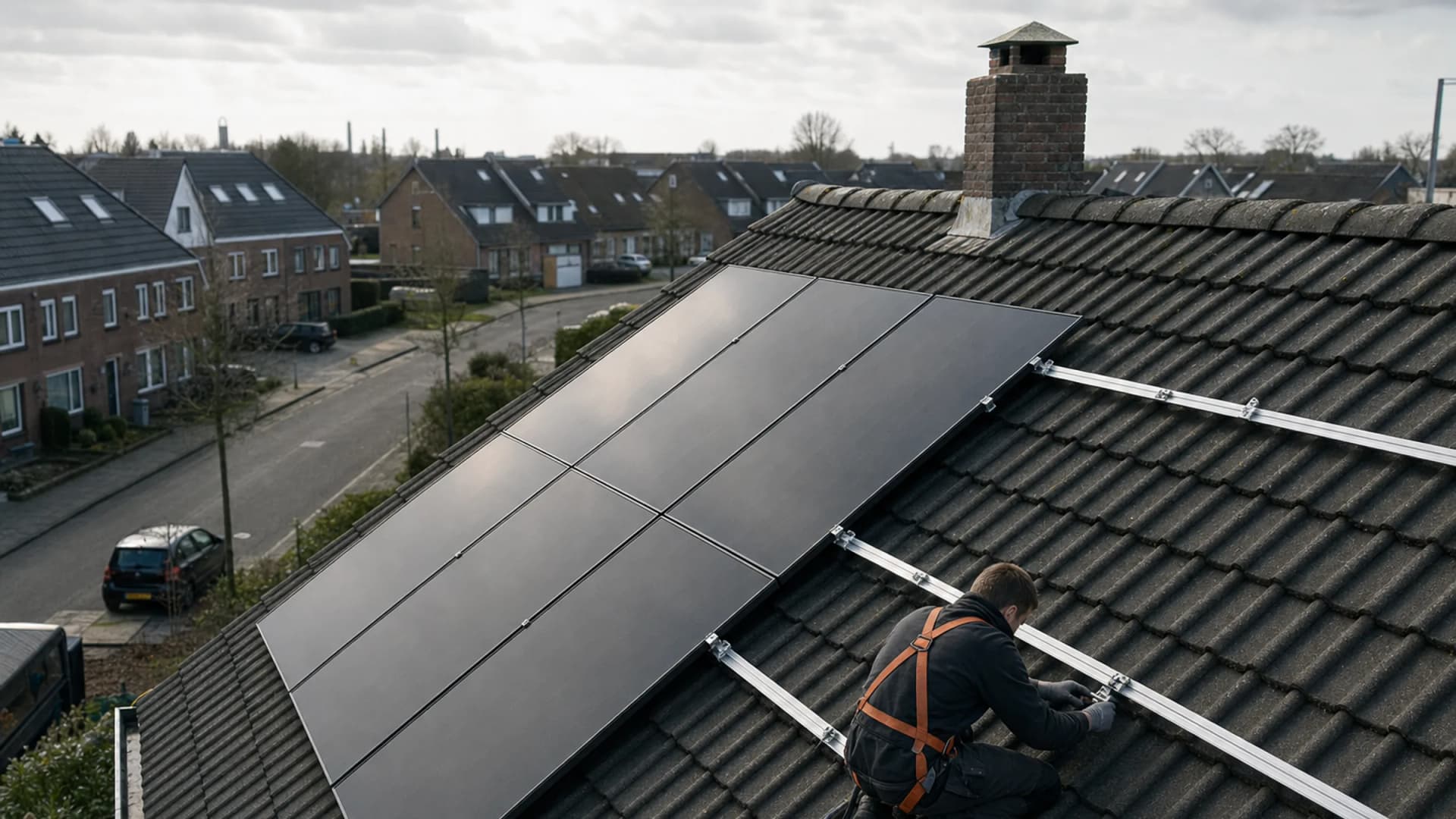
How many solar panels do I need? The calculation
Work out in three steps how many solar panels you need: yearly use, watt-peak and what fits on your roof. With worked examples from real installations.

What is Wp (watt-peak)? How to convert to kWh
Wp (watt-peak) is the peak output of a solar panel under standard test conditions. How to convert Wp to kWh per year and what to check in a quote.
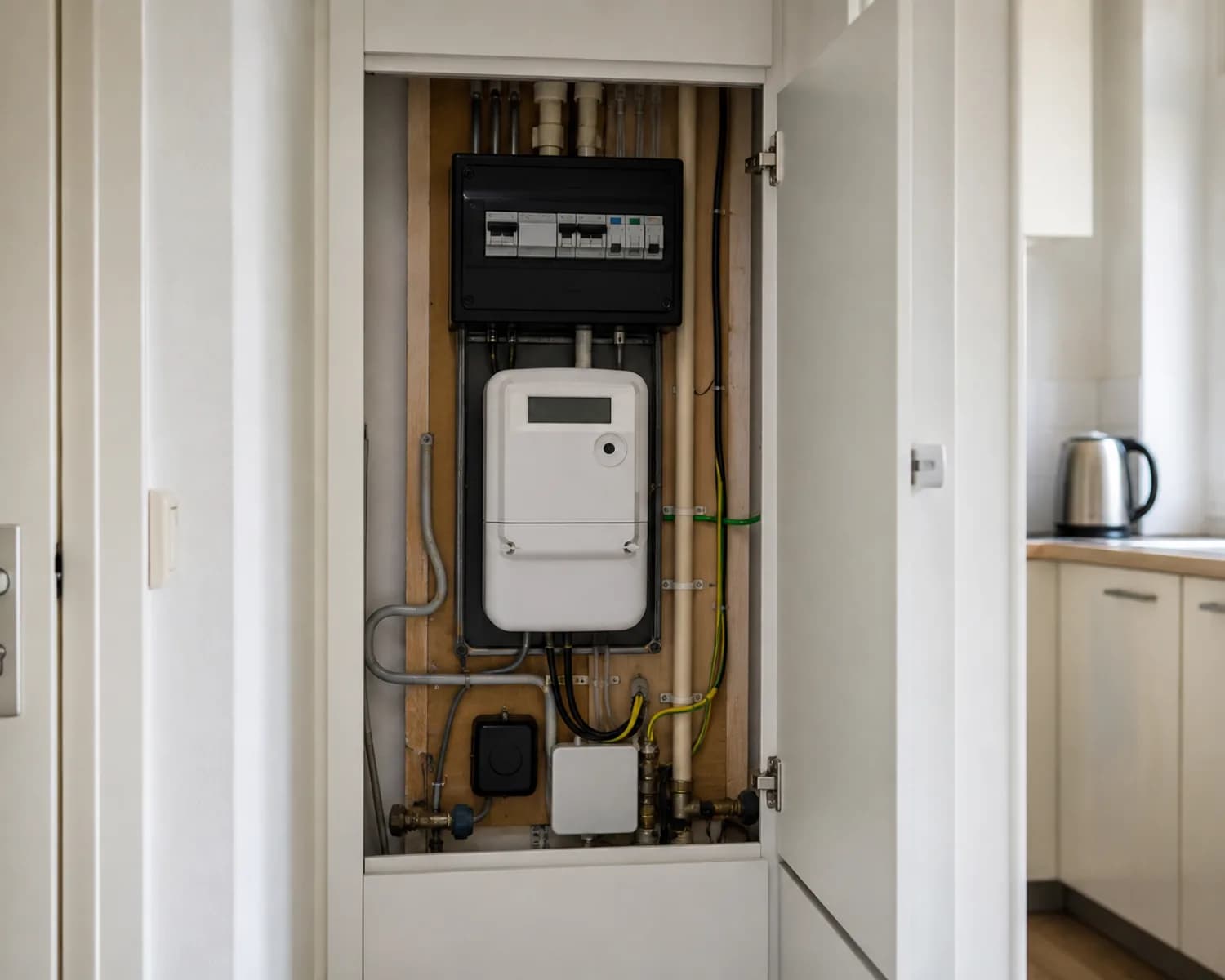
What is a kWh (kilowatt-hour)?
A kilowatt-hour (kWh) is the energy a 1,000-watt appliance uses in one hour. How to convert watts to kWh and read your use on your annual statement.
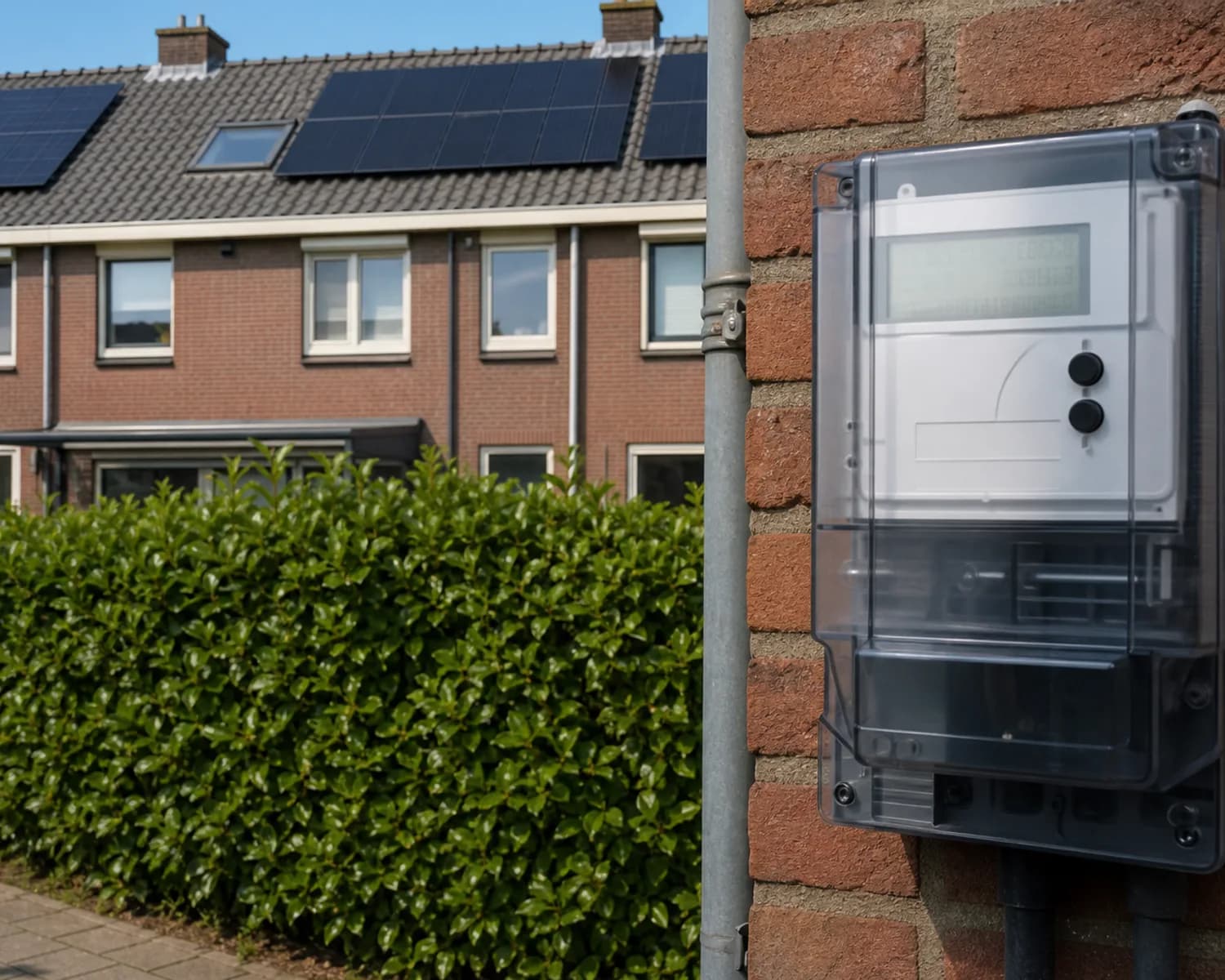
Net metering explained
Net metering for solar panels: what it is, the cap, feed-in payment and feed-in charges. How your supplier settles power fed back to the grid.
Buying solar panels: what to look for
Buying solar panels: quote, inverter, warranty, meter and installer. How to compare quotes fairly.
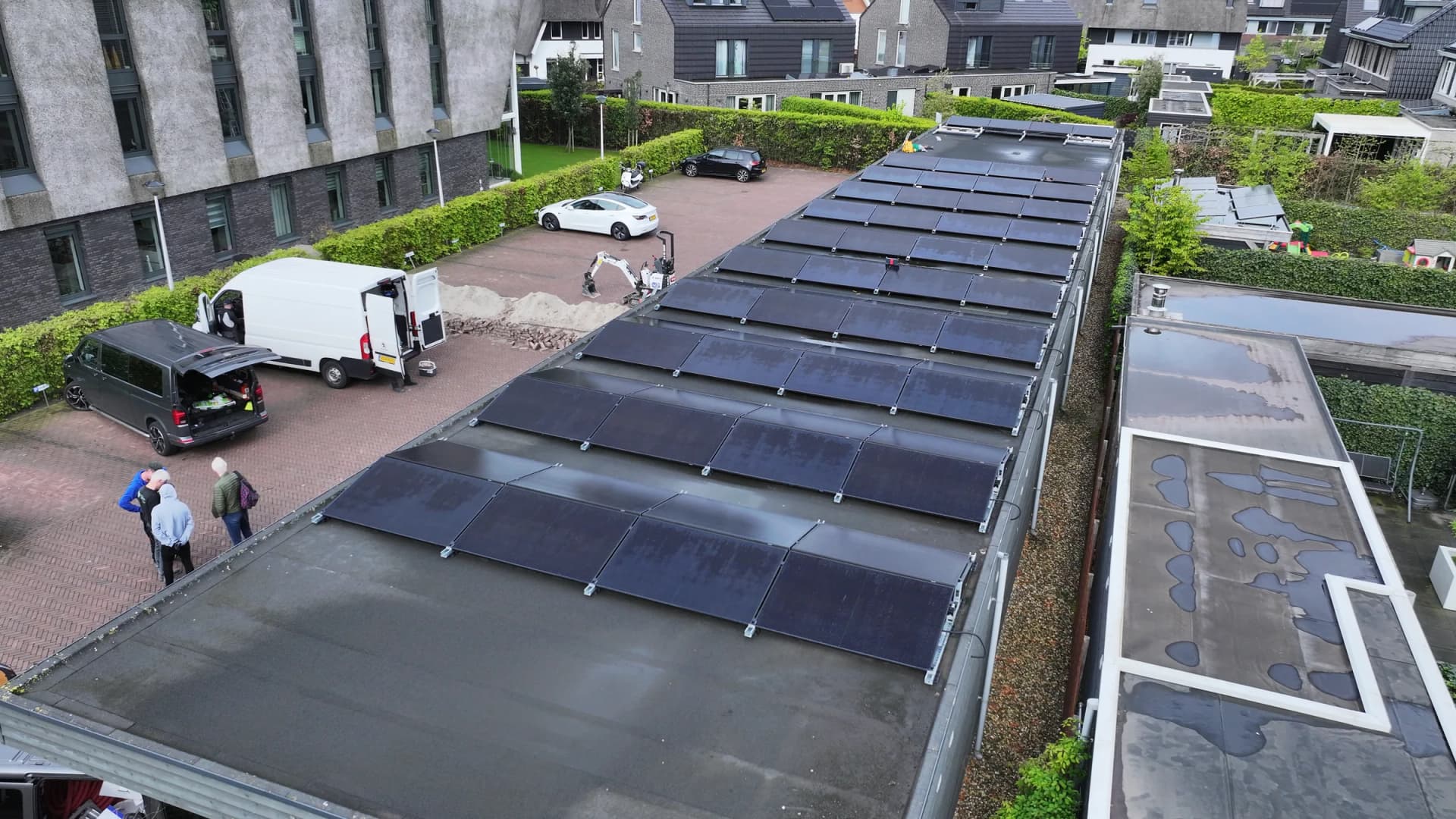
Cleaning solar panels: when is it worth it?
Cleaning solar panels? Usually unnecessary: rain does the work. When it pays off (flat roofs, bird droppings), how to clean safely and the upkeep that matters.
Solar self-consumption: use more of your own power
Self-consumption is the share of your solar power you use yourself. How to raise it with panels, a battery and smart use, without going off-grid.
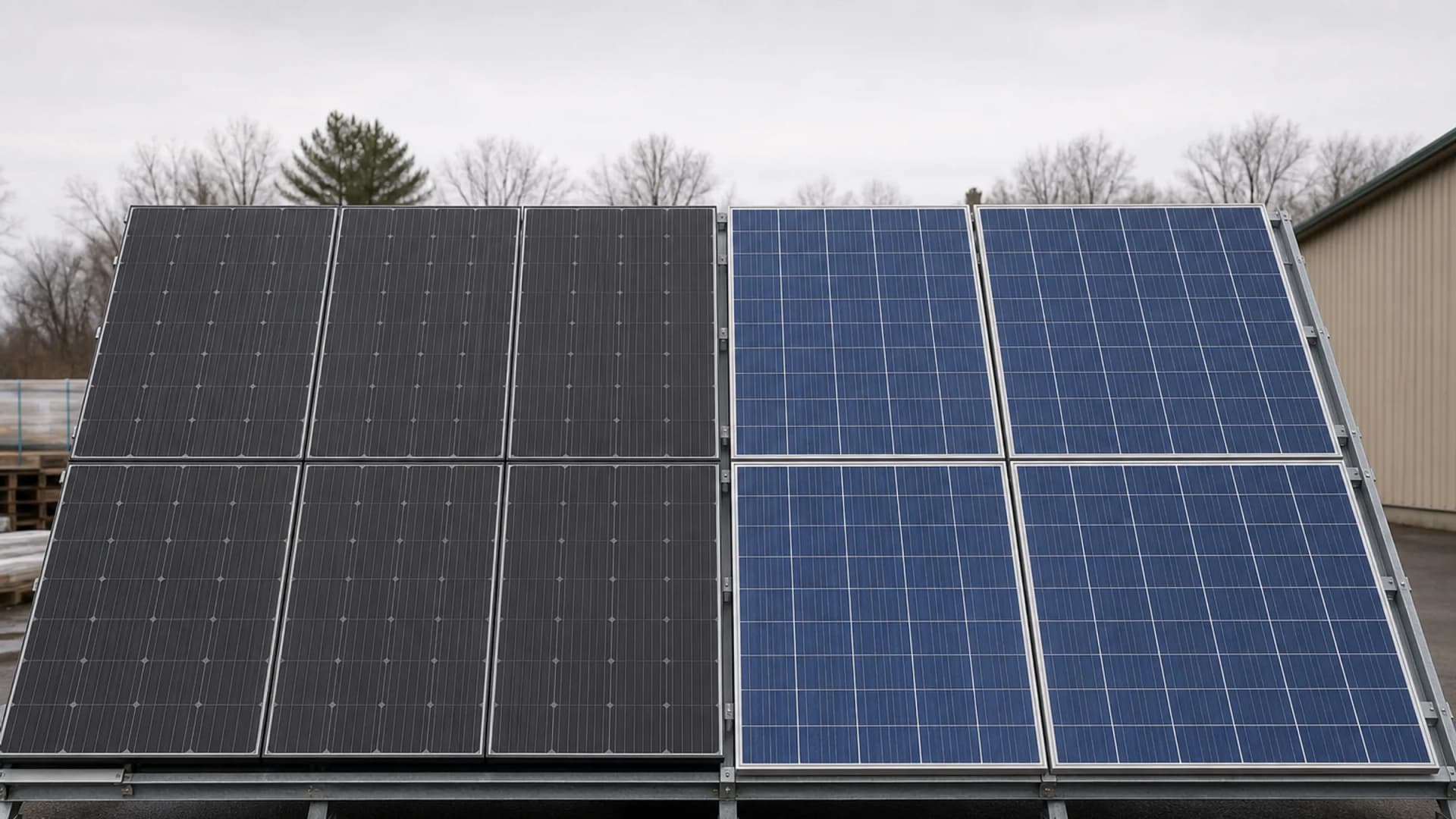
Monocrystalline vs polycrystalline panels
Monocrystalline or polycrystalline: why almost every new panel is mono, where the difference still matters and what SolarFast installs.
Frequently asked questions
How much kWh does a solar panel produce per day?
Divide your yearly yield by 365. A 435 Wp panel produces roughly 370 to 390 kWh a year, so about 1 to 1.1 kWh per day on average. In summer that is higher, in winter lower.
How do you calculate solar panel yield?
Multiply total watt-peak by 0.85 to 0.9 for an estimate in kWh per year. Roof orientation, shade and weather determine the real result. In your quote we calculate it for your situation.
How much does a solar panel produce per year?
Count on about 0.85 to 0.9 kilowatt-hours per watt-peak per year in the Netherlands. A 435 Wp panel lands around 370 to 390 kWh.
Do I need a south-facing roof?
No. South gives the highest peak, but an east-west layout spreads output better across the day and often matches your usage more closely. Both work well in the Netherlands.
How much does shade cost?
More than many people think. Even shade on a small part of a panel can cut output noticeably. Micro-inverters or optimisers limit that effect.
Do solar panels really pay back?
For many homes, yes, but payback varies widely: usage, tariffs, feed-in charges and the end of net metering in 2027 all matter. Milieu Centraal stresses there is no fixed term that fits everyone. We calculate it for you in your quote.
Can I finance solar panels?
Yes. Through the national Warmtefonds you can borrow on favourable terms for home improvements, so you spread the cost.
Do I pay VAT on solar panels?
On homes, supply and installation is generally charged at 0 percent VAT since 1 January 2023. Exceptions exist; we explain the current situation in your quote.
We apply this every day
The same knowledge you're reading here, we put to work for households across the Netherlands.