Charging your car on your own solar power
Updated on 6 min read
With a smart charger your car charges on your solar surplus. How surplus charging works, where the lower limit sits and what it saves.
All articles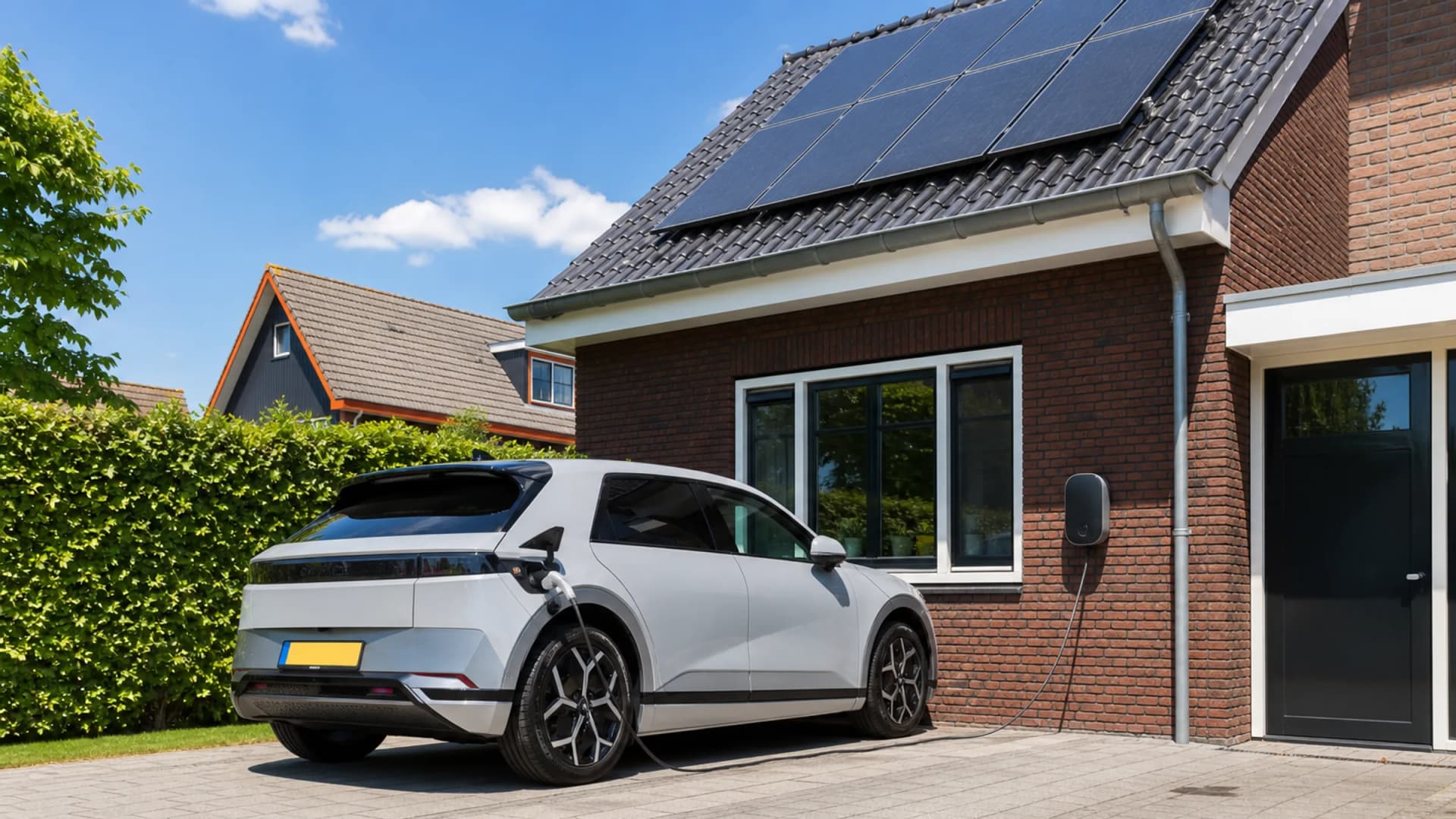
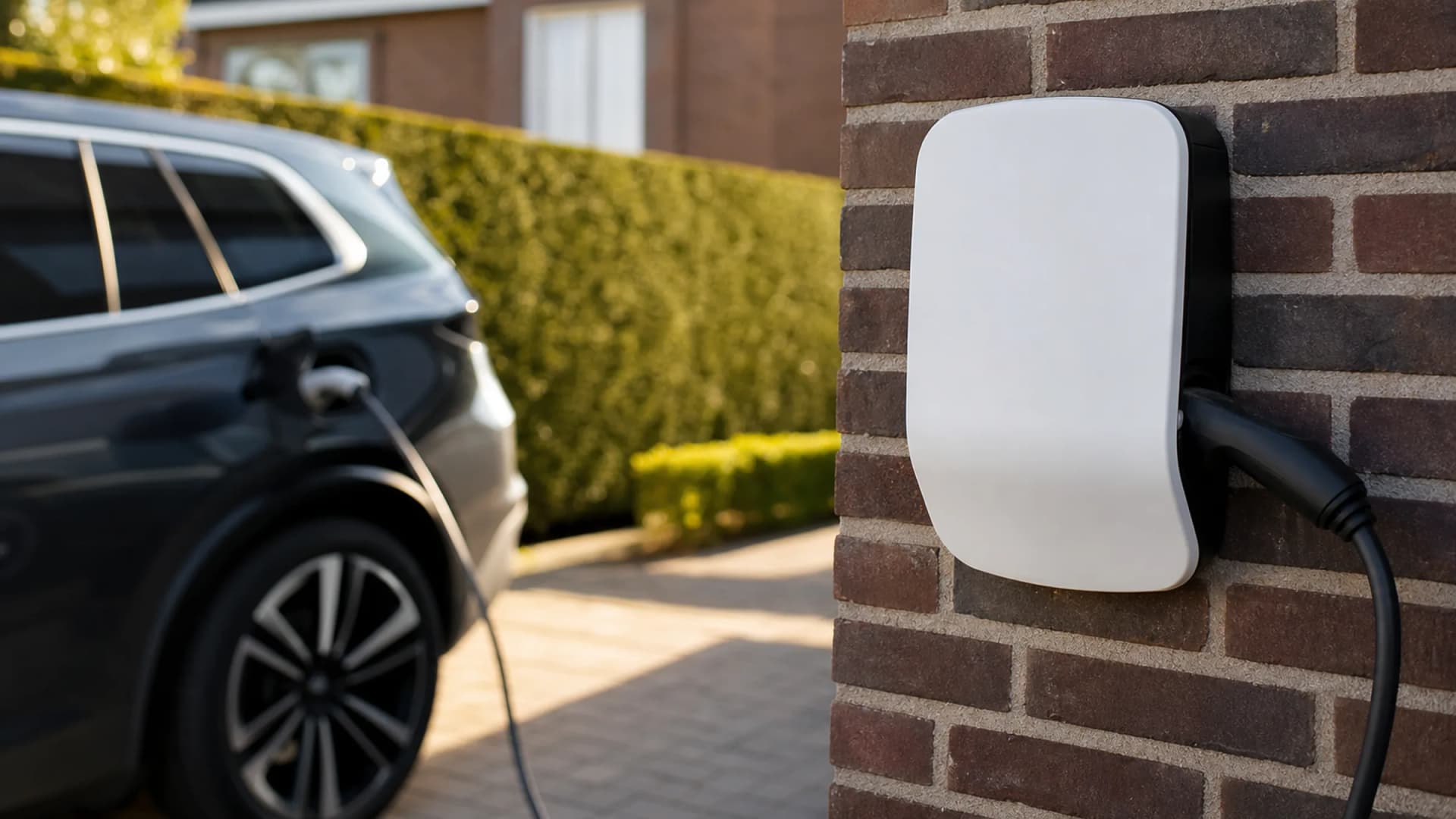
A smart charger can charge your car on the surplus from your solar panels: the power that would otherwise flow to the grid. It works through a meter module in your fuse box that follows the surplus live. There is a lower limit: charging only gets going from about 1.4 kilowatts of surplus.
What is charging on solar power?
 EV charger
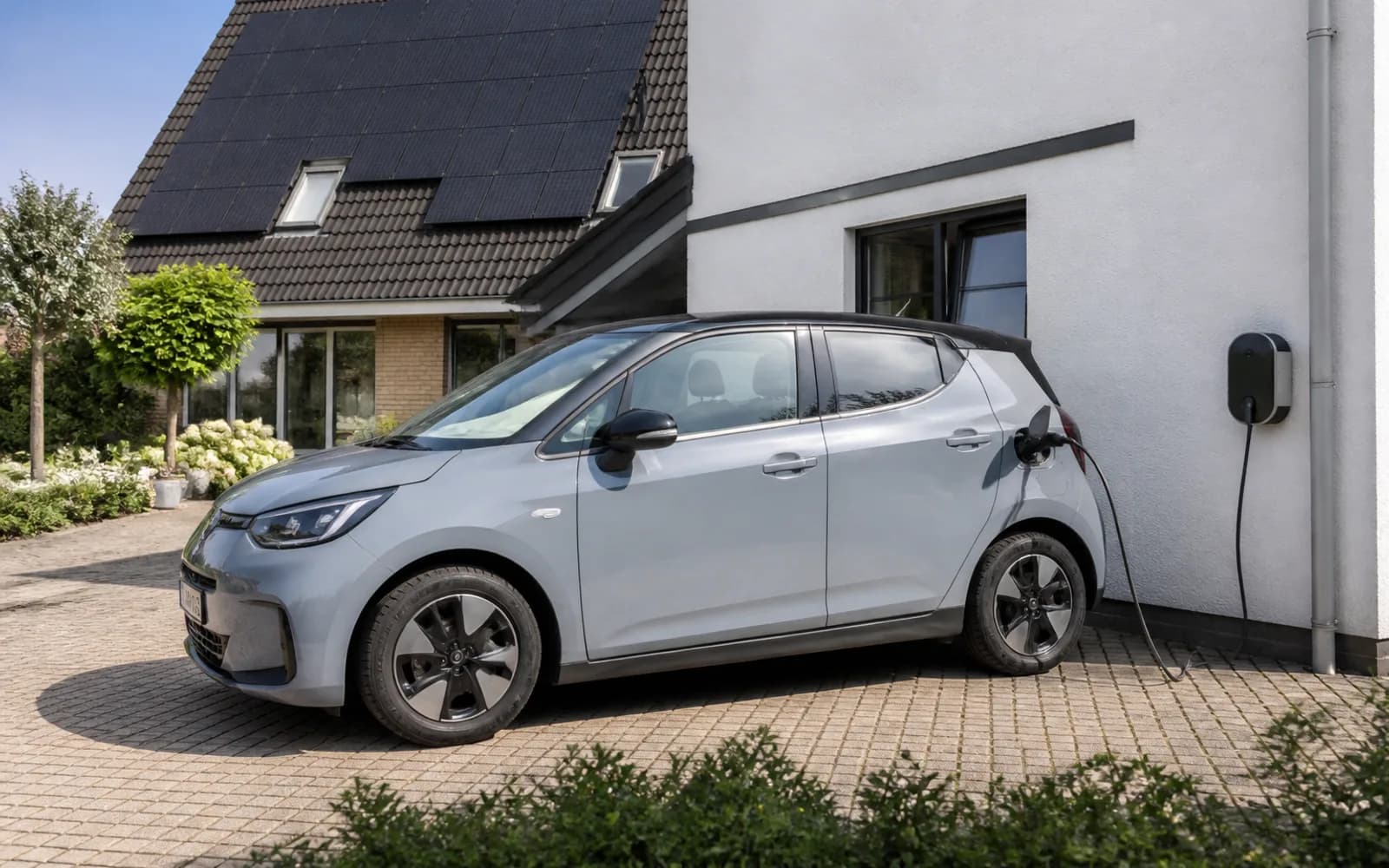
On a sunny day your panels often generate more than your home uses at that moment. That surplus normally flows to the grid, for a payment that keeps shrinking. Surplus charging sends that power to your car instead: the cheapest kilometres there are, because your own generation is already paid for.
The idea fits a broader approach: shifting consumption to the moments you generate. That principle, and what else it delivers, is covered in smart home energy steering.
How a smart charger works
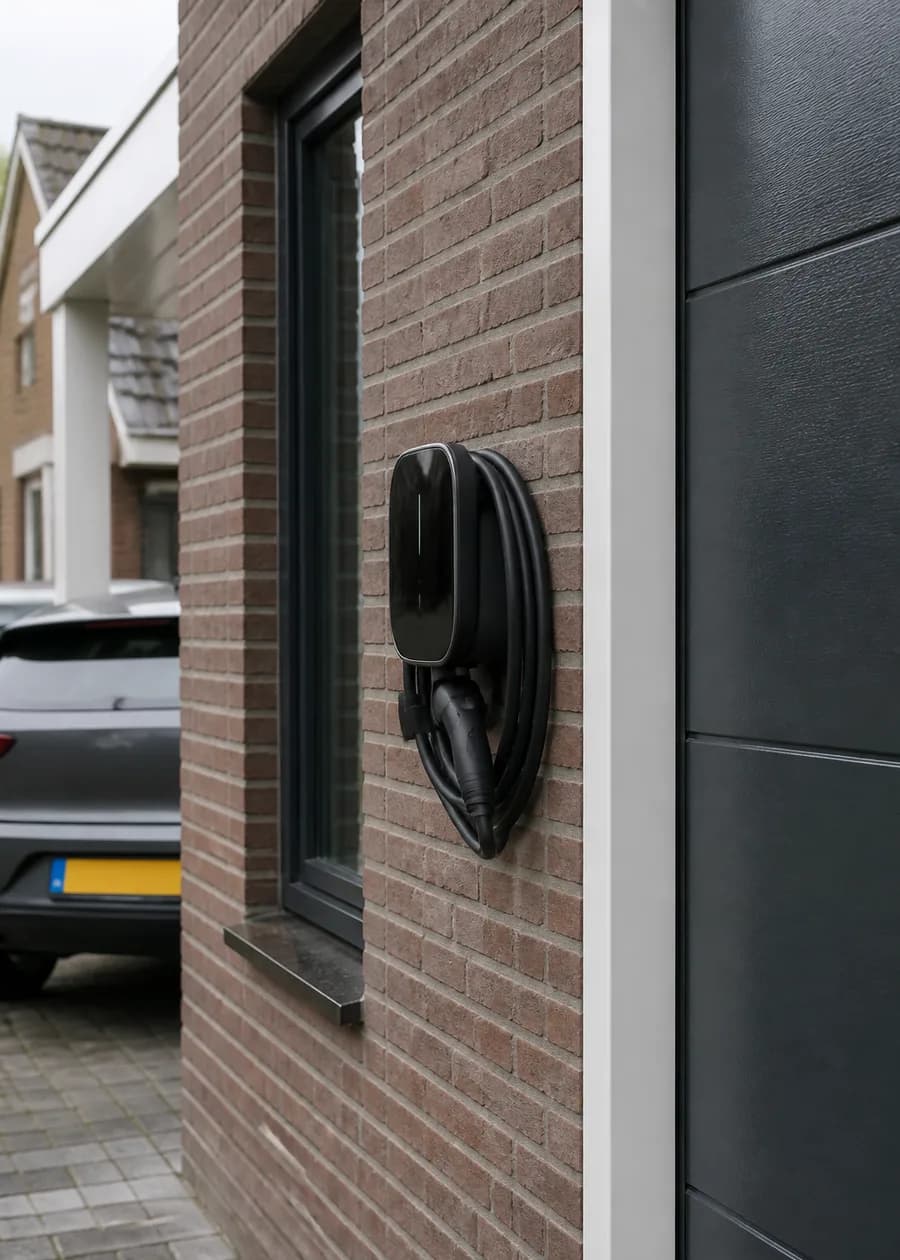
A smart charger gets its information from the fuse box: a metering module on the connection sees second by second how much power flows in or out of the house. When your panels generate more than the house uses, the charger raises the charging power; when a cloud slides in front of the sun, it throttles back. The car charges along with the weather.
Most smart chargers offer several modes for this. Solar-only: the car charges exclusively on surplus and pauses when it disappears. Solar-plus-grid: surplus comes first, but the grid tops up to a minimum speed so the car is full in time. Which mode suits you depends on how far and how often you drive.
The lower limit: why charging starts at 1.4 kW
Here is the detail missing from many explanations. The international charging standard that cars and chargers follow (IEC 61851-1) specifies a minimum charging current of 6 amps per phase. On a 230-volt phase that is about 1.4 kilowatts: below that, a car simply cannot accept power. If your surplus is smaller, charging pauses or the grid tops up.
If your car charges on three phases, that same lower limit sits around 4.2 kilowatts. For pure solar charging a single-phase setting is therefore often the better fit: the threshold is lower, so charging continues on half-cloudy days too. Many smart chargers switch automatically between one and three phases and pick the setting that matches the surplus.
How much surplus you have over a year depends on your system and consumption; make a first estimate via solar panel yield.
Load balancing: the guard of your fuse box
Surplus charging is about charging as cheaply as possible; load balancing is about charging safely. That function watches the total load on your connection and throttles the charger as soon as the rest of the house demands a lot, for instance when the oven and washing machine kick in together. The main fuse stays within its limits without upgrading the fuse box.
In practice the two belong together: the same metering module that sees the solar surplus also guards the total load. We configure both during installation.
What does it save?
The benefit grows over the years. The Dutch net-metering scheme is being phased out and more and more suppliers charge feed-in costs on power you send to the grid. Every kilowatt-hour of surplus that lands in your car instead of on the grid skips that whole circus: you neither feed it in nor buy it back later at a higher price.
Honesty also demands: it mainly works from March to October. In winter there is rarely a surplus, and charging during the cheap hours of a dynamic energy contract is the logical alternative, outside the evening peak, in line with what net-aware home charging (Dutch) advises. A smart charger combines both: sun in summer, cheap hours in winter.
And what about the home battery?
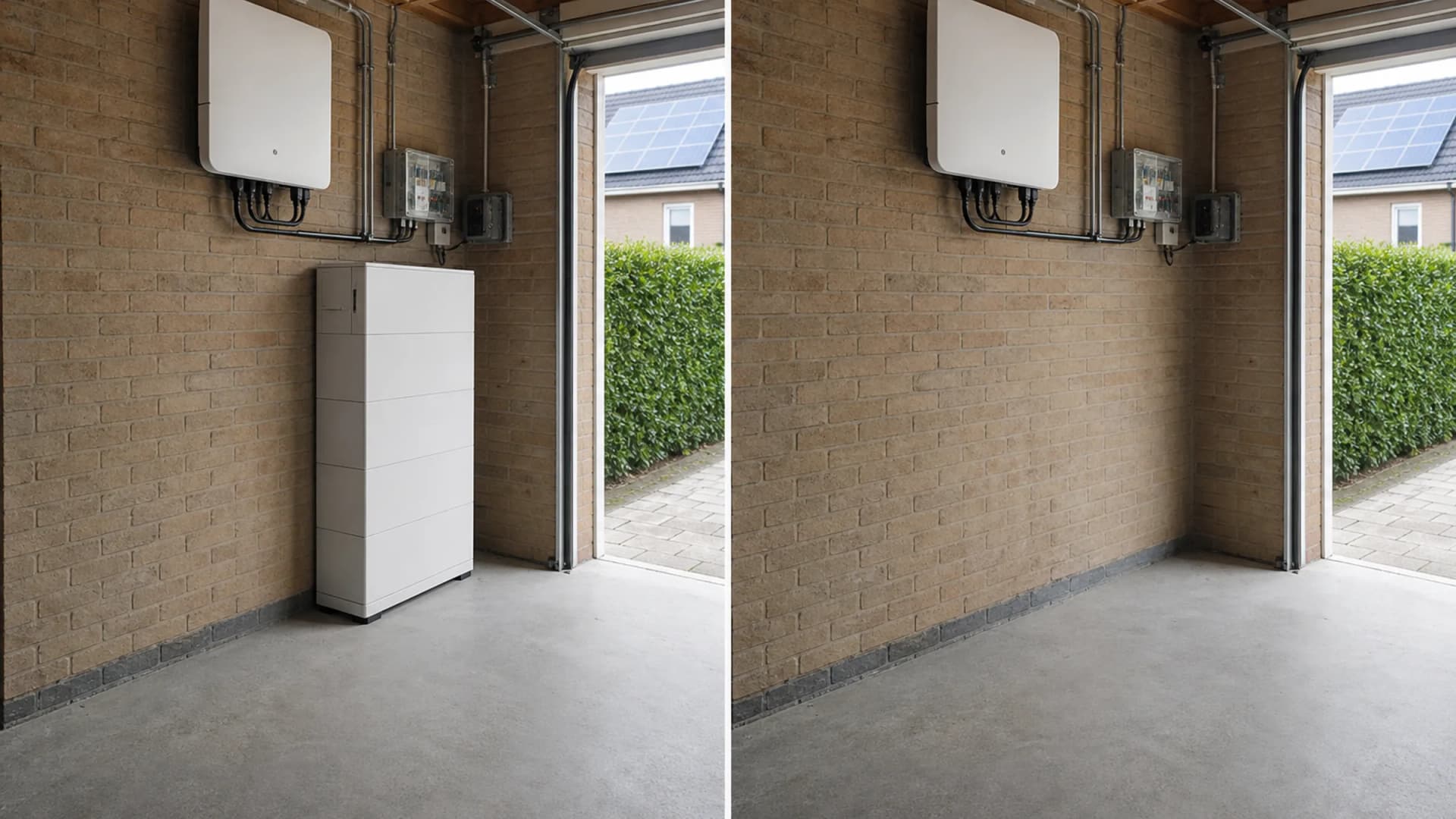
A common question: cannot the home battery charge the car at night with the day's sun? Technically yes, but do the maths: an average home battery stores 5 to 15 kilowatt-hours, while a car battery is easily 50 to 80 kilowatt-hours. The home battery is there for your household evening use; the car charges most cheaply straight from the afternoon surplus.
The order we advise: first the house on its own sun, then the car on the remainder, and the battery as a buffer for the evening. That way the devices do not compete for the same kilowatt-hours.
How SolarFast handles this
We install chargers with surplus charging and load balancing on board as standard, and tune them to your panels and fuse box during installation. If you do not have panels yet, we include the combination in the same quote; that saves a second installation round.
Curious what fits your situation? Put it to us or see the charger page and solar panels.
Solar panels are still a smart investment in 2026. A few things matter if you want the most from your own power.
Your energy use
Planning to drive, cook or heat electrically? Factor that into how many panels you install now.
Spread the yield
Spread panels across roof faces so you generate through the day and use more of your own energy.
Your data
Choose a system with its own 4G connection and data storage in Europe so your information stays secure.
Boost your energy
A smart home battery stores today's power for later, so you use more of your own electricity after sunset.

We install your EV charger
We install your charger professionally and explain the costs upfront. We look at your car, fuse box and where the charger will sit. After installation we remain available for questions.
- Leave every morning with a full battery
- Faster charging than a wall socket
Frequently asked questions
On sunny days with enough surplus, yes, certainly in solar-only mode. Across the whole year it will not be fully solar: in winter there is rarely a surplus and you top up on grid power, cheapest during the low-price hours of a dynamic contract.
Solar panels, a smart charger with surplus charging and a metering module in the fuse box that follows the surplus live. The charger then adjusts the charging power along with the sun by itself.
The charging standard IEC 61851-1 specifies a minimum charging current of 6 amps per phase, about 1.4 kilowatts on one phase. Below that limit the car cannot charge; the charger pauses or tops up with grid power, depending on the mode.
For pure solar charging single-phase is often the better fit: the lower limit sits at about 1.4 kilowatts instead of 4.2 kilowatts, so charging continues on a modest surplus. Many smart chargers switch between the two automatically.
Surplus charging sends your solar surplus to the car and is about cost. Load balancing guards the total load on your connection and is about safety. A good smart charger does both at once.
Technically yes, but it does not get you far: a home battery stores 5 to 15 kilowatt-hours, a car battery is easily 50 to 80 kilowatt-hours. The battery is there for your evening use in the house; the car charges most cheaply straight from the afternoon surplus.

Discover what smart energy can do for you
In about an hour you get insight into your savings, the options for your home and when the investment pays back. Straightforward, honest advice so you know exactly where you stand.
Smart energy at home
- Upgrade your home with our smart battery
- Our solar panels deliver up to 25% more energy
- A heat pump to minimise your energy use
- Charge your electric car easily at home with an EV charger
Booking an advice call is easy
Fill in your details below. Within a day we will contact you to schedule a no-obligation advice call together.
Related articles